
₦18,000.00
The Making Of A Manager
Congratulations, you’re a manager! After you pop the champagne, accept the shiny new title, and step into this thrilling next chapter of your career, the truth descends like a fog: you don’t really know what you’re doing.
That’s exactly how Julie Zhuo felt when she became a rookie manager at the age of 25. She stared at a long list of logistics–from hiring to firing, from meeting to messaging, from planning to pitching–and faced a thousand questions and uncertainties. How was she supposed to spin teamwork into value? How could she be a good steward of her reports’ careers? What was the secret to leading with confidence in new and unexpected situations?
Now, having managed dozens of teams spanning tens to hundreds of people, Julie knows the most important lesson of all: great managers are made, not born. If you care enough to be reading this, then you care enough to be a great manager.
The Making of a Manager is a modern field guide packed everyday examples and transformative insights, including:
* How to tell a great manager from an average manager (illustrations included)
* When you should look past an awkward interview and hire someone anyway
* How to build trust with your reports through not being a boss
* Where to look when you lose faith and lack the answers
Whether you’re new to the job, a veteran leader, or looking to be promoted, this is the handbook you need to be the kind of manager you wish you had.
Out of stock
Related products
The News Sorority
₦4,000.00For decades, women battered the walls of the male fortress of television journalism. After fierce struggles, three women—Diane Sawyer, Katie Couric, and Christiane Amanpour—broke into the newsroom’s once impenetrable “boys’ club.” These women were not simply pathbreakers, but wildly gifted journalists whose unique talents enabled them to climb to the top of the corporate ladder and transform the way Americans received their news.
Drawing on exclusive interviews with their colleagues and intimates from childhood on, The News Sorority crafts a lively and exhilarating narrative that reveals the hard struggles and inner strengths that shaped these women and powered their success. Life outside the newsroom—love, loss, child rearing—would mark them all, complicating their lives even as it deepened their convictions and instincts. Life inside the newsroom would include many nervy decisions and back room power plays previously uncaptured in any media account. Taken together, Sawyer’s, Couric’s, and Amanpour’s lives as women are here revealed not as impediments but as keys to their success.
Raised in Louisville, Kentucky, Diane Sawyer was a young woman steering her own unique political course in a time of societal upheaval. Her fierce intellect, almost insuperable work ethic, and sophisticated emotional intelligence would catapult Sawyer from being the first female on-air correspondent for 60 Minutes, to presenting anchoring the network flagship ABC World News. From her first breaks as a reporter all the way through her departure in 2014, Sawyer’s charisma and drive would carry her through countless personal and professional changes.
Katie Couric, always conveniently underestimated because of her “girl-next-door” demeanor, brazened her way through a succession of regional TV news jobs until she finally hit it big. In 1991, Couric became the cohost of Today, where, over the next fifteen years, she transformed the “female” slot from secondary to preeminent while shouldering devastating personal loss. Couric’s greatest triumph—and most bedeviling challenge—was at CBS Evening News, as the first woman to solo-anchor a nighttime network news program. Her contradictions—seriously feminist while proudly sorority-girlish—made her beyond easy typecasting, and as original as she is relatable.
A glamorous, unorthodox cosmopolite—raised in pre-revolution Iran amid royalty and educated in England—Christiane Amanpour would never have been picked out of a lineup as a future war reporter, until her character flourished on catastrophic soil: her family’s exile during the Iranian Revolution. Once she knew her calling, Amanpour shrewdly made a virtue of her outsider status, joining the fledgling CNN on the bottom rung and then becoming its “face,” catalyzing its rise to global prominence. Amanpour’s fearlessness in war zones would make her the world’s witness to some of its most acute crises and television’s chief advocate for international justice.
Revealing the tremendous combination of ambition, empathy, and skill that empowered Sawyer, Couric, and Amanpour to reach stardom, The News Sorority is a detailed story of three very particular lives and a testament to the extraordinary character of women everywhere.
An Ugly Truth: Inside Facebook’s Battle for Domination
₦15,000.00Award-winning New York Times reporters Sheera Frenkel and Cecilia Kang unveil the tech story of our times in a riveting, behind-the-scenes exposé that offers the definitive account of Facebook’s fall from grace.
Once one of Silicon Valley’s greatest success stories, Facebook has been under constant fire for the past five years, roiled by controversies and crises. It turns out that while the tech giant was connecting the world, they were also mishandling users’ data, spreading fake news, and amplifying dangerous, polarizing hate speech.
The company, many said, had simply lost its way. But the truth is far more complex. Leadership decisions enabled, and then attempted to deflect attention from, the crises. Time after time, Facebook’s engineers were instructed to create tools that encouraged people to spend as much time on the platform as possible, even as those same tools boosted inflammatory rhetoric, conspiracy theories, and partisan filter bubbles. And while consumers and lawmakers focused their outrage on privacy breaches and misinformation, Facebook solidified its role as the world’s most voracious data-mining machine, posting record profits, and shoring up its dominance via aggressive lobbying efforts.
Drawing on their unrivaled sources, Sheera Frenkel and Cecilia Kang take readers inside the complex court politics, alliances and rivalries within the company to shine a light on the fatal cracks in the architecture of the tech behemoth. Their explosive, exclusive reporting led them to a shocking conclusion: The missteps of the last five years were not an anomaly but an inevitability—this is how Facebook was built to perform. In a period of great upheaval, growth has remained the one constant under the leadership of Mark Zuckerberg and Sheryl Sandberg. Both have been held up as archetypes of uniquely 21st century executives—he the tech “boy genius” turned billionaire, she the ultimate woman in business, an inspiration to millions through her books and speeches. But sealed off in tight circles of advisers and hobbled by their own ambition and hubris, each has stood by as their technology is coopted by hate-mongers, criminals and corrupt political regimes across the globe, with devastating consequences. In An Ugly Truth, they are at last held accountable.
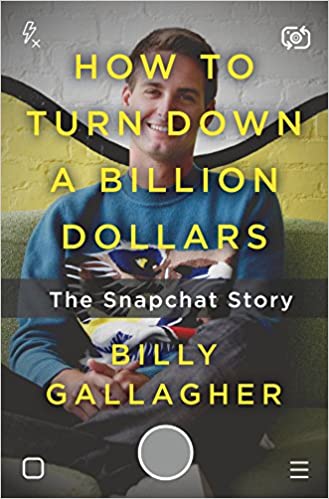
How To Turn Down A Billion Dollars: The Snapchat Story
₦4,500.00The improbable and exhilarating story of the rise of Snapchat from a frat boy fantasy to a multi-billion dollar internet unicorn that has dramatically changed the way we communicate.
In 2013 Evan Spiegel, the brash CEO of the social network Snapchat, and his co-founder Bobby Murphy stunned the press when they walked away from a three-billion-dollar offer from Facebook: how could an app teenagers use to text dirty photos dream of a higher valuation? Was this hubris, or genius?
In How to Turn Down a Billion Dollars, tech journalist Billy Gallagher takes us inside the rise of one of Silicon Valley’s hottest start-ups. Snapchat developed from a simple wish for disappearing pictures as Stanford junior Reggie Brown nursed regrets about photos he had sent. After an epic feud between best friends, Brown lost his stake in the company, while Spiegel has gone on to make a name for himself as a visionary―if ruthless―CEO worth billions, linked to celebrities like Taylor Swift and his wife, Miranda Kerr.
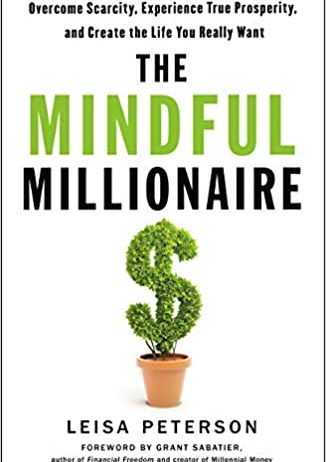
The Mindful Millionaire
₦5,000.00In the world of personal finance the biggest challenge is the sense that there’s never going to be enough. It is this mindset of scarcity, and not the amount spent on lattes, that holds people back the most from achieving their financial dreams.
Using techniques she’s developed as a financial planner and spiritual coach, Leisa Peterson guides you to dig deeper and discover the root of your financial thinking to change not just the way you save and spend, but the way you live your life.
Through powerful practices, compelling stories and extensive research, The Mindful Millionaire meets you wherever you are in your money journey by exploring:
*Where your current money habits come from and why you feel the way you do about money and success.
*How to break the cycle of fear, grief, and shame that often surrounds your money habits.
*How to write a new money story that inspires joy, satisfaction and prosperity.
*Why wealth building isn’t just about positive thinking and “manifesting” things into reality.
*How to stop financial self-sabotage and procrastination.
*Where practical financial advice misses the mark.
*The most effective tools for changing how you think and feel about money.
*What true financial independence looks like and how to discover the millionaire within.
The Man Who Knew
₦8,000.00Greenspan’s life is a quintessential American success story: raised by a single mother in the Jewish émigré community of Washington Heights, he was a math prodigy who found a niche as a stats-crunching consultant. A master at explaining the economic weather to captains of industry, he translated that skill into advising Richard Nixon in his 1968 campaign. This led to a perch on the White House Council of Economic Advisers, and then to a dazzling array of business and government roles, from which the path to the Fed was relatively clear. A fire-breathing libertarian and disciple of Ayn Rand in his youth who once called the Fed’s creation a historic mistake, Mallaby shows how Greenspan reinvented himself as a pragmatist once in power. In his analysis, and in his core mission of keeping inflation in check, he was a maestro indeed, and hailed as such. At his retirement in 2006, he was lauded as the age’s necessary man, the veritable God in the machine, the global economy’s avatar. His memoirs sold for record sums to publishers around the world.
But then came 2008. Mallaby’s story lands with both feet on the great crash which did so much to damage Alan Greenspan’s reputation. Mallaby argues that the conventional wisdom is off base: Greenspan wasn’t a naïve ideologue who believed greater regulation was unnecessary. He had pressed for greater regulation of some key areas of finance over the years, and had gotten nowhere. To argue that he didn’t know the risks in irrational markets is to miss the point. He knew more than almost anyone; the question is why he didn’t act, and whether anyone else could or would have. A close reading of Greenspan’s life provides fascinating answers to these questions, answers whose lessons we would do well to heed. Because perhaps Mallaby’s greatest lesson is that economic statesmanship, like political statesmanship, is the art of the possible. The Man Who Knew is a searching reckoning with what exactly comprised the art, and the possible, in the career of Alan Greenspan.
Reviews
There are no reviews yet.