Paperback
“Shoes” is a visual extravaganza, a celebration of women’s footwear with over 1,000 photographs of shoes in glorious color.


₦15,000.00
Paperback
“Shoes” is a visual extravaganza, a celebration of women’s footwear with over 1,000 photographs of shoes in glorious color.
How do we talk about bias? How do we address racial disparities and inequities? What role do our institutions play in creating, maintaining, and magnifying those inequities? What role do we play? With a perspective that is at once scientific, investigative, and informed by personal experience, Dr. Jennifer Eberhardt offers us the language and courage we need to face one of the biggest and most troubling issues of our time. She exposes racial bias at all levels of society—in our neighborhoods, schools, workplaces, and criminal justice system. Yet she also offers us tools to address it. Eberhardt shows us how we can be vulnerable to bias but not doomed to live under its grip. Racial bias is a problem that we all have a role to play in solving.
Required reading at Harvard Business School and Columbia Business School.
Everyone wants to be more appealing and effective, but few believe we can manage the personal magnetism of a Bill Clinton or an Oprah Winfrey. John Neffinger and Matthew Kohut trace the path to influence through a balance of strength (the root of respect) and warmth (the root of affection). Each seems simple, but only a few of us figure out the tricky task of projecting both at once.
Drawing on cutting-edge social science research as well as their own work with Fortune 500 executives, members of Congress, TED speakers, and Nobel Prize winners, Neffinger and Kohut reveal how we size each other up—and how we can learn to win the admiration, respect, and affection we desire.
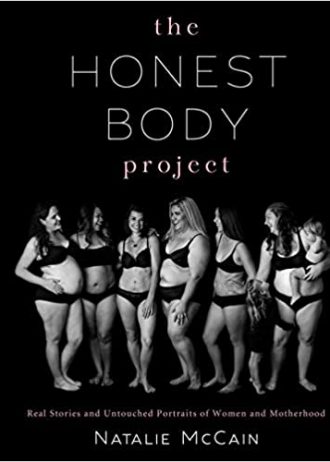
Only 4 percent of women around the world consider themselves to be beautiful, according to research done by Dove, and twenty million women suffer from significant eating disorders at some point in their life—The Honest Body Project was created to combat this tragic problem of poor body image in our society.
Founded by photographer Natalie McCain, this project is opening the eyes of women around the world and helping them to see the beauty both outside and inside of themselves. It is a collection of black and white portraits and stories, raw and untouched, from hundreds of women who have bared their hearts and souls to be a part of the project. Natalie tastefully photographs the women in their underwear, showing off their natural shapes and “imperfections.” There is no editing done after the fact, and the natural beauty of these women—from all backgrounds and walks of life—shines through the lens. Together, they create a beautiful, honest picture of both motherhood and what it means to be a woman. Topics include body image issues, breast cancer, depression (postpartum and otherwise), anxiety, bottle feeding versus breast feeding, aging, and more.
The Honest Body Project is a breath of fresh air, breaking down walls and helping women learn that they are not alone in their hardships. It wants to help women everywhere contribute to a better world, and to learn to love themselves and appreciate their bodies for what they are: perfectly imperfect. It is time to celebrate the true form of women.
The #1 New York Times bestselling The 5 Love Languages® has helped millions of couples learn the secret to building a love that lasts. Now discover how to speak your child’s love language in a way that he or she understands. Dr. Gary Chapman and Dr. Ross Campbell help you:
Discover your child’s love language
Assist your child in successful learning
Use the love languages to correct and discipline more effectively
Build a foundation of unconditional love for your child
Plus: Find dozens of tips for practical ways to speak your child’s love language.
Discover your child’s primary language—then speak it—and you will be well on your way to a stronger relationship with your flourishing child.
She couldn’t have been more than seven or eight years old. “Go ahead, ask your question,” her father urged, nudging her forward. She smiled shyly and said, “You’re my hero. Who’s yours?”
Many people—especially girls—have asked us that same question over the years. It’s one of our favorite topics.
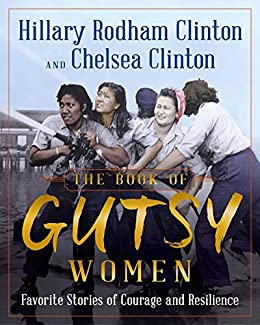
HILLARY: Growing up, I knew hardly any women who worked outside the home. So I looked to my mother, my teachers, and the pages of Life magazine for inspiration. After learning that Amelia Earhart kept a scrapbook with newspaper articles about successful women in male-dominated jobs, I started a scrapbook of my own. Long after I stopped clipping articles, I continued to seek out stories of women who seemed to be redefining what was possible.
CHELSEA: This book is the continuation of a conversation the two of us have been having since I was little. For me, too, my mom was a hero; so were my grandmothers. My early teachers were also women. But I grew up in a world very different from theirs. My pediatrician was a woman, and so was the first mayor of Little Rock who I remember from my childhood. Most of my close friends’ moms worked outside the home as nurses, doctors, teachers, professors, and in business. And women were going into space and breaking records here on Earth.
Ensuring the rights and opportunities of women and girls remains a big piece of the unfinished business of the twenty-first century. While there’s a lot of work to do, we know that throughout history and around the globe women have overcome the toughest resistance imaginable to win victories that have made progress possible for all of us. That is the achievement of each of the women in this book.
So how did they do it? The answers are as unique as the women themselves. Civil rights activist Dorothy Height, LGBTQ trailblazer Edie Windsor, and swimmer Diana Nyad kept pushing forward, no matter what. Writers like Rachel Carson and Chimamanda Ngozi Adichie named something no one had dared talk about before. Historian Mary Beard used wit to open doors that were once closed, and Wangari Maathai, who sparked a movement to plant trees, understood the power of role modeling. Harriet Tubman and Malala Yousafzai looked fear in the face and persevered. Nearly every single one of these women was fiercely optimistic—they had faith that their actions could make a difference. And they were right.
To us, they are all gutsy women—leaders with the courage to stand up to the status quo, ask hard questions, and get the job done. So in the moments when the long haul seems awfully long, we hope you will draw strength from these stories. We do. Because if history shows one thing, it’s that the world needs gutsy women.
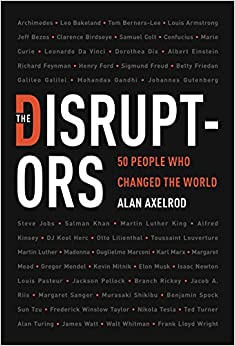
Meet 50 women and men who broke the rules . . . and changed the world.
What does Charles Darwin have in common with Johannes Gutenberg—or with Jackson Pollock, Martin Luther, Betty Friedan, Steve Jobs, and DJ Kool Herc? They were the disruptors, upending cultural, technical, spiritual, or scientific paradigms and altering the way we live forever. Bestselling author Alan Axelrod presents engaging profiles, accompanied by original line drawings, of 50 visionaries who rewrote the rules. Their innovations range from the printing press (Gutenberg) to the fight for women’s equality (Friedan), from the smartphone (Jobs) to the invention of hip-hop (Herc).
Reviews
There are no reviews yet.