Hardcover


₦6,000.00
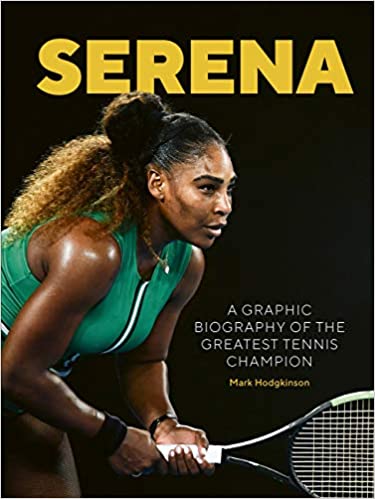
Serena
Serena Williams is the most successful tennis player – male or female – of the modern, professional era, with more Grand Slams than either Steffi Graf or Roger Federer.
Always a fierce competitor, her story – which began on the cracked public courts of Compton, L.A. – is also one of overcoming challenges through sheer determination, drive and talent.
In this innovative illustrated biography, Serena’s tennis is explored like never before: stunning graphics explore her serving patterns, signature power groundstrokes, and her movement – as well as showcasing her astonishing records, spanning over two decades in the tennis elite.
Drawing on conversations with Serena over the course of her career, and on interviews with those closest to her, this is the ultimate celebration of arguably the greatest tennis player of all time and, without question, a true global icon.
Out of stock
Related products
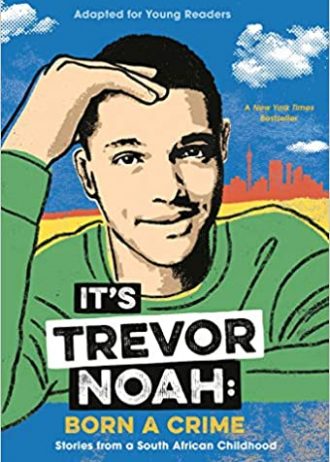
Born A Crime: Young Readers Edition
₦4,500.00Trevor Noah, host of The Daily Show on Comedy Central, shares his remarkable story of growing up in South Africa with a black South African mother and a white European father at a time when it was against the law for a mixed-race child to exist. But he did exist–and from the beginning, the often-misbehaved Trevor used his keen smarts and humor to navigate a harsh life under a racist government.
In a country where racism barred blacks from social, educational, and economic opportunity, Trevor surmounted staggering obstacles and created a promising future for himself thanks to his mom’s unwavering love and indomitable will.
This honest and poignant memoir adapted from the #1 New York Times bestseller Born a Crime: Stories from a South African Childhood will astound and inspire readers as well as offer a fascinating perspective on South Africa’s tumultuous racial history.
BORN A CRIME IS SOON TO BE A MAJOR MOTION PICTURE STARRING OSCAR WINNER LUPITA NYONG’O!
The Life and Afterlife of Harry Houdini
₦4,500.00Nearly a century after Harry Houdini died on Halloween in 1926, he feels as modern and alive as ever. The name Houdini still leaps to mind whenever we witness a daring escape. The baby who frees herself from her crib? Houdini. The dog who vanishes and reappears in the neighbor’s garden? Houdini. Every generation produces new disciples of the magician, from household names in magic like David Copperfield and David Blaine to countless other followers whose lives have been transformed by the power of Houdini.
In The Life and Afterlife of Harry Houdini, award-winning journalist and #1 New York Times bestselling author Joe Posnanski enters Houdini World to understand why the magician still enthralls people. Posnanski immerses himself in Houdini’s past and present, visiting landmarks, museums (including one owned by Copperfield), attractions, and private archives. Filled with false histories and improbable facts, Houdini’s life is an irresistible contradiction. His sweeping afterlife is no less fascinating.
In rural Pennsylvania, a thirteen-year-old girl finds the courage to leave a violent home after learning that Houdini ran away to join the circus; she eventually becomes the first female magician to saw a man in half on television. In Australia, an eight-year-old boy with a learning impediment feels worthless until he sees an old poster of Houdini advertising “Nothing on earth can hold Houdini prisoner,” and begins his path to becoming that nation’s most popular magician. In California, an actor and Vietnam War veteran finds purpose in his life by uncovering the secrets of his hero.
But the unique phenomenon of Houdini was always more than his death-defying stunts or his ability to escape handcuffs and straitjackets. It is also about the power of imagination and self-invention. His incredible transformation from Ehrich Weiss, humble Hungarian immigrant and rabbi’s son, into the self-named Harry Houdini has won him a slice of immortality. No one has withstood the test of time quite like Houdini.
Fueled by Posnanski’s personal obsession with the magician—and magic itself—The Life and Afterlife of Harry Houdini is a poignant odyssey of discovery, blending biography, memoir, and first-person reporting to trace Houdini’s metamorphosis into an iconic figure who has inspired millions. Posnanski takes us on a joyous, thrilling, and, yes, magical journey to discover why Houdini endures—and what he still has to teach the world about wonder.
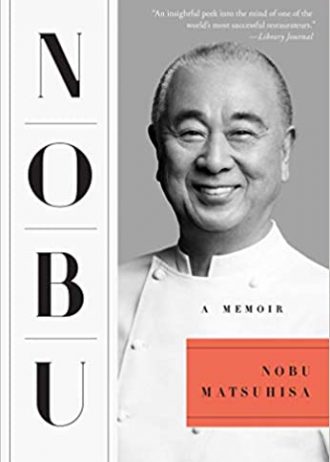
Nobu: A Memoir
₦4,500.00As one of the world’s most widely acclaimed restaurateurs, Nobu’s influence on food and hospitality can be found at the highest levels of haute-cuisine to the food trucks you frequent during the work week—this is the Nobu that the public knows.
But now, we are finally introduced to the private Nobu: the man who failed three times before starting the restaurant that would grow into an empire; the man who credits the love and support of his family as the only thing keeping him from committing suicide when his first restaurant burned down; and the man who values the busboy who makes sure each glass is crystal clear as highly as the chef who slices the fish for Omakase perfectly.
What makes Nobu special, and what made him famous, is the spirit of what exists on these pages. He has the traditional Japanese perspective that there is great pride to be found in every element of doing a job well—no matter how humble that job is. Furthermore, he shows us repeatedly that success is as much about perseverance in the face of adversity as it is about innate talent.
The Will To Win: The Story of Biodun Shobanjo (Hardback)
₦20,000.00The Will to Win: The Story of Biodun Shobanjo is fundamentally a deliberative evaluation of leadership and enterprise management. It is as much a biographical portrait of Nigeria’s ‘Czar of Advertising’ as it is a story of the major developments in the world of marketing communications in Nigeria as it involves Shobanjo. It sheds light on his persona and gives a comprehensive overview of who he is. It is a lucidly engaging work through which the reader understands his parentage, family life and most poignantly, his professional and business life. In a land with few authentic heroes or achievers, Biodun Shobanjo’s contributions, achievements and place are deservedly presented. The avalanche of information provided, the depth of treatment given to it, and the sources consulted make this work a productive venture. The reader is assured of an excursion in history, career development, ambition, decision – making, entrepreneurship, business management, office politics, people management, success and failure. It is a positive work that is faithful to its theme: the path to success is guided by the will to win.
The Man Who Knew
₦8,000.00Greenspan’s life is a quintessential American success story: raised by a single mother in the Jewish émigré community of Washington Heights, he was a math prodigy who found a niche as a stats-crunching consultant. A master at explaining the economic weather to captains of industry, he translated that skill into advising Richard Nixon in his 1968 campaign. This led to a perch on the White House Council of Economic Advisers, and then to a dazzling array of business and government roles, from which the path to the Fed was relatively clear. A fire-breathing libertarian and disciple of Ayn Rand in his youth who once called the Fed’s creation a historic mistake, Mallaby shows how Greenspan reinvented himself as a pragmatist once in power. In his analysis, and in his core mission of keeping inflation in check, he was a maestro indeed, and hailed as such. At his retirement in 2006, he was lauded as the age’s necessary man, the veritable God in the machine, the global economy’s avatar. His memoirs sold for record sums to publishers around the world.
But then came 2008. Mallaby’s story lands with both feet on the great crash which did so much to damage Alan Greenspan’s reputation. Mallaby argues that the conventional wisdom is off base: Greenspan wasn’t a naïve ideologue who believed greater regulation was unnecessary. He had pressed for greater regulation of some key areas of finance over the years, and had gotten nowhere. To argue that he didn’t know the risks in irrational markets is to miss the point. He knew more than almost anyone; the question is why he didn’t act, and whether anyone else could or would have. A close reading of Greenspan’s life provides fascinating answers to these questions, answers whose lessons we would do well to heed. Because perhaps Mallaby’s greatest lesson is that economic statesmanship, like political statesmanship, is the art of the possible. The Man Who Knew is a searching reckoning with what exactly comprised the art, and the possible, in the career of Alan Greenspan.
Reviews
There are no reviews yet.