Paperback
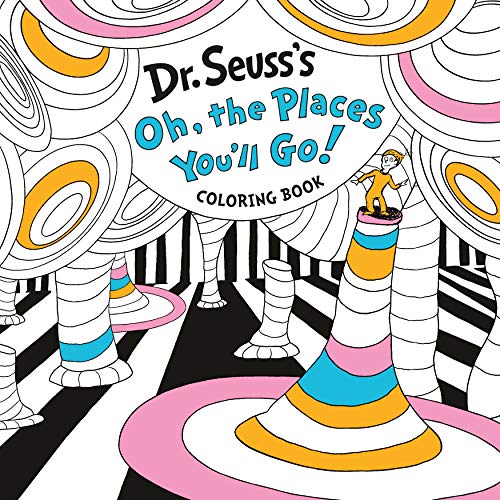
Featuring designs and patterns based on the Dr. Seuss’s classic Oh, the Places You’ll Go!, this coloring book for all ages is the perfect way to encourage graduates–or anyone making a change in life–to relax and exercise their imagination!

₦18,000.00
Paperback
Featuring designs and patterns based on the Dr. Seuss’s classic Oh, the Places You’ll Go!, this coloring book for all ages is the perfect way to encourage graduates–or anyone making a change in life–to relax and exercise their imagination!
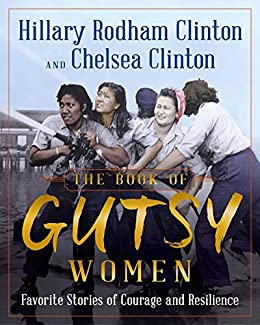
She couldn’t have been more than seven or eight years old. “Go ahead, ask your question,” her father urged, nudging her forward. She smiled shyly and said, “You’re my hero. Who’s yours?”
Many people—especially girls—have asked us that same question over the years. It’s one of our favorite topics.
HILLARY: Growing up, I knew hardly any women who worked outside the home. So I looked to my mother, my teachers, and the pages of Life magazine for inspiration. After learning that Amelia Earhart kept a scrapbook with newspaper articles about successful women in male-dominated jobs, I started a scrapbook of my own. Long after I stopped clipping articles, I continued to seek out stories of women who seemed to be redefining what was possible.
CHELSEA: This book is the continuation of a conversation the two of us have been having since I was little. For me, too, my mom was a hero; so were my grandmothers. My early teachers were also women. But I grew up in a world very different from theirs. My pediatrician was a woman, and so was the first mayor of Little Rock who I remember from my childhood. Most of my close friends’ moms worked outside the home as nurses, doctors, teachers, professors, and in business. And women were going into space and breaking records here on Earth.
Ensuring the rights and opportunities of women and girls remains a big piece of the unfinished business of the twenty-first century. While there’s a lot of work to do, we know that throughout history and around the globe women have overcome the toughest resistance imaginable to win victories that have made progress possible for all of us. That is the achievement of each of the women in this book.
So how did they do it? The answers are as unique as the women themselves. Civil rights activist Dorothy Height, LGBTQ trailblazer Edie Windsor, and swimmer Diana Nyad kept pushing forward, no matter what. Writers like Rachel Carson and Chimamanda Ngozi Adichie named something no one had dared talk about before. Historian Mary Beard used wit to open doors that were once closed, and Wangari Maathai, who sparked a movement to plant trees, understood the power of role modeling. Harriet Tubman and Malala Yousafzai looked fear in the face and persevered. Nearly every single one of these women was fiercely optimistic—they had faith that their actions could make a difference. And they were right.
To us, they are all gutsy women—leaders with the courage to stand up to the status quo, ask hard questions, and get the job done. So in the moments when the long haul seems awfully long, we hope you will draw strength from these stories. We do. Because if history shows one thing, it’s that the world needs gutsy women.
Social scientist Brené Brown, PhD, MSW, has sparked a global conversation about the experiences that bring meaning to our lives—experiences of courage, vulnerability, love, belonging, shame, and empathy. In Braving the Wilderness, Brown redefines what it means to truly belong in an age of increased polarization. With her trademark mix of research, storytelling, and honesty, Brown will again change the cultural conversation while mapping a clear path to true belonging.
Brown argues that we’re experiencing a spiritual crisis of disconnection, and introduces four practices of true belonging that challenge everything we believe about ourselves and each other. She writes, “True belonging requires us to believe in and belong to ourselves so fully that we can find sacredness both in being a part of something and in standing alone when necessary. But in a culture that’s rife with perfectionism and pleasing, and with the erosion of civility, it’s easy to stay quiet, hide in our ideological bunkers, or fit in rather than show up as our true selves and brave the wilderness of uncertainty and criticism. But true belonging is not something we negotiate or accomplish with others; it’s a daily practice that demands integrity and authenticity. It’s a personal commitment that we carry in our hearts.” Brown offers us the clarity and courage we need to find our way back to ourselves and to each other. And that path cuts right through the wilderness. Brown writes, “The wilderness is an untamed, unpredictable place of solitude and searching. It is a place as dangerous as it is breathtaking, a place as sought after as it is feared. But it turns out to be the place of true belonging, and it’s the bravest and most sacred place you will ever stand.”
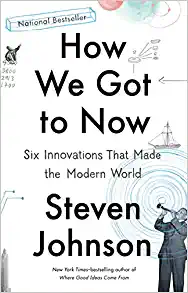
From the New York Times–bestselling author of Where Good Ideas Come From and Unexpected Life, a new look at the power and legacy of great ideas.
In this illustrated history, Steven Johnson explores the history of innovation over centuries, tracing facets of modern life (refrigeration, clocks, and eyeglass lenses, to name a few) from their creation by hobbyists, amateurs, and entrepreneurs to their unintended historical consequences. Filled with surprising stories of accidental genius and brilliant mistakes—from the French publisher who invented the phonograph before Edison but forgot to include playback, to the Hollywood movie star who helped invent the technology behind Wi-Fi and Bluetooth—How We Got to Now investigates the secret history behind the everyday objects of contemporary life.
In his trademark style, Johnson examines unexpected connections between seemingly unrelated fields: how the invention of air-conditioning enabled the largest migration of human beings in the history of the species—to cities such as Dubai or Phoenix, which would otherwise be virtually uninhabitable; how pendulum clocks helped trigger the industrial revolution; and how clean water made it possible to manufacture computer chips. Accompanied by a major six-part television series on PBS, How We Got to Now is the story of collaborative networks building the modern world, written in the provocative, informative, and engaging style that has earned Johnson fans around the globe.
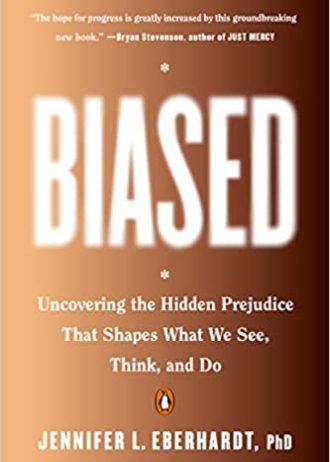
How do we talk about bias? How do we address racial disparities and inequities? What role do our institutions play in creating, maintaining, and magnifying those inequities? What role do we play? With a perspective that is at once scientific, investigative, and informed by personal experience, Dr. Jennifer Eberhardt offers us the language and courage we need to face one of the biggest and most troubling issues of our time. She exposes racial bias at all levels of society—in our neighborhoods, schools, workplaces, and criminal justice system. Yet she also offers us tools to address it. Eberhardt shows us how we can be vulnerable to bias but not doomed to live under its grip. Racial bias is a problem that we all have a role to play in solving.
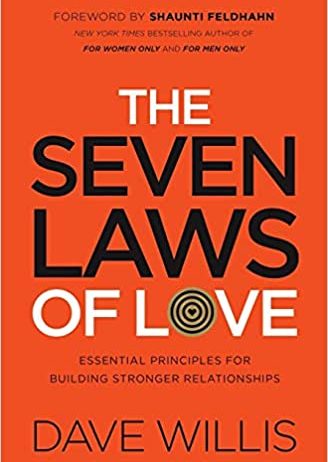
In our fast-paced, success-obsessed culture, we’re constantly tempted to chase after things that don’t matter. We’ve been conditioned to value possessions over people, status over relationships, and ourselves over God.
But the reality is this: God created love to be the centerpiece of our lives.
In The Seven Laws of Love, Dave Willis makes the case for a love revival and proves that in returning to a life of love we have no greater model than the one who is love himself.
In Dave’s humorous, touching, down-to-earth style, The Seven Laws of Love takes you on a journey through the ins and outs of everyday relationships—with your spouse, your children, your friends, and your coworkers—using practical, applicable examples and guiding principles that demonstrate what a life of love actually looks like.
There is no higher calling on earth than to love and be loved. It’s time to learn The Seven Laws of Love, and to make loving a priority over all other pursuits. Anything else isn’t really living.
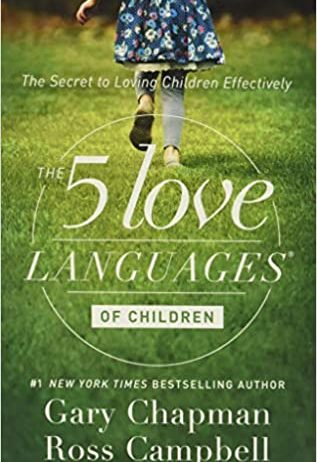
The #1 New York Times bestselling The 5 Love Languages® has helped millions of couples learn the secret to building a love that lasts. Now discover how to speak your child’s love language in a way that he or she understands. Dr. Gary Chapman and Dr. Ross Campbell help you:
Discover your child’s love language
Assist your child in successful learning
Use the love languages to correct and discipline more effectively
Build a foundation of unconditional love for your child
Plus: Find dozens of tips for practical ways to speak your child’s love language.
Discover your child’s primary language—then speak it—and you will be well on your way to a stronger relationship with your flourishing child.
Reviews
There are no reviews yet.