Hardcover
Jakande: His Story Is History
₦5,000.00This book is the story of Alhaji Chief (Dr) Lateef Kayode Jakande who was the first civilian governor of Lagos State (1979 – 1983) and the Honourable Minister of Works and Housing (1993 – 1995).


₦17,000.00
Hi! I’m Seth! I was asked to describe my book, Yearbook, for the inside flap (which is a gross phrase) and for websites and shit like that, so… here it goes!!!
Yearbook is a collection of true stories that I desperately hope are just funny at worst, and life-changingly amazing at best. (I understand that it’s likely the former, which is a fancy “book” way of saying “the first one.”)
I talk about my grandparents, doing stand-up comedy as a teenager, bar mitzvahs, and Jewish summer camp, and tell way more stories about doing drugs than my mother would like. I also talk about some of my adventures in Los Angeles, and surely say things about other famous people that will create a wildly awkward conversation for me at a party one day.
I hope you enjoy the book should you buy it, and if you don’t enjoy it, I’m sorry. If you ever see me on the street and explain the situation, I’ll do my best to make it up to you.
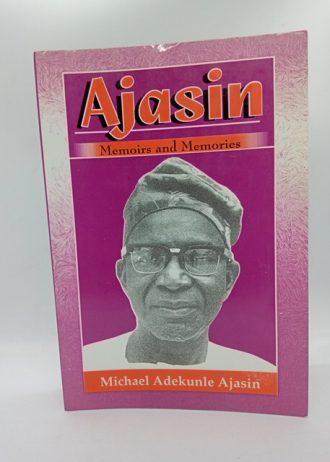
This book is the story of Alhaji Chief (Dr) Lateef Kayode Jakande who was the first civilian governor of Lagos State (1979 – 1983) and the Honourable Minister of Works and Housing (1993 – 1995).
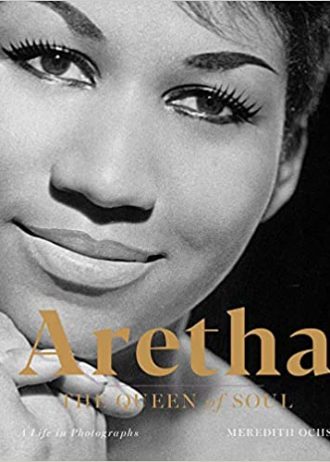
Aretha Franklin’s voice was legendary, unforgettable: deeply rooted in gospel, yet versatile enough to brilliantly interpret R&B, rock, soul, pop, and jazz standards, it fueled a six-decade career. Her vocal wallop was a mix of preaching, rebuke, and elation. From the languorous “I Never Loved a Man (the Way That I Love You),” to the funky “Chain of Fools,” to the fiercely feminist “Think,” to the definitive, demanding version of Otis Redding’s “Respect,” Franklin’s songs played out against the tumultuous sociopolitical backdrop of the late ’60s like a soundtrack meant to set things right. Her accolades were many: she received the Kennedy Center honor in 1994, won 18 Grammys®, was the first woman inducted into the Rock and Roll Hall of Fame, and performed for presidents and the Pope.
Illustrated with 85 photos, and with insightful text from noted radio personality and author Meredith Ochs, Aretha explores the diva’s life, from her formative years growing up in Detroit, to her singing and recording career from the 1950s until her untimely death in 2018, to her numerous honors, awards, and causes, including her advocacy for civil rights and the arts.
In this groundbreaking biography, T.J. Stiles tells the dramatic story of Cornelius “Commodore” Vanderbilt, the combative man and American icon who, through his genius and force of will, did more than perhaps any other individual to create modern capitalism. Meticulously researched and elegantly written, The First Tycoon describes an improbable life, from Vanderbilt’s humble birth during the presidency of George Washington to his death as one of the richest men in American history. In between we see how the Commodore helped to launch the transportation revolution, propel the Gold Rush, reshape Manhattan, and invent the modern corporation. Epic in its scope and success, the life of Vanderbilt is also the story of the rise of America itself.
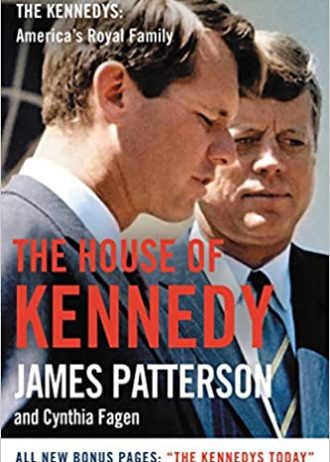
The Kennedys have always been a family of charismatic adventurers, raised to take risks and excel, living by the dual family mottos: “To whom much is given, much is expected” and “Win at all costs.” And they do—but at a price.
Across decades and generations, the Kennedys have occupied a unique place in the American imagination: charmed, cursed, at once familiar and unknowable. The House of Kennedy is a revealing, fascinating account of America’s most storied family, as told by America’s most trusted storyteller.
Greenspan’s life is a quintessential American success story: raised by a single mother in the Jewish émigré community of Washington Heights, he was a math prodigy who found a niche as a stats-crunching consultant. A master at explaining the economic weather to captains of industry, he translated that skill into advising Richard Nixon in his 1968 campaign. This led to a perch on the White House Council of Economic Advisers, and then to a dazzling array of business and government roles, from which the path to the Fed was relatively clear. A fire-breathing libertarian and disciple of Ayn Rand in his youth who once called the Fed’s creation a historic mistake, Mallaby shows how Greenspan reinvented himself as a pragmatist once in power. In his analysis, and in his core mission of keeping inflation in check, he was a maestro indeed, and hailed as such. At his retirement in 2006, he was lauded as the age’s necessary man, the veritable God in the machine, the global economy’s avatar. His memoirs sold for record sums to publishers around the world.
But then came 2008. Mallaby’s story lands with both feet on the great crash which did so much to damage Alan Greenspan’s reputation. Mallaby argues that the conventional wisdom is off base: Greenspan wasn’t a naïve ideologue who believed greater regulation was unnecessary. He had pressed for greater regulation of some key areas of finance over the years, and had gotten nowhere. To argue that he didn’t know the risks in irrational markets is to miss the point. He knew more than almost anyone; the question is why he didn’t act, and whether anyone else could or would have. A close reading of Greenspan’s life provides fascinating answers to these questions, answers whose lessons we would do well to heed. Because perhaps Mallaby’s greatest lesson is that economic statesmanship, like political statesmanship, is the art of the possible. The Man Who Knew is a searching reckoning with what exactly comprised the art, and the possible, in the career of Alan Greenspan.
As one of the world’s most widely acclaimed restaurateurs, Nobu’s influence on food and hospitality can be found at the highest levels of haute-cuisine to the food trucks you frequent during the work week—this is the Nobu that the public knows.
But now, we are finally introduced to the private Nobu: the man who failed three times before starting the restaurant that would grow into an empire; the man who credits the love and support of his family as the only thing keeping him from committing suicide when his first restaurant burned down; and the man who values the busboy who makes sure each glass is crystal clear as highly as the chef who slices the fish for Omakase perfectly.
What makes Nobu special, and what made him famous, is the spirit of what exists on these pages. He has the traditional Japanese perspective that there is great pride to be found in every element of doing a job well—no matter how humble that job is. Furthermore, he shows us repeatedly that success is as much about perseverance in the face of adversity as it is about innate talent.
Reviews
There are no reviews yet.