
Hardcover
₦12,000.00
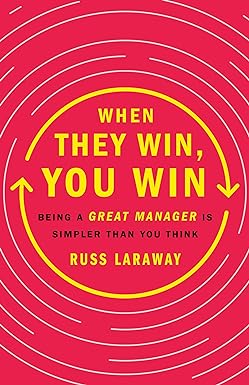
When They Win You Win
Businesses everywhere are plagued by managers who seem to think that keeping their staff miserable is the best way to deliver profits. This is a failure of leadership that also hurts the bottom line; research has shown that maintaining a happy, engaged workforce consistently drives measurably better business results across the board.
In When They Win, You Win, Russ Laraway, the Chief People Officer of Goodwater Capital, provides a simple, coherent, and complete leadership standard that teaches organizational planners and managers how to develop incredible levels of employee engagement. The book identifies three key elements: clear direction-setting, frequent coaching, and active engagement with employees on their long-term career goals.
Russ Laraway’s approach to management, developed at Google, Twitter, Qualtrics, and Goodwater, shows the way to cultivate a happy, productive, and engaged team. Happy results are sure to follow―for you, your customers, your shareholders, and your employees alike.
Related products
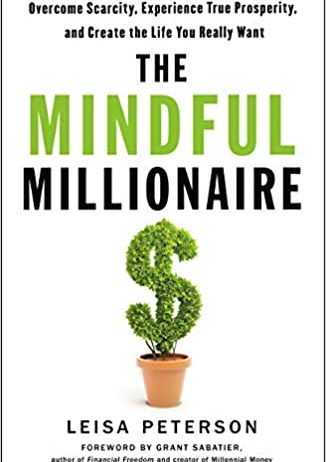
The Mindful Millionaire
₦5,000.00In the world of personal finance the biggest challenge is the sense that there’s never going to be enough. It is this mindset of scarcity, and not the amount spent on lattes, that holds people back the most from achieving their financial dreams.
Using techniques she’s developed as a financial planner and spiritual coach, Leisa Peterson guides you to dig deeper and discover the root of your financial thinking to change not just the way you save and spend, but the way you live your life.
Through powerful practices, compelling stories and extensive research, The Mindful Millionaire meets you wherever you are in your money journey by exploring:
*Where your current money habits come from and why you feel the way you do about money and success.
*How to break the cycle of fear, grief, and shame that often surrounds your money habits.
*How to write a new money story that inspires joy, satisfaction and prosperity.
*Why wealth building isn’t just about positive thinking and “manifesting” things into reality.
*How to stop financial self-sabotage and procrastination.
*Where practical financial advice misses the mark.
*The most effective tools for changing how you think and feel about money.
*What true financial independence looks like and how to discover the millionaire within.
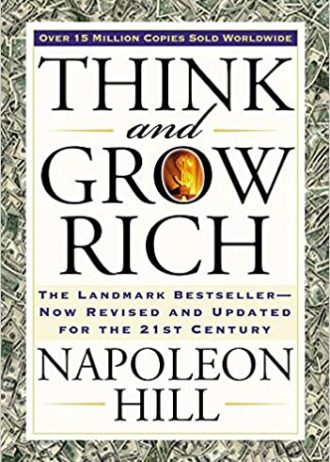
Think and Grow Rich
₦4,500.00Think and Grow Rich has been called the “Granddaddy of All Motivational Literature.” It was the first book to boldly ask, “What makes a winner?” The man who asked and listened for the answer, Napoleon Hill, is now counted in the top ranks of the world’s winners himself.
The most famous of all teachers of success spent “a fortune and the better part of a lifetime of effort” to produce the “Law of Success” philosophy that forms the basis of his books and that is so powerfully summarized in this one.
In the original Think and Grow Rich, published in 1937, Hill draws on stories of Andrew Carnegie, Thomas Edison, Henry Ford, and other millionaires of his generation to illustrate his principles. In the updated version, Arthur R. Pell, Ph.D., a nationally known author, lecturer, and consultant in human resources management and an expert in applying Hill’s thought, deftly interweaves anecdotes of how contemporary millionaires and billionaires, such as Bill Gates, Mary Kay Ash, Dave Thomas, and Sir John Templeton, achieved their wealth. Outmoded or arcane terminology and examples are faithfully refreshed to preclude any stumbling blocks to a new generation of readers.
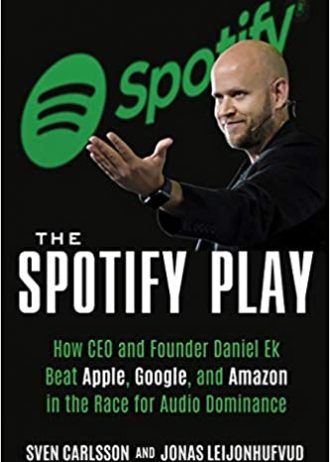
The Spotify Play: How CEO and Founder Daniel Ek Beat Apple, Google and Amazon in the Race for Audio Dominance
₦8,500.00Steve Jobs tried to stop this moment from ever happening. Google and Microsoft made bids to preempt it. The music industry blocked it time and again. Yet, on a summer’s eve in 2011, the whiz kid CEO of a Swedish start-up celebrated his company’s US launch.
In the midst of the Apple-Android tech war and a music label crusade against piracy and illegal downloading, Spotify redrew the battle lines, sent shockwaves through Silicon Valley, and got the hardline executives at Universal, Sony, and Warner to sign with its “free-mium” platform.
In The Spotify Play, now adapted into an upcoming Netflix Original series, Swedish investigative tech journalists Sven Carlsson and Jonas Leijonhufvud, who covered the company from its inception, draw upon hundreds of interviews, previously untapped sources, and in-depth reporting on figures like Mark Zuckerberg, Sean Parker, Steve Jobs, Taylor Swift, Jay-Z, Pony Ma Huateng, and Jimmy Iovine. They have captured the riveting David vs. Goliath story of a disruptive innovator who played the industry giants in a quest to revolutionize the consumption of sound, building today’s largest online source of audio, with more than 50 million songs, one million-plus podcasts, and over 300 million users.
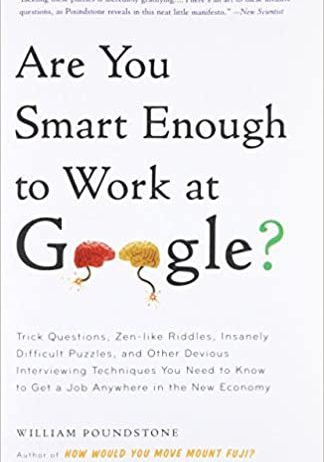
Are You Smart Enough To Work At Google?
₦5,000.00You are shrunk to the height of a nickel and thrown in a blender. The blades start moving in 60 seconds. What do you do?
If you want to work at Google, or any of America’s best companies, you need to have an answer to this and other puzzling questions. Are You Smart Enough to Work at Google? guides readers through the surprising solutions to dozens of the most challenging interview questions. The book covers the importance of creative thinking, ways to get a leg up on the competition, what your Facebook page says about you, and much more.
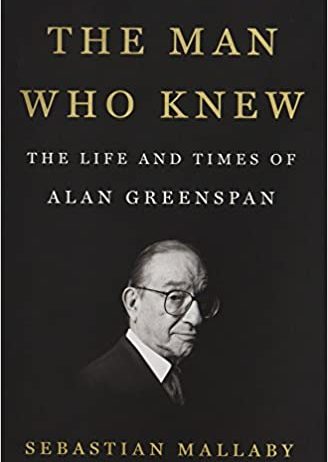
The Man Who Knew
₦8,000.00Greenspan’s life is a quintessential American success story: raised by a single mother in the Jewish émigré community of Washington Heights, he was a math prodigy who found a niche as a stats-crunching consultant. A master at explaining the economic weather to captains of industry, he translated that skill into advising Richard Nixon in his 1968 campaign. This led to a perch on the White House Council of Economic Advisers, and then to a dazzling array of business and government roles, from which the path to the Fed was relatively clear. A fire-breathing libertarian and disciple of Ayn Rand in his youth who once called the Fed’s creation a historic mistake, Mallaby shows how Greenspan reinvented himself as a pragmatist once in power. In his analysis, and in his core mission of keeping inflation in check, he was a maestro indeed, and hailed as such. At his retirement in 2006, he was lauded as the age’s necessary man, the veritable God in the machine, the global economy’s avatar. His memoirs sold for record sums to publishers around the world.
But then came 2008. Mallaby’s story lands with both feet on the great crash which did so much to damage Alan Greenspan’s reputation. Mallaby argues that the conventional wisdom is off base: Greenspan wasn’t a naïve ideologue who believed greater regulation was unnecessary. He had pressed for greater regulation of some key areas of finance over the years, and had gotten nowhere. To argue that he didn’t know the risks in irrational markets is to miss the point. He knew more than almost anyone; the question is why he didn’t act, and whether anyone else could or would have. A close reading of Greenspan’s life provides fascinating answers to these questions, answers whose lessons we would do well to heed. Because perhaps Mallaby’s greatest lesson is that economic statesmanship, like political statesmanship, is the art of the possible. The Man Who Knew is a searching reckoning with what exactly comprised the art, and the possible, in the career of Alan Greenspan.
Reviews
There are no reviews yet.