
Paperback

₦5,000.00
The Up Side of Down
Most new products fail. So do most businesses. And most of us, if we are honest, have experienced a major setback in our personal or professional lives. So what determines who will bounce back and follow up with a home run? What separates those who keep treading water from those who harness the lessons from their mistakes?
One of our most popular business bloggers, Megan McArdle takes insights from emergency room doctors, kindergarten teachers, bankruptcy judges, and venture capitalists to teach us how to reinvent ourselves in the face of failure. The Up Side of Down is a book that just might change the way you lead your life.
Related products

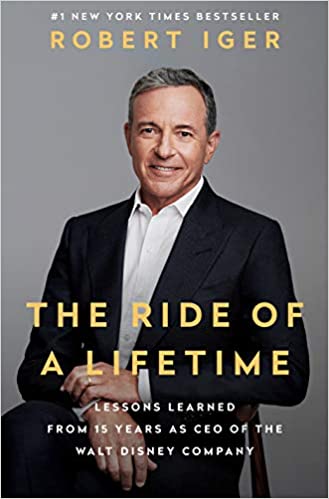
The Ride of a Lifetime
₦15,000.00Robert Iger became CEO of The Walt Disney Company in 2005, during a difficult time. Competition was more intense than ever and technology was changing faster than at any time in the company’s history. His vision came down to three clear ideas: Recommit to the concept that quality matters, embrace technology instead of fighting it, and think bigger—think global—and turn Disney into a stronger brand in international markets.
Today, Disney is the largest, most admired media company in the world, counting Pixar, Marvel, Lucasfilm, and 21st Century Fox among its properties. Its value is nearly five times what it was when Iger took over, and he is recognized as one of the most innovative and successful CEOs of our era.
In The Ride of a Lifetime, Robert Iger shares the lessons he learned while running Disney and leading its 220,000-plus employees, and he explores the principles that are necessary for true leadership, including:
• Optimism. Even in the face of difficulty, an optimistic leader will find the path toward the best possible outcome and focus on that, rather than give in to pessimism and blaming.
• Courage. Leaders have to be willing to take risks and place big bets. Fear of failure destroys creativity.
• Decisiveness. All decisions, no matter how difficult, can be made on a timely basis. Indecisiveness is both wasteful and destructive to morale.
• Fairness. Treat people decently, with empathy, and be accessible to them.
This book is about the relentless curiosity that has driven Iger for forty-five years, since the day he started as the lowliest studio grunt at ABC. It’s also about thoughtfulness and respect, and a decency-over-dollars approach that has become the bedrock of every project and partnership Iger pursues, from a deep friendship with Steve Jobs in his final years to an abiding love of the Star Wars mythology.
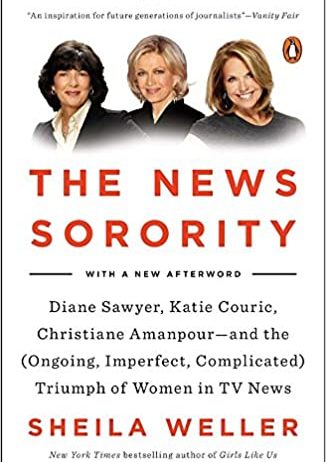
The News Sorority
₦4,000.00For decades, women battered the walls of the male fortress of television journalism. After fierce struggles, three women—Diane Sawyer, Katie Couric, and Christiane Amanpour—broke into the newsroom’s once impenetrable “boys’ club.” These women were not simply pathbreakers, but wildly gifted journalists whose unique talents enabled them to climb to the top of the corporate ladder and transform the way Americans received their news.
Drawing on exclusive interviews with their colleagues and intimates from childhood on, The News Sorority crafts a lively and exhilarating narrative that reveals the hard struggles and inner strengths that shaped these women and powered their success. Life outside the newsroom—love, loss, child rearing—would mark them all, complicating their lives even as it deepened their convictions and instincts. Life inside the newsroom would include many nervy decisions and back room power plays previously uncaptured in any media account. Taken together, Sawyer’s, Couric’s, and Amanpour’s lives as women are here revealed not as impediments but as keys to their success.
Raised in Louisville, Kentucky, Diane Sawyer was a young woman steering her own unique political course in a time of societal upheaval. Her fierce intellect, almost insuperable work ethic, and sophisticated emotional intelligence would catapult Sawyer from being the first female on-air correspondent for 60 Minutes, to presenting anchoring the network flagship ABC World News. From her first breaks as a reporter all the way through her departure in 2014, Sawyer’s charisma and drive would carry her through countless personal and professional changes.
Katie Couric, always conveniently underestimated because of her “girl-next-door” demeanor, brazened her way through a succession of regional TV news jobs until she finally hit it big. In 1991, Couric became the cohost of Today, where, over the next fifteen years, she transformed the “female” slot from secondary to preeminent while shouldering devastating personal loss. Couric’s greatest triumph—and most bedeviling challenge—was at CBS Evening News, as the first woman to solo-anchor a nighttime network news program. Her contradictions—seriously feminist while proudly sorority-girlish—made her beyond easy typecasting, and as original as she is relatable.
A glamorous, unorthodox cosmopolite—raised in pre-revolution Iran amid royalty and educated in England—Christiane Amanpour would never have been picked out of a lineup as a future war reporter, until her character flourished on catastrophic soil: her family’s exile during the Iranian Revolution. Once she knew her calling, Amanpour shrewdly made a virtue of her outsider status, joining the fledgling CNN on the bottom rung and then becoming its “face,” catalyzing its rise to global prominence. Amanpour’s fearlessness in war zones would make her the world’s witness to some of its most acute crises and television’s chief advocate for international justice.
Revealing the tremendous combination of ambition, empathy, and skill that empowered Sawyer, Couric, and Amanpour to reach stardom, The News Sorority is a detailed story of three very particular lives and a testament to the extraordinary character of women everywhere.


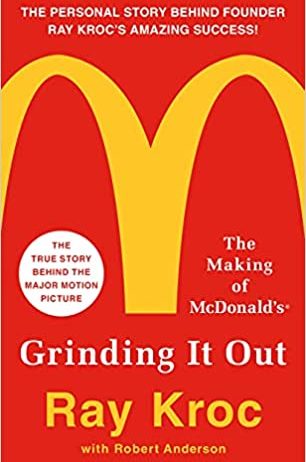
Grinding It Out: The Making of McDonald’s
₦9,000.00Few entrepreneurs can claim to have radically changed the way we live, and Ray Kroc is one of them. His revolutions in food-service automation, franchising, shared national training, and advertising have earned him a place beside the men and women who have founded not only businesses, but entire empires. But even more interesting than Ray Kroc the business man is Ray Kroc the man. Not your typical self-made tycoon, Kroc was fifty-two years old when he opened his first franchise. In Grinding It Out, you’ll meet the man behind McDonald’s, one of the largest fast-food corporations in the world with over 32,000 stores around the globe.
Irrepressible enthusiast, intuitive people person, and born storyteller, Kroc will fascinate and inspire you on every page.
Reviews
There are no reviews yet.