Paperback
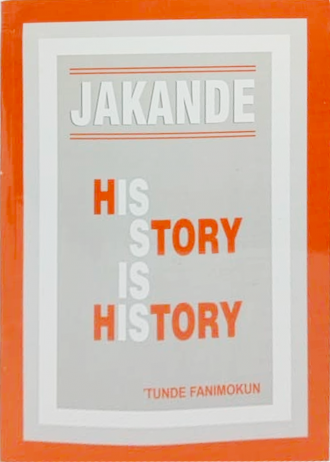
Jakande: His Story Is History
₦5,000.00This book is the story of Alhaji Chief (Dr) Lateef Kayode Jakande who was the first civilian governor of Lagos State (1979 – 1983) and the Honourable Minister of Works and Housing (1993 – 1995).


₦9,000.00
Ayesha Shamsi has a lot going on. Her dreams of being a poet have been set aside for a teaching job so she can pay off her debts to her wealthy uncle. She lives with her boisterous Muslim family and is always being reminded that her flighty younger cousin, Hafsa, is close to rejecting her one hundredth marriage proposal. Though Ayesha is lonely, she doesn’t want an arranged marriage. Then she meets Khalid, who is just as smart and handsome as he is conservative and judgmental. She is irritatingly attracted to someone who looks down on her choices and who dresses like he belongs in the seventh century.
When a surprise engagement is announced between Khalid and Hafsa, Ayesha is torn between how she feels about the straightforward Khalid and the unsettling new gossip she hears about his family. Looking into the rumors, she finds she has to deal with not only what she discovers about Khalid, but also the truth she realizes about herself.
This book is the story of Alhaji Chief (Dr) Lateef Kayode Jakande who was the first civilian governor of Lagos State (1979 – 1983) and the Honourable Minister of Works and Housing (1993 – 1995).
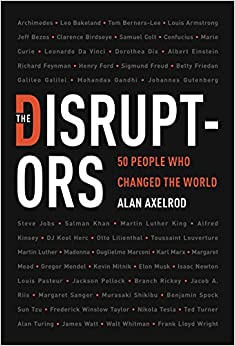
Meet 50 women and men who broke the rules . . . and changed the world.
What does Charles Darwin have in common with Johannes Gutenberg—or with Jackson Pollock, Martin Luther, Betty Friedan, Steve Jobs, and DJ Kool Herc? They were the disruptors, upending cultural, technical, spiritual, or scientific paradigms and altering the way we live forever. Bestselling author Alan Axelrod presents engaging profiles, accompanied by original line drawings, of 50 visionaries who rewrote the rules. Their innovations range from the printing press (Gutenberg) to the fight for women’s equality (Friedan), from the smartphone (Jobs) to the invention of hip-hop (Herc).
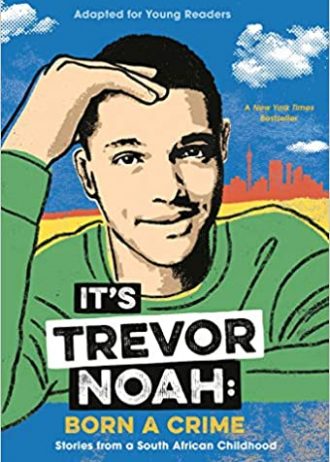
Trevor Noah, host of The Daily Show on Comedy Central, shares his remarkable story of growing up in South Africa with a black South African mother and a white European father at a time when it was against the law for a mixed-race child to exist. But he did exist–and from the beginning, the often-misbehaved Trevor used his keen smarts and humor to navigate a harsh life under a racist government.
In a country where racism barred blacks from social, educational, and economic opportunity, Trevor surmounted staggering obstacles and created a promising future for himself thanks to his mom’s unwavering love and indomitable will.
This honest and poignant memoir adapted from the #1 New York Times bestseller Born a Crime: Stories from a South African Childhood will astound and inspire readers as well as offer a fascinating perspective on South Africa’s tumultuous racial history.
BORN A CRIME IS SOON TO BE A MAJOR MOTION PICTURE STARRING OSCAR WINNER LUPITA NYONG’O!
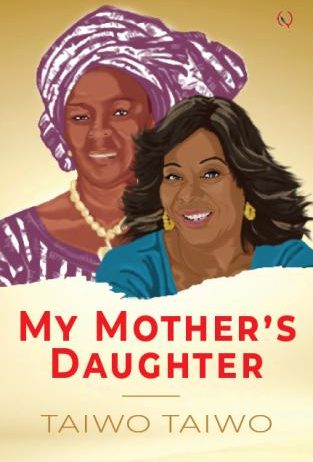
Chief Mrs Taiwo Taiwo, an unstoppable force, passionate and driven to deliver change, and to help others in Nigeria, especially in her hometown of Lagos. She brings her energy, humour, and disarming honesty to every page—from her encounters with brutal racism as a child in the UK, her fresh perspective on 1960s Europe as a teenager, to her cultural disconnect on returning to Lagos in the early 1970s.
With clear-sightedness and determination, she takes on daunting business battles and philanthropic challenges in education, urban renewal, and grief counselling. Taiwo’s life has privilege but also tragedy. Her story shows us a determined Nigerian who has taken life full-on and delivers everything she can to make things better for people who pass her way. Despite numerous setbacks, she remains optimistic and passionate for change.
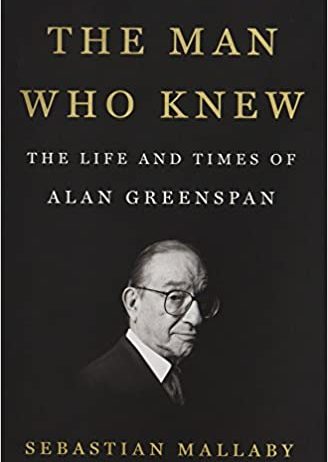
Greenspan’s life is a quintessential American success story: raised by a single mother in the Jewish émigré community of Washington Heights, he was a math prodigy who found a niche as a stats-crunching consultant. A master at explaining the economic weather to captains of industry, he translated that skill into advising Richard Nixon in his 1968 campaign. This led to a perch on the White House Council of Economic Advisers, and then to a dazzling array of business and government roles, from which the path to the Fed was relatively clear. A fire-breathing libertarian and disciple of Ayn Rand in his youth who once called the Fed’s creation a historic mistake, Mallaby shows how Greenspan reinvented himself as a pragmatist once in power. In his analysis, and in his core mission of keeping inflation in check, he was a maestro indeed, and hailed as such. At his retirement in 2006, he was lauded as the age’s necessary man, the veritable God in the machine, the global economy’s avatar. His memoirs sold for record sums to publishers around the world.
But then came 2008. Mallaby’s story lands with both feet on the great crash which did so much to damage Alan Greenspan’s reputation. Mallaby argues that the conventional wisdom is off base: Greenspan wasn’t a naïve ideologue who believed greater regulation was unnecessary. He had pressed for greater regulation of some key areas of finance over the years, and had gotten nowhere. To argue that he didn’t know the risks in irrational markets is to miss the point. He knew more than almost anyone; the question is why he didn’t act, and whether anyone else could or would have. A close reading of Greenspan’s life provides fascinating answers to these questions, answers whose lessons we would do well to heed. Because perhaps Mallaby’s greatest lesson is that economic statesmanship, like political statesmanship, is the art of the possible. The Man Who Knew is a searching reckoning with what exactly comprised the art, and the possible, in the career of Alan Greenspan.
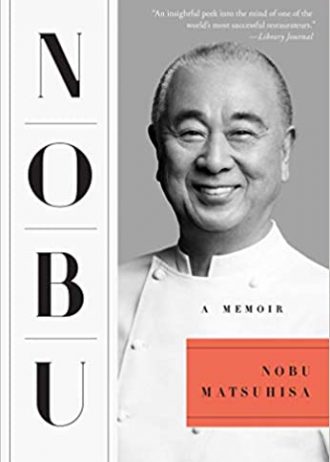
As one of the world’s most widely acclaimed restaurateurs, Nobu’s influence on food and hospitality can be found at the highest levels of haute-cuisine to the food trucks you frequent during the work week—this is the Nobu that the public knows.
But now, we are finally introduced to the private Nobu: the man who failed three times before starting the restaurant that would grow into an empire; the man who credits the love and support of his family as the only thing keeping him from committing suicide when his first restaurant burned down; and the man who values the busboy who makes sure each glass is crystal clear as highly as the chef who slices the fish for Omakase perfectly.
What makes Nobu special, and what made him famous, is the spirit of what exists on these pages. He has the traditional Japanese perspective that there is great pride to be found in every element of doing a job well—no matter how humble that job is. Furthermore, he shows us repeatedly that success is as much about perseverance in the face of adversity as it is about innate talent.
Reviews
There are no reviews yet.