
Hardcover

₦14,000.00
Reinventing The Sheikhdom
Though the Arab Spring has reverberated through the Middle East, largely leaving a path of destruction, the relative calm in the United Arab Emirates has offered a regional roadmap for stability. Domestic changes since 2000 have significantly altered the country’s dynamics, firmly cementing power within the Emirates’ evolution has largely been accredited to Abu Dhabi’s crown prince, Mohammed bin Zayed.
His reign has been characterised by the rise of the security apparatus and a micromanaged approach to governance. Mohammed bin Zayed’s strategy of fortification has focused on pre-empting threats from the UAE’s native population, rather than from expatriates or foreign actors. As a result, he has consolidated power, distributing its administration among his tribal and kinship allies. In essence, Mohammed bin Zayed has driven modernisation in order to strengthen his grasp on power.
This book explores Mohammed bin Zayed’s regime security strategy, illustrating the network of alliances that seek to support his reign and that of his family. In an ever-turbulent region, the UAE remains critical to understanding the evolution of Middle Eastern authoritarian control.
Related products
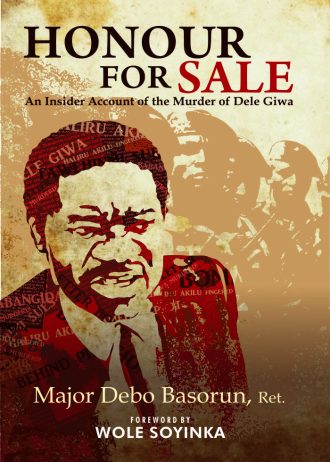
Honour For Sale
₦5,000.00The murder of Dele Giwa remains on the infamous list of Nigeria’s unsolved murders. More than twenty-five years after Nigeria’s first ever parcel bomb ended the life of one of the country’s most colourful investigative journalists, the case has refused to be laid to rest. In Honour for Sale, Debo Basorun, with the insight of his proximity to some of the dramatis personae, examines the lurid circumstances of this controversial murder. He unearths a web of ‘intrigue and treachery, clannishness and base humanity’ of some of the men in uniform who, only recently, ran the affairs of the country.
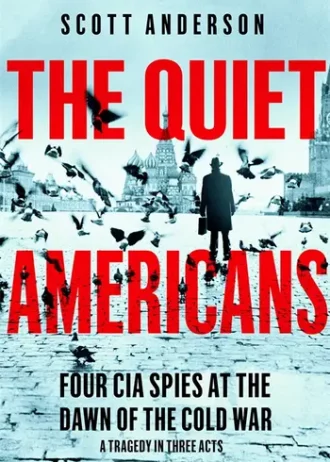
The Quiet Americans
₦6,500.00At the end of World War II, the United States dominated the world militarily, economically, and in moral standing – seen as the victor over tyranny and a champion of freedom. But it was clear – to some – that the Soviet Union was already executing a plan to expand and foment revolution around the world. The American government’s strategy in response relied on the secret efforts of a newly-formed CIA.
The Quiet Americans chronicles the exploits of four spies – Michael Burke, a charming former football star fallen on hard times, Frank Wisner, the scion of a wealthy Southern family, Peter Sichel, a sophisticated German Jew who escaped the Nazis, and Edward Lansdale, a brilliant ad executive. The four ran covert operations across the globe, trying to outwit the ruthless KGB in Berlin, parachuting commandos into Eastern Europe, plotting coups, and directing wars against Communist insurgents in Asia.
But time and again their efforts went awry, thwarted by a combination of stupidity and ideological rigidity at the highest levels of the government – and more profoundly, the decision to abandon American ideals. By the mid-1950s, the Soviet Union had a stranglehold on Eastern Europe, the US had begun its disastrous intervention in Vietnam, and America, the beacon of democracy, was overthrowing democratically elected governments and earning the hatred of much of the world. All of this culminated in an act of betrayal and cowardice that would lock the Cold War into place for decades to come.
Anderson brings to the telling of this story all the narrative brio, deep research, sceptical eye, and lively prose that made Lawrence in Arabia a major international bestseller. The intertwined lives of these men began in a common purpose of defending freedom, but the ravages of the Cold War led them to different fates. Two would quit the CIA in despair, stricken by the moral compromises they had to make; one became the archetype of the duplicitous and destructive American spy; and one would be so heartbroken he would take his own life.
Scott Anderson’s The Quiet Americans is the story of these four men. It is also the story of how the United States, at the very pinnacle of its power, managed to permanently damage its moral standing in the world.
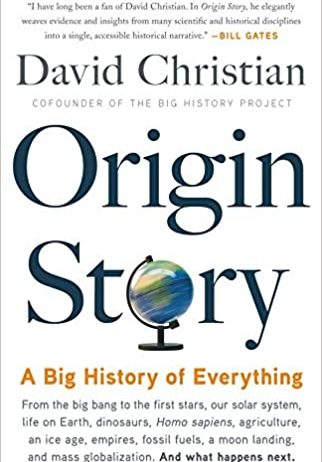
Origin Story
₦5,000.00Most historians study the smallest slivers of time, emphasizing specific dates, individuals, and documents. But what would it look like to study the whole of history, from the big bang through the present day — and even into the remote future? How would looking at the full span of time change the way we perceive the universe, the earth, and our very existence?
These were the questions David Christian set out to answer when he created the field of “Big History,” the most exciting new approach to understanding where we have been, where we are, and where we are going. In Origin Story, Christian takes readers on a wild ride through the entire 13.8 billion years we’ve come to know as “history.” By focusing on defining events (thresholds), major trends, and profound questions about our origins, Christian exposes the hidden threads that tie everything together — from the creation of the planet to the advent of agriculture, nuclear war, and beyond.
With stunning insights into the origin of the universe, the beginning of life, the emergence of humans, and what the future might bring, Origin Story boldly reframes our place in the cosmos.

What Britain Did To Nigeria
₦9,000.00Most accounts of Nigeria’s colonisation were written by British officials, presenting it as a noble civilising mission to rid Africans of barbaric superstition and corrupt tribal leadership. Thanks to this skewed writing of history, many Nigerians today still have Empire nostalgia and view the
colonial period through rose-tinted glasses.
Max Siollun offers a bold rethink: an unromanticised history, arguing compellingly that colonialism had few benevolent intentions, but many unjust outcomes. It may have ended slavery and human sacrifice, but it was accompanied by extreme violence; ethnic and religious identity were cynically exploited to maintain control, while the forceful remoulding of longstanding legal and social practices permanently altered the culture and internal politics of indigenous communities. The aftershocks of this colonial meddling are still being felt decades after independence. Popular narratives often suggest that the economic and political turmoil are homegrown, but the reality is that Britain created many of Nigeria’s crises, and has left them behind for Nigerians to resolve.
This is a definitive, head-on confrontation with Nigeria’s experience under British rule, showing how it forever changed the country–perhaps cataclysmically.
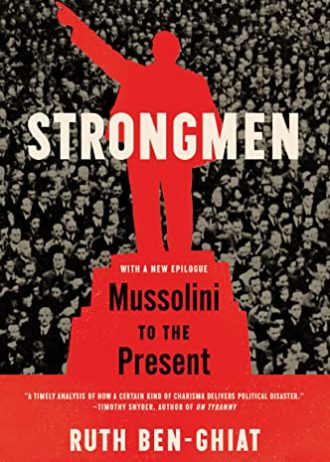
Strongmen
₦8,500.00Ruth Ben-Ghiat is the expert on the “strongman” playbook employed by authoritarian demagogues from Mussolini to Putin—enabling her to predict with uncanny accuracy the recent experience in America and Europe. In Strongmen, she lays bare the blueprint these leaders have followed over the past 100 years, and empowers us to recognize, resist, and prevent their disastrous rule in the future.
For ours is the age of authoritarian rulers: self-proclaimed saviors of the nation who evade accountability while robbing their people of truth, treasure, and the protections of democracy. They promise law and order, then legitimize lawbreaking by financial, sexual, and other predators.
They use masculinity as a symbol of strength and a political weapon. Taking what you want, and getting away with it, becomes proof of male authority. They use propaganda, corruption, and violence to stay in power.
Vladimir Putin and Mobutu Sese Seko’s kleptocracies, Augusto Pinochet’s torture sites, Benito Mussolini and Muammar Gaddafi’s systems of sexual exploitation, and Silvio Berlusconi and Donald Trump’s relentless misinformation: all show how authoritarian rule, far from ensuring stability, is marked by destructive chaos.
No other type of leader is so transparent about prioritizing self-interest over the public good. As one country after another has discovered, the strongman is at his worst when true guidance is most needed by his country.
Recounting the acts of solidarity and dignity that have undone strongmen over the past 100 years, Ben-Ghiat makes vividly clear that only by seeing the strongman for what he is—and by valuing one another as he is unable to do—can we stop him, now and in the future.
Reviews
There are no reviews yet.