
Paperback

₦9,500.00
Jerks At Work
A practical and hilarious guide to getting difficult people off your back, for anyone pulling their hair out over an irritating colleague who’s not technically breaking any rules
From open floor plans and Zoom calls to Slack channels, the workplace has changed a lot over the years. But there’s one thing that never changes: you’ll always encounter jerks. Jerks at Work is the definitive guide to dealing with—and ultimately breaking free from—the overbearing bosses, irritating coworkers, and all-around difficult people who make work and life miserable.
Social psychologist Tessa West has spent years leveraging science to help people solve interpersonal conflicts in the workplace. What she discovered is that most of our go-to tactics don’t work because they fail to address the specific motivations that drive bad behavior. In this book, she takes you on a rollicking deep dive of the seven jerks you’re most likely to encounter at the office, drawing on decades of original research to expose their inner workings and weak points—and ultimately deliver an effective game plan for stopping each type before they take you down with them.
Related products


The Law and Practice of Real Estate Investment Trusts – Hardcover
₦8,000.00In ten expertly written chapters, the author dissects the core elements and defining characteristics of REITs and provides analysis of the origin, growth, global spread, legal structure and governance of them.

An Ugly Truth: Inside Facebook’s Battle for Domination
₦15,000.00Award-winning New York Times reporters Sheera Frenkel and Cecilia Kang unveil the tech story of our times in a riveting, behind-the-scenes exposé that offers the definitive account of Facebook’s fall from grace.
Once one of Silicon Valley’s greatest success stories, Facebook has been under constant fire for the past five years, roiled by controversies and crises. It turns out that while the tech giant was connecting the world, they were also mishandling users’ data, spreading fake news, and amplifying dangerous, polarizing hate speech.
The company, many said, had simply lost its way. But the truth is far more complex. Leadership decisions enabled, and then attempted to deflect attention from, the crises. Time after time, Facebook’s engineers were instructed to create tools that encouraged people to spend as much time on the platform as possible, even as those same tools boosted inflammatory rhetoric, conspiracy theories, and partisan filter bubbles. And while consumers and lawmakers focused their outrage on privacy breaches and misinformation, Facebook solidified its role as the world’s most voracious data-mining machine, posting record profits, and shoring up its dominance via aggressive lobbying efforts.
Drawing on their unrivaled sources, Sheera Frenkel and Cecilia Kang take readers inside the complex court politics, alliances and rivalries within the company to shine a light on the fatal cracks in the architecture of the tech behemoth. Their explosive, exclusive reporting led them to a shocking conclusion: The missteps of the last five years were not an anomaly but an inevitability—this is how Facebook was built to perform. In a period of great upheaval, growth has remained the one constant under the leadership of Mark Zuckerberg and Sheryl Sandberg. Both have been held up as archetypes of uniquely 21st century executives—he the tech “boy genius” turned billionaire, she the ultimate woman in business, an inspiration to millions through her books and speeches. But sealed off in tight circles of advisers and hobbled by their own ambition and hubris, each has stood by as their technology is coopted by hate-mongers, criminals and corrupt political regimes across the globe, with devastating consequences. In An Ugly Truth, they are at last held accountable.
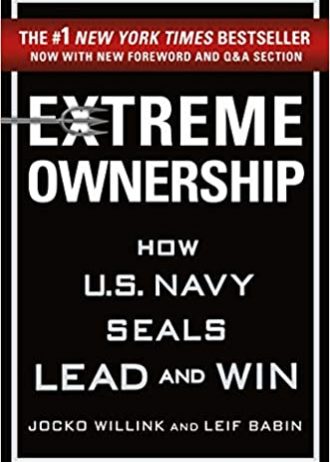
Extreme Ownership
₦7,500.00An updated edition of the blockbuster bestselling leadership book that took America and the world by storm, two U.S. Navy SEAL officers who led the most highly decorated special operations unit of the Iraq War demonstrate how to apply powerful leadership principles from the battlefield to business and life. Now with an excerpt from the authors’ new book, THE DICHOTOMY OF LEADERSHIP.
Combat, the most intense and dynamic environment imaginable, teaches the toughest leadership lessons, with absolutely everything at stake. Jocko Willink and Leif Babin learned this reality first-hand on the most violent and dangerous battlefield in Iraq. As leaders of SEAL Team Three’s Task Unit Bruiser, their mission was one many thought impossible: help U.S. forces secure Ramadi, a violent, insurgent-held city deemed “all but lost.” In gripping, firsthand accounts of heroism, tragic loss, and hard-won victories, they learned that leadership―at every level―is the most important factor in whether a team succeeds or fails.
Willink and Babin returned home from deployment and instituted SEAL leadership training to pass on their harsh lessons learned in combat to help forge the next generation of SEAL leaders. After leaving the SEAL Teams, they launched a company, Echelon Front, to teach those same leadership principles to leaders in businesses, companies, and organizations across the civilian sector. Since that time, they have trained countless leaders and worked with hundreds of companies in virtually every industry across the U.S. and internationally, teaching them how to develop their own high-performance teams and most effectively lead those teams to dominate their battlefields.
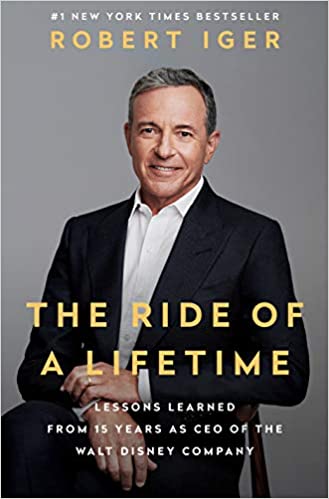
The Ride of a Lifetime
₦15,000.00Robert Iger became CEO of The Walt Disney Company in 2005, during a difficult time. Competition was more intense than ever and technology was changing faster than at any time in the company’s history. His vision came down to three clear ideas: Recommit to the concept that quality matters, embrace technology instead of fighting it, and think bigger—think global—and turn Disney into a stronger brand in international markets.
Today, Disney is the largest, most admired media company in the world, counting Pixar, Marvel, Lucasfilm, and 21st Century Fox among its properties. Its value is nearly five times what it was when Iger took over, and he is recognized as one of the most innovative and successful CEOs of our era.
In The Ride of a Lifetime, Robert Iger shares the lessons he learned while running Disney and leading its 220,000-plus employees, and he explores the principles that are necessary for true leadership, including:
• Optimism. Even in the face of difficulty, an optimistic leader will find the path toward the best possible outcome and focus on that, rather than give in to pessimism and blaming.
• Courage. Leaders have to be willing to take risks and place big bets. Fear of failure destroys creativity.
• Decisiveness. All decisions, no matter how difficult, can be made on a timely basis. Indecisiveness is both wasteful and destructive to morale.
• Fairness. Treat people decently, with empathy, and be accessible to them.
This book is about the relentless curiosity that has driven Iger for forty-five years, since the day he started as the lowliest studio grunt at ABC. It’s also about thoughtfulness and respect, and a decency-over-dollars approach that has become the bedrock of every project and partnership Iger pursues, from a deep friendship with Steve Jobs in his final years to an abiding love of the Star Wars mythology.
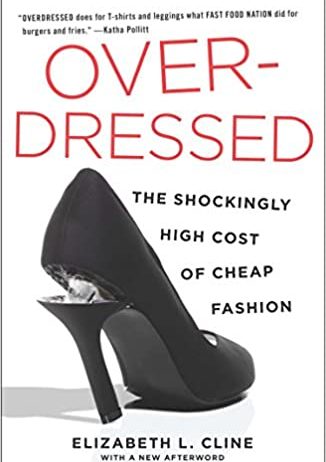
Over-Dressed: The Shockingly High Cost of Cheap Fashion
₦4,000.00Cheap fashion has fundamentally changed the way most Americans dress. Stores ranging from discounters like Target to traditional chains like JCPenny now offer the newest trends at unprecedentedly low prices. And we have little reason to keep wearing and repairing the clothes we already own when styles change so fast and it’s cheaper to just buy more.
Cline sets out to uncover the true nature of the cheap fashion juggernaut. What are we doing with all these cheap clothes? And more important, what are they doing to us, our society, our environment, and our economic well-being?
Reviews
There are no reviews yet.