
Hardcover
₦28,000.00
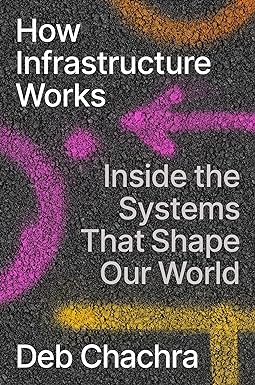
How Infrastructure Works
A new way of seeing the essential systems hidden inside our walls, under our streets, and all around us
Infrastructure is a marvel, meeting our basic needs and enabling lives of astounding ease and productivity that would have been unimaginable just a century ago. It is the physical manifestation of our social contract—of our ability to work collectively for the public good—and it consists of the most complex and vast technological systems ever created by humans.
A soaring bridge is an obvious infrastructural feat, but so are the mostly hidden reservoirs, transformers, sewers, cables, and pipes that deliver water, energy, and information to wherever we need it. When these systems work well, they hide in plain sight. Engineer and materials scientist Deb Chachra takes readers on a fascinating tour of these essential utilities, revealing how they work, what it takes to keep them running, just how much we rely on them—but also whom they work well for, and who pays the costs.
Across the U.S. and elsewhere, these systems are suffering from systemic neglect and the effects of climate change, becoming unavoidably visible when they break down. Communities that are already marginalized often bear the brunt of these failures. But Chachra maps out a path for transforming and rebuilding our shared infrastructure to be not just functional but also equitable, resilient, and sustainable. The cost of not being able to rely on these systems is unthinkably high. We need to learn how to see them—and fix them, together—before it’s too late.
Out of stock
Related products
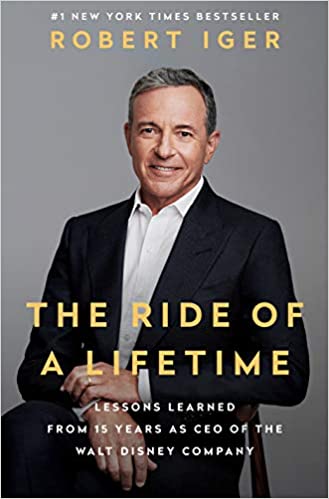
The Ride of a Lifetime
₦15,000.00Robert Iger became CEO of The Walt Disney Company in 2005, during a difficult time. Competition was more intense than ever and technology was changing faster than at any time in the company’s history. His vision came down to three clear ideas: Recommit to the concept that quality matters, embrace technology instead of fighting it, and think bigger—think global—and turn Disney into a stronger brand in international markets.
Today, Disney is the largest, most admired media company in the world, counting Pixar, Marvel, Lucasfilm, and 21st Century Fox among its properties. Its value is nearly five times what it was when Iger took over, and he is recognized as one of the most innovative and successful CEOs of our era.
In The Ride of a Lifetime, Robert Iger shares the lessons he learned while running Disney and leading its 220,000-plus employees, and he explores the principles that are necessary for true leadership, including:
• Optimism. Even in the face of difficulty, an optimistic leader will find the path toward the best possible outcome and focus on that, rather than give in to pessimism and blaming.
• Courage. Leaders have to be willing to take risks and place big bets. Fear of failure destroys creativity.
• Decisiveness. All decisions, no matter how difficult, can be made on a timely basis. Indecisiveness is both wasteful and destructive to morale.
• Fairness. Treat people decently, with empathy, and be accessible to them.
This book is about the relentless curiosity that has driven Iger for forty-five years, since the day he started as the lowliest studio grunt at ABC. It’s also about thoughtfulness and respect, and a decency-over-dollars approach that has become the bedrock of every project and partnership Iger pursues, from a deep friendship with Steve Jobs in his final years to an abiding love of the Star Wars mythology.
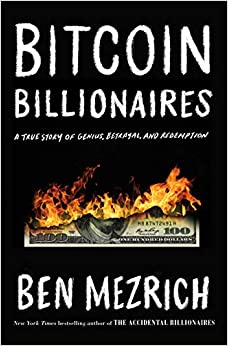
Bitcoin Billionaires
₦4,500.00Ben Mezrich’s 2009 bestseller The Accidental Billionaires is the definitive account of Facebook’s founding and the basis for the Academy Award–winning film The Social Network. Two of the story’s iconic characters are Harvard students Tyler and Cameron Winklevoss: identical twins, Olympic rowers, and foils to Mark Zuckerberg. Bitcoin Billionaires is the story of the brothers’ redemption and revenge in the wake of their epic legal battle with Facebook.
Planning to start careers as venture capitalists, the brothers quickly discover that no one will take their money after their fight with Zuckerberg. While nursing their wounds in Ibiza, they accidentally run into an eccentric character who tells them about a brand-new idea: cryptocurrency. Immersing themselves in what is then an obscure and sometimes sinister world, they begin to realize “crypto” is, in their own words, “either the next big thing or total bulls–t.” There’s nothing left to do but make a bet.
From the Silk Road to the halls of the Securities and Exchange Commission, Bitcoin Billionaires will take us on a wild and surprising ride while illuminating a tantalizing economic future. On November 26, 2017, the Winklevoss brothers became the first bitcoin billionaires. Here’s the story of how they got there―as only Ben Mezrich could tell it.
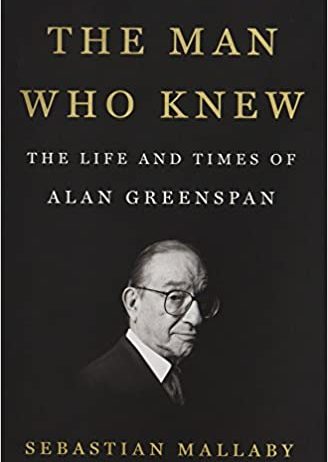
The Man Who Knew
₦8,000.00Greenspan’s life is a quintessential American success story: raised by a single mother in the Jewish émigré community of Washington Heights, he was a math prodigy who found a niche as a stats-crunching consultant. A master at explaining the economic weather to captains of industry, he translated that skill into advising Richard Nixon in his 1968 campaign. This led to a perch on the White House Council of Economic Advisers, and then to a dazzling array of business and government roles, from which the path to the Fed was relatively clear. A fire-breathing libertarian and disciple of Ayn Rand in his youth who once called the Fed’s creation a historic mistake, Mallaby shows how Greenspan reinvented himself as a pragmatist once in power. In his analysis, and in his core mission of keeping inflation in check, he was a maestro indeed, and hailed as such. At his retirement in 2006, he was lauded as the age’s necessary man, the veritable God in the machine, the global economy’s avatar. His memoirs sold for record sums to publishers around the world.
But then came 2008. Mallaby’s story lands with both feet on the great crash which did so much to damage Alan Greenspan’s reputation. Mallaby argues that the conventional wisdom is off base: Greenspan wasn’t a naïve ideologue who believed greater regulation was unnecessary. He had pressed for greater regulation of some key areas of finance over the years, and had gotten nowhere. To argue that he didn’t know the risks in irrational markets is to miss the point. He knew more than almost anyone; the question is why he didn’t act, and whether anyone else could or would have. A close reading of Greenspan’s life provides fascinating answers to these questions, answers whose lessons we would do well to heed. Because perhaps Mallaby’s greatest lesson is that economic statesmanship, like political statesmanship, is the art of the possible. The Man Who Knew is a searching reckoning with what exactly comprised the art, and the possible, in the career of Alan Greenspan.
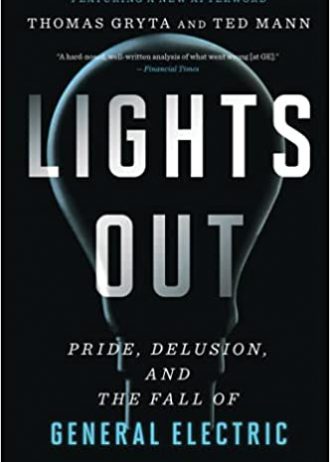
Lights Out
₦10,000.00This is the definitive history of General Electric’s epic decline, as told by the two Wall Street Journal reporters who covered its fall.
Since its founding in 1892, GE has been more than just a corporation. For generations, it was job security, a solidly safe investment, and an elite business education for top managers.
GE electrified America, powering everything from lightbulbs to turbines, and became fully integrated into the American societal mindset as few companies ever had. And after two decades of leadership under legendary CEO Jack Welch, GE entered the twenty-first century as America’s most valuable corporation. Yet, fewer than two decades later, the GE of old was gone.
Lights Out examines how Welch’s handpicked successor, Jeff Immelt, tried to fix flaws in Welch’s profit machine, while stumbling headlong into mistakes of his own. In the end, GE’s traditional win-at-all-costs driven culture seemed to lose its direction, which ultimately caused the company’s decline on both a personal and organizational scale. Lights Out details how one of America’s all-time great companies has been reduced to a cautionary tale for our times.
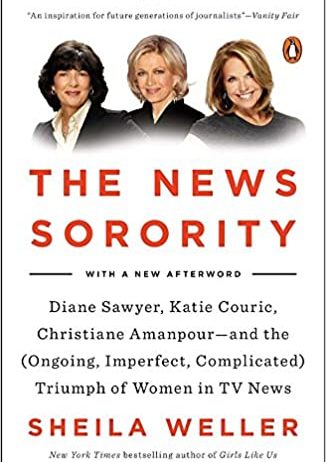
The News Sorority
₦4,000.00For decades, women battered the walls of the male fortress of television journalism. After fierce struggles, three women—Diane Sawyer, Katie Couric, and Christiane Amanpour—broke into the newsroom’s once impenetrable “boys’ club.” These women were not simply pathbreakers, but wildly gifted journalists whose unique talents enabled them to climb to the top of the corporate ladder and transform the way Americans received their news.
Drawing on exclusive interviews with their colleagues and intimates from childhood on, The News Sorority crafts a lively and exhilarating narrative that reveals the hard struggles and inner strengths that shaped these women and powered their success. Life outside the newsroom—love, loss, child rearing—would mark them all, complicating their lives even as it deepened their convictions and instincts. Life inside the newsroom would include many nervy decisions and back room power plays previously uncaptured in any media account. Taken together, Sawyer’s, Couric’s, and Amanpour’s lives as women are here revealed not as impediments but as keys to their success.
Raised in Louisville, Kentucky, Diane Sawyer was a young woman steering her own unique political course in a time of societal upheaval. Her fierce intellect, almost insuperable work ethic, and sophisticated emotional intelligence would catapult Sawyer from being the first female on-air correspondent for 60 Minutes, to presenting anchoring the network flagship ABC World News. From her first breaks as a reporter all the way through her departure in 2014, Sawyer’s charisma and drive would carry her through countless personal and professional changes.
Katie Couric, always conveniently underestimated because of her “girl-next-door” demeanor, brazened her way through a succession of regional TV news jobs until she finally hit it big. In 1991, Couric became the cohost of Today, where, over the next fifteen years, she transformed the “female” slot from secondary to preeminent while shouldering devastating personal loss. Couric’s greatest triumph—and most bedeviling challenge—was at CBS Evening News, as the first woman to solo-anchor a nighttime network news program. Her contradictions—seriously feminist while proudly sorority-girlish—made her beyond easy typecasting, and as original as she is relatable.
A glamorous, unorthodox cosmopolite—raised in pre-revolution Iran amid royalty and educated in England—Christiane Amanpour would never have been picked out of a lineup as a future war reporter, until her character flourished on catastrophic soil: her family’s exile during the Iranian Revolution. Once she knew her calling, Amanpour shrewdly made a virtue of her outsider status, joining the fledgling CNN on the bottom rung and then becoming its “face,” catalyzing its rise to global prominence. Amanpour’s fearlessness in war zones would make her the world’s witness to some of its most acute crises and television’s chief advocate for international justice.
Revealing the tremendous combination of ambition, empathy, and skill that empowered Sawyer, Couric, and Amanpour to reach stardom, The News Sorority is a detailed story of three very particular lives and a testament to the extraordinary character of women everywhere.
Reviews
There are no reviews yet.