Paperback
Jakande: His Story Is History
₦5,000.00This book is the story of Alhaji Chief (Dr) Lateef Kayode Jakande who was the first civilian governor of Lagos State (1979 – 1983) and the Honourable Minister of Works and Housing (1993 – 1995).


₦7,000.00
FUNNY, HEART-WRENCHING, GENEROUS AND TRUE, IN FINDING MY VOICE NADIYA HUSSAIN SHARES THE UNFORGETTABLE MEMORIES AND EXPERIENCES THAT HAVE MADE HER THE WOMAN SHE IS TODAY.
‘I am writing this for everyone who was told no. ‘No, you are not rich enough. No, that is not credible. No, you can’t. No, you won’t. No, you are not allowed. No, that is not appropriate.
I was told, “No, you do not belong.”
Finally, I am saying, “Yes, I do.”‘
From the moment Nadiya Hussain was born, she has been questioning her role in life. But the irony is, she never wanted to be a trailblazer. She just wanted to follow a ‘normal’ path. But life kept telling her ‘you can’t’.
And so she found her own way, beyond anything she dared to dream . . .
In this wise, witty, open-hearted book, Nadiya lets us into her life and, for the first time, shares the memories and experiences that have shaped her into the woman and role-model that she is today, alongside her personal recipes and the stories they tell.
‘We all have a voice. Yours might be loud and strong, or quiet yet insistent. I have always tried to use mine for the right reasons.’
Out of stock
This book is the story of Alhaji Chief (Dr) Lateef Kayode Jakande who was the first civilian governor of Lagos State (1979 – 1983) and the Honourable Minister of Works and Housing (1993 – 1995).
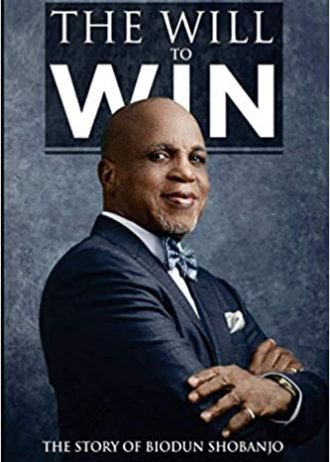
The Will to Win: The Story of Biodun Shobanjo is fundamentally a deliberative evaluation of leadership and enterprise management. It is as much a biographical portrait of Nigeria’s ‘Czar of Advertising’ as it is a story of the major developments in the world of marketing communications in Nigeria as it involves Shobanjo. It sheds light on his persona and gives a comprehensive overview of who he is. It is a lucidly engaging work through which the reader understands his parentage, family life and most poignantly, his professional and business life. In a land with few authentic heroes or achievers, Biodun Shobanjo’s contributions, achievements and place are deservedly presented. The avalanche of information provided, the depth of treatment given to it, and the sources consulted make this work a productive venture. The reader is assured of an excursion in history, career development, ambition, decision – making, entrepreneurship, business management, office politics, people management, success and failure. It is a positive work that is faithful to its theme: the path to success is guided by the will to win.
In February 2013, the arch-conservative Pope Benedict XVI made a startling announcement: he would resign, making him the first pope to willingly vacate his office in over 700 years. Reeling from the news, the College of Cardinals rushed to Rome to congregate in the Sistine Chapel to pick his successor. Their unlikely choice? Francis, the first non-European pope in 1,200 years, a onetime tango club bouncer, a passionate soccer fan, a man with the common touch.
Why did Benedict walk away at the height of power, knowing his successor might be someone whose views might undo his legacy? How did Francis – who used to ride the bus to work back in his native Buenos Aires – adjust to life as leader to a billion followers? If, as the Church teaches, the pope is infallible, how can two living popes who disagree on almost everything both be right? Having immersed himself in these men’s lives to write the screenplay for The Two Popes, Anthony McCarten masterfully weaves their stories into one gripping narrative. From Benedict and Francis’s formative experiences in war-torn Germany and Argentina to the sexual abuse scandal that continues to rock the Church to its foundations to the intrigue and the occasional comedy of life in the Vatican, The Two Popes glitters with the darker and the lighter details of one of the world’s most opaque but significant institutions.
The Cartiers is the revealing tale of a jewelry dynasty—four generations, from revolutionary France to the 1970s. At its heart are the three Cartier brothers whose motto was “Never copy, only create” and who made their family firm internationally famous in the early days of the twentieth century, thanks to their unique and complementary talents: Louis, the visionary designer who created the first men’s wristwatch to help an aviator friend tell the time without taking his hands off the controls of his flying machine; Pierre, the master dealmaker who bought the New York headquarters on Fifth Avenue for a double-stranded natural pearl necklace; and Jacques, the globe-trotting gemstone expert whose travels to India gave Cartier access to the world’s best rubies, emeralds, and sapphires, inspiring the celebrated Tutti Frutti jewelry.
Francesca Cartier Brickell, whose great-grandfather was the youngest of the brothers, has traveled the world researching her family’s history, tracking down those connected with her ancestors and discovering long-lost pieces of the puzzle along the way. Now she reveals never-before-told dramas, romances, intrigues, betrayals, and more.
The Cartiers also offers a behind-the-scenes look at the firm’s most iconic jewelry—the notoriously cursed Hope Diamond, the Romanov emeralds, the classic panther pieces—and the long line of stars from the worlds of fashion, film, and royalty who wore them, from Indian maharajas and Russian grand duchesses to Wallis Simpson, Coco Chanel, and Elizabeth Taylor.
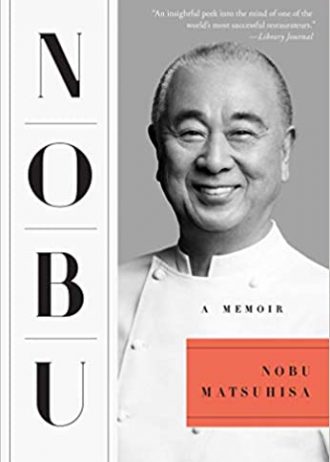
As one of the world’s most widely acclaimed restaurateurs, Nobu’s influence on food and hospitality can be found at the highest levels of haute-cuisine to the food trucks you frequent during the work week—this is the Nobu that the public knows.
But now, we are finally introduced to the private Nobu: the man who failed three times before starting the restaurant that would grow into an empire; the man who credits the love and support of his family as the only thing keeping him from committing suicide when his first restaurant burned down; and the man who values the busboy who makes sure each glass is crystal clear as highly as the chef who slices the fish for Omakase perfectly.
What makes Nobu special, and what made him famous, is the spirit of what exists on these pages. He has the traditional Japanese perspective that there is great pride to be found in every element of doing a job well—no matter how humble that job is. Furthermore, he shows us repeatedly that success is as much about perseverance in the face of adversity as it is about innate talent.
Robert Iger became CEO of The Walt Disney Company in 2005, during a difficult time. Competition was more intense than ever and technology was changing faster than at any time in the company’s history. His vision came down to three clear ideas: Recommit to the concept that quality matters, embrace technology instead of fighting it, and think bigger—think global—and turn Disney into a stronger brand in international markets.
Today, Disney is the largest, most admired media company in the world, counting Pixar, Marvel, Lucasfilm, and 21st Century Fox among its properties. Its value is nearly five times what it was when Iger took over, and he is recognized as one of the most innovative and successful CEOs of our era.
In The Ride of a Lifetime, Robert Iger shares the lessons he learned while running Disney and leading its 220,000-plus employees, and he explores the principles that are necessary for true leadership, including:
• Optimism. Even in the face of difficulty, an optimistic leader will find the path toward the best possible outcome and focus on that, rather than give in to pessimism and blaming.
• Courage. Leaders have to be willing to take risks and place big bets. Fear of failure destroys creativity.
• Decisiveness. All decisions, no matter how difficult, can be made on a timely basis. Indecisiveness is both wasteful and destructive to morale.
• Fairness. Treat people decently, with empathy, and be accessible to them.
This book is about the relentless curiosity that has driven Iger for forty-five years, since the day he started as the lowliest studio grunt at ABC. It’s also about thoughtfulness and respect, and a decency-over-dollars approach that has become the bedrock of every project and partnership Iger pursues, from a deep friendship with Steve Jobs in his final years to an abiding love of the Star Wars mythology.
Reviews
There are no reviews yet.