Paperback
Jakande: His Story Is History
₦5,000.00This book is the story of Alhaji Chief (Dr) Lateef Kayode Jakande who was the first civilian governor of Lagos State (1979 – 1983) and the Honourable Minister of Works and Housing (1993 – 1995).


₦5,500.00
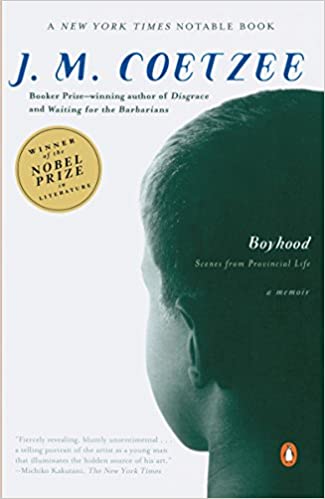
Coetzee grew up in a new development north of Cape Town, tormented by guilt and fear. With a father he despised, and a mother he both adored and resented, he led a double life—the brilliant and well-behaved student at school, the princely despot at home, always terrified of losing his mother’s love. His first encounters with literature, the awakenings of sexual desire, and a growing awareness of apartheid left him with baffling questions; and only in his love of the high veld (“farms are places of freedom, of life”) could he find a sense of belonging. Bold and telling, this masterly evocation of a young boy’s life is the book Coetzee’s many admirers have been waiting for, but never could have expected.
This book is the story of Alhaji Chief (Dr) Lateef Kayode Jakande who was the first civilian governor of Lagos State (1979 – 1983) and the Honourable Minister of Works and Housing (1993 – 1995).
In February 2013, the arch-conservative Pope Benedict XVI made a startling announcement: he would resign, making him the first pope to willingly vacate his office in over 700 years. Reeling from the news, the College of Cardinals rushed to Rome to congregate in the Sistine Chapel to pick his successor. Their unlikely choice? Francis, the first non-European pope in 1,200 years, a onetime tango club bouncer, a passionate soccer fan, a man with the common touch.
Why did Benedict walk away at the height of power, knowing his successor might be someone whose views might undo his legacy? How did Francis – who used to ride the bus to work back in his native Buenos Aires – adjust to life as leader to a billion followers? If, as the Church teaches, the pope is infallible, how can two living popes who disagree on almost everything both be right? Having immersed himself in these men’s lives to write the screenplay for The Two Popes, Anthony McCarten masterfully weaves their stories into one gripping narrative. From Benedict and Francis’s formative experiences in war-torn Germany and Argentina to the sexual abuse scandal that continues to rock the Church to its foundations to the intrigue and the occasional comedy of life in the Vatican, The Two Popes glitters with the darker and the lighter details of one of the world’s most opaque but significant institutions.
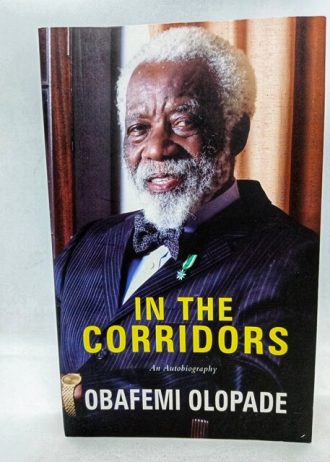
In the Corridors is a book about one of the most remarkable, yet largely unknown influencers in Nigeria’s often complicated political and business circles. Chief Obafemi Olopade, an outstanding businessman and long-time close friend to Nigeria’s former president, Chief Olusegun Obasanjo, has for many decades had the rare privilege of seeing critical events unfold behind the scenes within the corridors of powerin Nigeria. In this autobiography, he shares some of his observations and experiences within those corridors, offering the reader insights into occurrences in Nigerian politics that are usually shrouded in mystery.
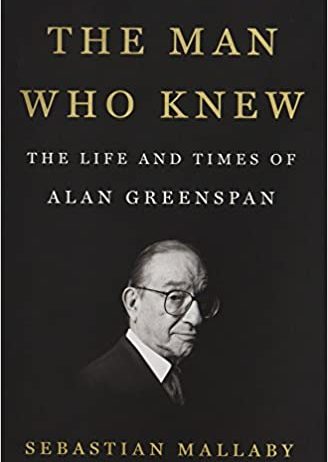
Greenspan’s life is a quintessential American success story: raised by a single mother in the Jewish émigré community of Washington Heights, he was a math prodigy who found a niche as a stats-crunching consultant. A master at explaining the economic weather to captains of industry, he translated that skill into advising Richard Nixon in his 1968 campaign. This led to a perch on the White House Council of Economic Advisers, and then to a dazzling array of business and government roles, from which the path to the Fed was relatively clear. A fire-breathing libertarian and disciple of Ayn Rand in his youth who once called the Fed’s creation a historic mistake, Mallaby shows how Greenspan reinvented himself as a pragmatist once in power. In his analysis, and in his core mission of keeping inflation in check, he was a maestro indeed, and hailed as such. At his retirement in 2006, he was lauded as the age’s necessary man, the veritable God in the machine, the global economy’s avatar. His memoirs sold for record sums to publishers around the world.
But then came 2008. Mallaby’s story lands with both feet on the great crash which did so much to damage Alan Greenspan’s reputation. Mallaby argues that the conventional wisdom is off base: Greenspan wasn’t a naïve ideologue who believed greater regulation was unnecessary. He had pressed for greater regulation of some key areas of finance over the years, and had gotten nowhere. To argue that he didn’t know the risks in irrational markets is to miss the point. He knew more than almost anyone; the question is why he didn’t act, and whether anyone else could or would have. A close reading of Greenspan’s life provides fascinating answers to these questions, answers whose lessons we would do well to heed. Because perhaps Mallaby’s greatest lesson is that economic statesmanship, like political statesmanship, is the art of the possible. The Man Who Knew is a searching reckoning with what exactly comprised the art, and the possible, in the career of Alan Greenspan.
Award-winning New York Times reporters Sheera Frenkel and Cecilia Kang unveil the tech story of our times in a riveting, behind-the-scenes exposé that offers the definitive account of Facebook’s fall from grace.
Once one of Silicon Valley’s greatest success stories, Facebook has been under constant fire for the past five years, roiled by controversies and crises. It turns out that while the tech giant was connecting the world, they were also mishandling users’ data, spreading fake news, and amplifying dangerous, polarizing hate speech.
The company, many said, had simply lost its way. But the truth is far more complex. Leadership decisions enabled, and then attempted to deflect attention from, the crises. Time after time, Facebook’s engineers were instructed to create tools that encouraged people to spend as much time on the platform as possible, even as those same tools boosted inflammatory rhetoric, conspiracy theories, and partisan filter bubbles. And while consumers and lawmakers focused their outrage on privacy breaches and misinformation, Facebook solidified its role as the world’s most voracious data-mining machine, posting record profits, and shoring up its dominance via aggressive lobbying efforts.
Drawing on their unrivaled sources, Sheera Frenkel and Cecilia Kang take readers inside the complex court politics, alliances and rivalries within the company to shine a light on the fatal cracks in the architecture of the tech behemoth. Their explosive, exclusive reporting led them to a shocking conclusion: The missteps of the last five years were not an anomaly but an inevitability—this is how Facebook was built to perform. In a period of great upheaval, growth has remained the one constant under the leadership of Mark Zuckerberg and Sheryl Sandberg. Both have been held up as archetypes of uniquely 21st century executives—he the tech “boy genius” turned billionaire, she the ultimate woman in business, an inspiration to millions through her books and speeches. But sealed off in tight circles of advisers and hobbled by their own ambition and hubris, each has stood by as their technology is coopted by hate-mongers, criminals and corrupt political regimes across the globe, with devastating consequences. In An Ugly Truth, they are at last held accountable.
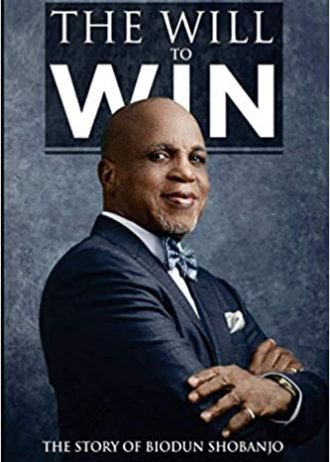
The Will to Win: The Story of Biodun Shobanjo is fundamentally a deliberative evaluation of leadership and enterprise management. It is as much a biographical portrait of Nigeria’s ‘Czar of Advertising’ as it is a story of the major developments in the world of marketing communications in Nigeria as it involves Shobanjo. It sheds light on his persona and gives a comprehensive overview of who he is. It is a lucidly engaging work through which the reader understands his parentage, family life and most poignantly, his professional and business life. In a land with few authentic heroes or achievers, Biodun Shobanjo’s contributions, achievements and place are deservedly presented. The avalanche of information provided, the depth of treatment given to it, and the sources consulted make this work a productive venture. The reader is assured of an excursion in history, career development, ambition, decision – making, entrepreneurship, business management, office politics, people management, success and failure. It is a positive work that is faithful to its theme: the path to success is guided by the will to win.
Reviews
There are no reviews yet.