Paperback
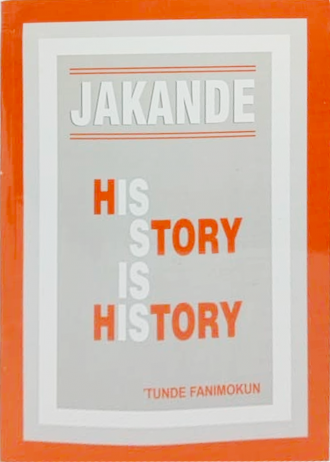
Jakande: His Story Is History
₦5,000.00This book is the story of Alhaji Chief (Dr) Lateef Kayode Jakande who was the first civilian governor of Lagos State (1979 – 1983) and the Honourable Minister of Works and Housing (1993 – 1995).


₦5,500.00
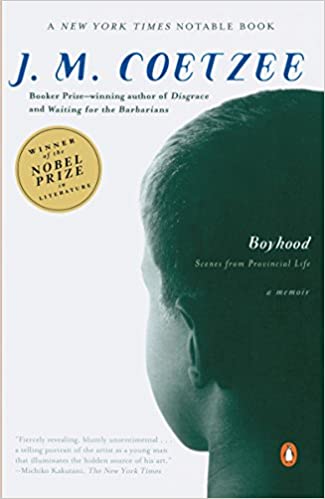
Coetzee grew up in a new development north of Cape Town, tormented by guilt and fear. With a father he despised, and a mother he both adored and resented, he led a double life—the brilliant and well-behaved student at school, the princely despot at home, always terrified of losing his mother’s love. His first encounters with literature, the awakenings of sexual desire, and a growing awareness of apartheid left him with baffling questions; and only in his love of the high veld (“farms are places of freedom, of life”) could he find a sense of belonging. Bold and telling, this masterly evocation of a young boy’s life is the book Coetzee’s many admirers have been waiting for, but never could have expected.
This book is the story of Alhaji Chief (Dr) Lateef Kayode Jakande who was the first civilian governor of Lagos State (1979 – 1983) and the Honourable Minister of Works and Housing (1993 – 1995).
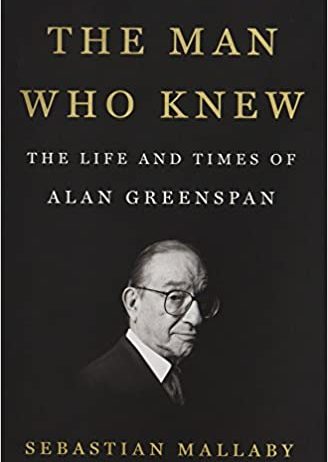
Greenspan’s life is a quintessential American success story: raised by a single mother in the Jewish émigré community of Washington Heights, he was a math prodigy who found a niche as a stats-crunching consultant. A master at explaining the economic weather to captains of industry, he translated that skill into advising Richard Nixon in his 1968 campaign. This led to a perch on the White House Council of Economic Advisers, and then to a dazzling array of business and government roles, from which the path to the Fed was relatively clear. A fire-breathing libertarian and disciple of Ayn Rand in his youth who once called the Fed’s creation a historic mistake, Mallaby shows how Greenspan reinvented himself as a pragmatist once in power. In his analysis, and in his core mission of keeping inflation in check, he was a maestro indeed, and hailed as such. At his retirement in 2006, he was lauded as the age’s necessary man, the veritable God in the machine, the global economy’s avatar. His memoirs sold for record sums to publishers around the world.
But then came 2008. Mallaby’s story lands with both feet on the great crash which did so much to damage Alan Greenspan’s reputation. Mallaby argues that the conventional wisdom is off base: Greenspan wasn’t a naïve ideologue who believed greater regulation was unnecessary. He had pressed for greater regulation of some key areas of finance over the years, and had gotten nowhere. To argue that he didn’t know the risks in irrational markets is to miss the point. He knew more than almost anyone; the question is why he didn’t act, and whether anyone else could or would have. A close reading of Greenspan’s life provides fascinating answers to these questions, answers whose lessons we would do well to heed. Because perhaps Mallaby’s greatest lesson is that economic statesmanship, like political statesmanship, is the art of the possible. The Man Who Knew is a searching reckoning with what exactly comprised the art, and the possible, in the career of Alan Greenspan.
In this comprehensive, revelatory biography—fifteen years of interviews and research in the making—historian Jane Sherron De Hart explores the central experiences that crucially shaped Ginsburg’s passion for justice, her advocacy for gender equality, and her meticulous jurisprudence.
At the heart of her story and abiding beliefs is her Jewish background, specifically the concept of tikkun olam, the Hebrew injunction to “repair the world,” with its profound meaning for a young girl who grew up during the Holocaust and World War II.
Ruth’s journey begins with her mother, who died tragically young but whose intellect inspired her daughter’s feminism. It stretches from Ruth’s days as a baton twirler at Brooklyn’s James Madison High School to Cornell University to Harvard and Columbia Law Schools; to becoming one of the first female law professors in the country and having to fight for equal pay and hide her second pregnancy to avoid losing her job; to becoming the director of the ACLU’s Women’s Rights Project and arguing momentous anti-sex discrimination cases before the U.S. Supreme Court.
All this, even before being nominated in 1993 to become the second woman on the Court, where her crucial decisions and dissents are still making history. Intimately, personably told, this biography offers unprecedented insight into a pioneering life and legal career whose profound mark on American jurisprudence, American society, and our American character and spirit will reverberate deep into the twenty-first century and beyond.
The Cartiers is the revealing tale of a jewelry dynasty—four generations, from revolutionary France to the 1970s. At its heart are the three Cartier brothers whose motto was “Never copy, only create” and who made their family firm internationally famous in the early days of the twentieth century, thanks to their unique and complementary talents: Louis, the visionary designer who created the first men’s wristwatch to help an aviator friend tell the time without taking his hands off the controls of his flying machine; Pierre, the master dealmaker who bought the New York headquarters on Fifth Avenue for a double-stranded natural pearl necklace; and Jacques, the globe-trotting gemstone expert whose travels to India gave Cartier access to the world’s best rubies, emeralds, and sapphires, inspiring the celebrated Tutti Frutti jewelry.
Francesca Cartier Brickell, whose great-grandfather was the youngest of the brothers, has traveled the world researching her family’s history, tracking down those connected with her ancestors and discovering long-lost pieces of the puzzle along the way. Now she reveals never-before-told dramas, romances, intrigues, betrayals, and more.
The Cartiers also offers a behind-the-scenes look at the firm’s most iconic jewelry—the notoriously cursed Hope Diamond, the Romanov emeralds, the classic panther pieces—and the long line of stars from the worlds of fashion, film, and royalty who wore them, from Indian maharajas and Russian grand duchesses to Wallis Simpson, Coco Chanel, and Elizabeth Taylor.
This is a life account of one of Nigeria’s legendary leaders. It goes beyond the life history of Chief Michael Adekunle Ajasin. It is about a people and is a compendium of historical events.
Beyoncé. Her name conjures more than music, it has come to be synonymous with beauty, glamour, power, creativity, love, and romance. Her performances are legendary, her album releases events. She is not even forty but she has already rewritten the Beyoncé playbook more than half a dozen times. She is consistently provocative, political and surprising. As a solo artist, she has sold more than 100 million records. She has won 22 Grammys and is the most-nominated woman artist in the history of Grammy awards. Her 2018 performance at Coachella wowed the world. The New York Times wrote: “There’s not likely to be a more meaningful, absorbing, forceful and radical performance by an American musician this year or any year soon.” Artist, business woman, mother, daughter, sister, wife, black feminist, Queen Bey is endlessly fascinating.
Queen Bey features a diverse range of voices, from star academics to outspoken cultural critics to Hollywood and music stars. Some of the essays include
“Beychella is Proof That Beyoncé is the Greatest Performer Alive. I’m Not Arguing.” by Luvvie Ajayi
“On the Journey Together,” by Lena Waithe
“All Her Single Ladies” by Kid Fury
“Beyoncé the Brave” by Reshma Saujani
“Beyoncé’s Radical Ways” by Carmen Perez
“The King of Pop and the Queen of Everything” by Michael Eric Dyson
“The Beauty of Beyoncé” by Fatima Robinson
“King Bey” by Treva B. Lindsey
“Meridonial: Beyoncé’s Southern Roots and References” by Robin M. Boylorn
“B & V: A Love Letter” by Caroline Clarke
Reviews
There are no reviews yet.