Paperback


₦5,000.00
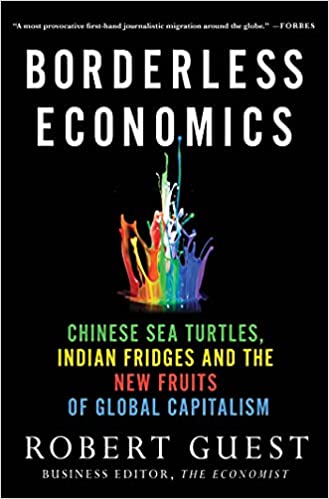
Borderless Economics
A century ago, migrants often crossed an ocean and never saw their homelands again. Today, they call―or Skype―home the moment their flight has landed, and that’s just the beginning. Thanks to cheap travel and easy communication, immigrants everywhere stay in intimate contact with their native countries, creating powerful cross-border networks.
In Borderless Economics, Robert Guest, The Economist’s global business editor, travels through dozens of countries and 44 American states, observing how these networks create wealth, spread ideas, and foster innovation. Covering phenomena such as how young Chinese studying in the West are infecting China with democratic ideals, to why the so-called “brain drain”―the flow of educated migrants from poor countries to rich ones―actually reduces global poverty, this is a fascinating look at how migration makes the world wealthier and happier.
Related products
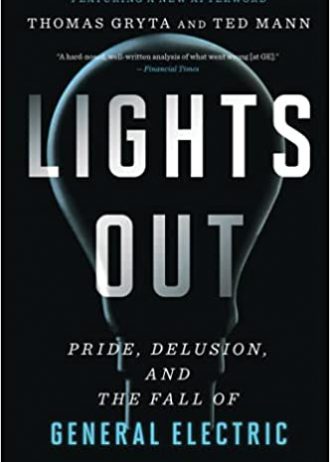
Lights Out
₦10,000.00This is the definitive history of General Electric’s epic decline, as told by the two Wall Street Journal reporters who covered its fall.
Since its founding in 1892, GE has been more than just a corporation. For generations, it was job security, a solidly safe investment, and an elite business education for top managers.
GE electrified America, powering everything from lightbulbs to turbines, and became fully integrated into the American societal mindset as few companies ever had. And after two decades of leadership under legendary CEO Jack Welch, GE entered the twenty-first century as America’s most valuable corporation. Yet, fewer than two decades later, the GE of old was gone.
Lights Out examines how Welch’s handpicked successor, Jeff Immelt, tried to fix flaws in Welch’s profit machine, while stumbling headlong into mistakes of his own. In the end, GE’s traditional win-at-all-costs driven culture seemed to lose its direction, which ultimately caused the company’s decline on both a personal and organizational scale. Lights Out details how one of America’s all-time great companies has been reduced to a cautionary tale for our times.
The Man Who Knew
₦8,000.00Greenspan’s life is a quintessential American success story: raised by a single mother in the Jewish émigré community of Washington Heights, he was a math prodigy who found a niche as a stats-crunching consultant. A master at explaining the economic weather to captains of industry, he translated that skill into advising Richard Nixon in his 1968 campaign. This led to a perch on the White House Council of Economic Advisers, and then to a dazzling array of business and government roles, from which the path to the Fed was relatively clear. A fire-breathing libertarian and disciple of Ayn Rand in his youth who once called the Fed’s creation a historic mistake, Mallaby shows how Greenspan reinvented himself as a pragmatist once in power. In his analysis, and in his core mission of keeping inflation in check, he was a maestro indeed, and hailed as such. At his retirement in 2006, he was lauded as the age’s necessary man, the veritable God in the machine, the global economy’s avatar. His memoirs sold for record sums to publishers around the world.
But then came 2008. Mallaby’s story lands with both feet on the great crash which did so much to damage Alan Greenspan’s reputation. Mallaby argues that the conventional wisdom is off base: Greenspan wasn’t a naïve ideologue who believed greater regulation was unnecessary. He had pressed for greater regulation of some key areas of finance over the years, and had gotten nowhere. To argue that he didn’t know the risks in irrational markets is to miss the point. He knew more than almost anyone; the question is why he didn’t act, and whether anyone else could or would have. A close reading of Greenspan’s life provides fascinating answers to these questions, answers whose lessons we would do well to heed. Because perhaps Mallaby’s greatest lesson is that economic statesmanship, like political statesmanship, is the art of the possible. The Man Who Knew is a searching reckoning with what exactly comprised the art, and the possible, in the career of Alan Greenspan.
The Power of Why
₦4,000.00The urge to question is natural for small children—just ask any parent. But few of us are aware that it is also one of the most vital tools for success. In The Power of Why, Amanda Lang shows how curiosity and the ability to ask the right questions fuels innovation and can drive change not just in business but also in our personal lives.
Weaving together the latest research with in-depth profiles of innovators from around the world, Lang explores how to harness and develop the power of curiosity. She reveals how a major retailer set out to discover what really makes men happy—and was stunned by the results. She finds out why, at one particular hospital, nurses think it’s better if they don’t wash their hands. She learns why the most common methods of brainstorming don’t actually work and discovers a new soccer ball that could change the world.
A book that challenges conventional wisdom and offers practical, inspiring advice, The Power of Why shows how it’s possible to reignite your innate curiosity and overcome long-standing barriers—leaving you more creative, productive and fulfilled in your job and happier in your relationships.
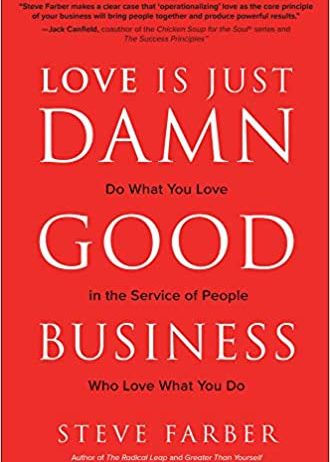
Love is Just Damn Good Business: Do What You Love in the Service of the People Who Love What You Do
₦12,500.00It’s time to toss aside the touchy-feely notions of love in business and acknowledge the real power that it holds. Love is not only appropriate in the context of business, it’s the foundation of great leadership. To put it bluntly: love is just damn good business. That’s the simple but profound truth that leadership consultant Steve Farber has discovered in his extensive work with Fortune 100 companies and other successful businesses. His game-changing approach to love as a practical business strategy will help you to:
• Identify your passions―and share them with others
• Create a culture of love at work―and spark innovation, productivity, and joy
• Serve your customers, so they love how you treat them―and have them coming back for more
• Invest time in making personal connections―that are mutually rewarding
• Focus on serving the needs of others―they’re going to love it
• Do what you love―and make it your business, so others love it, too
The proven principles you’ll find in this book will help you lay the groundwork for a thriving, competitive enterprise. When love is part of your organization’s framework and operationalized in its culture, employees and customers feel genuinely valued. Employees who are passionate about the work that they do are more loyal, innovative, creative, and inspired, and that translates to great customer experience. They don’t serve others out of obligation, but because of a genuine desire to improve people’s lives. And when customers reciprocate by loving your products, your services, and your people, that’s when something great happens. That’s when you get loyalty. That’s when you get raving fans. It’s a refreshingly human way of doing business.
In addition to Farber’s field-tested strategies, you’ll find inspiring case studies from a wide range of industries and leaders, revealing self-assessment quizzes, and practical pointers on how to build a corporate culture based on love, the ultimate competitive advantage. At the end of the day, it’s just damn good business.
Your Next Five Moves: Master the Art of Business Strategy
₦18,000.00Both successful entrepreneurs and chess grandmasters have the vision to look at the pieces in front of them and anticipate their next five moves. In this book, Patrick Bet-David “helps entrepreneurs understand exactly what they need to do next” (Brian Tracy, author of Eat That Frog!) by translating this skill into a valuable methodology. Whether you feel like you’ve hit a wall, lost your fire, or are looking for innovative strategies to take your business to the next level, Your Next Five Moves has the answers.
You will gain:
CLARITY on what you want and who you want to be.
STRATEGY to help you reason in the war room and the board room.
GROWTH TACTICS for good times and bad.
SKILLS for building the right team based on strong values.
INSIGHT on power plays and the art of applying leverage.
Combining these principles and revelations drawn from Patrick’s own rise to successful CEO, Your Next Five Moves is a must-read for any serious executive, strategist, or entrepreneur.
Reviews
There are no reviews yet.