Politics

Africa’s Security Challenges in the 21st Century

10,000.00

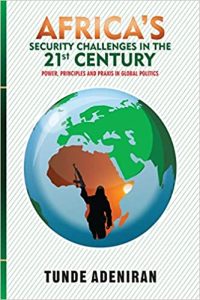
Against the backdrop of a globalized world, with the key players having to contend with the changing nature of power in international relations and Africa of the 21st century faced with new realities, this book was conceived to expand and push the scope of inquiry into a new direction in strategic thinking. It was designed to examine various issues that are related to the security of Africa as a sub-system within the international system.

The book is an attempt to examine how some basic security issues define the position of Africa within the international system and determine the dynamics of African participation in the ordering of a global world order. Part of the intention is to show the forms that the factors of African security would take in the foreseeable future as these factors would determine the relationship between African states and the non-African world as well as influence the developments within Africa itself.

Dynamics of Change: The Amaechi Years

10,000.00

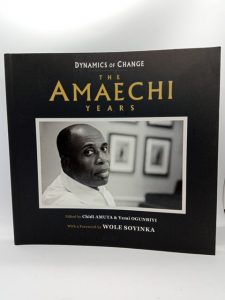
As soon as he assumed office as governor in 2007, Rotimi Amaechi immediately set about establishing his credentials as an uncommon political leader – one who was determined to make a tangible difference in the lives of his people through vision, tenacity and a stubborn will.

This book is the work of friends, associates and observers drawn from across the length and breadth of Nigeria. These individuals, most of whom have distinguished themselves in diverse fields of human endeavor, have the advantage of observing and assessing the work of the Amaechi administration from mostly dispassionate but close enough positions.

The Director: My Years Assisting J. Edgar Hoover

9,500.00

The 1960s and 1970s were arguably among America’s most turbulent post-Civil War decades. While the Vietnam War continued seemingly without end, protests and riots ravaged most cities, the Kennedys and MLK were assassinated, and corruption found its way to the highest levels of politics, culminating in Watergate.

In 1965, at the beginning of the chaos, twenty-two-year-old Paul Letersky was assigned to assist the legendary FBI director J. Edgar Hoover who’d just turned seventy and had, by then, led the Bureau for an incredible forty-one years. Hoover was a rare and complex man who walked confidently among the most powerful. His personal privacy was more tightly guarded than the secret “files” he carefully collected—and that were so feared by politicians and celebrities. Through Letersky’s close working relationship with Hoover, and the trust and confidence he gained from Hoover’s most loyal senior assistant, Helen Gandy, Paul became one of the few able to enter the Director’s secretive—and sometimes perilous—world.

Since Hoover’s death half a century ago, millions of words have been written about the man and hundreds of hours of TV dramas and A-list Hollywood films produced. But until now, there has been virtually no account from someone who, for a period of years, spent hours with the Director on a daily basis.

Balanced, honest, and keenly observed, this “vivid, foibles-and-all portrait of the fabled scourge of gangsters, Klansmen, and communists” (The Wall Street Journal) sheds new light on one of the most powerful law enforcement figures in American history.

A Spy Among Friends

9,500.00

Who was Kim Philby? Those closest to him—like his fellow MI6 officer and best friend since childhood, Nicholas Elliot, and the CIA’s head of counterintelligence, James Jesus Angleton—knew him as a loyal confidant and an unshakeable patriot. Philby was a brilliant and charming man who rose to head Britain’s counterintelligence against the Soviet Union. Together with Elliott and Angleton he stood on the front lines of the Cold War, holding Communism at bay. But he was secretly betraying them both: He was working for the Russians the entire time.

Every word uttered in confidence to Philby by his colleagues in the West made its way to Moscow, leading countless missions to their doom and subverting American and British attempts to subdue the Soviet threat. So how was this cunning double-agent finally exposed? In A Spy Among Friends, Ben Macintyre expertly weaves the heart-pounding tale of how Philby almost got away with it all—and what happened when he was finally unmasked.

Based on personal papers and never-before-seen British intelligence files, this is Ben Macintyre’s epic telling of one of the greatest spy stories ever, a Cold War history that will keep you on the edge of your seat.

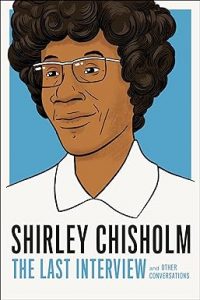
The Last Interview: Shirley Chisolm

9,000.00

When Shirley Chisholm announced her candidacy for the democratic presidential nomination in 1972, she became the first Black candidate for a major party’s nomination—just four years after she had become the first ever Black woman in Congress.

In this collection of interviews stretching from her first major profile to her final interview, this icon of iron will and unshakeable political principle reveals how her disciplined and demanding childhood and the expectations placed on her by the public shaped her into a force of nature and the ultimate people’s politician—tirelessly advocating in the halls of government for the poorest and most disadvantaged of the nation.

The Last Interview: John Lewis

9,000.00

Featuring interviews of civil rights activist and congressman John Lewis at almost every stage of his career, this collection illustrates why Lewis has become a human rights icon and remains an inspiration to activists today

Throughout John Lewis’s long and storied career he maintained a seemingly unwavering hope for a better future. This hope can be traced throughout the inteviews collected here. From a young activist testifying in the aftermath of Bloody Sunday to recounting the violence he met as a Freedom Rider to an elder statesman inspired by today’s civil rights activists, this collection forms a portrait of a man whose life was spent fighting for a better world and never lost hope.

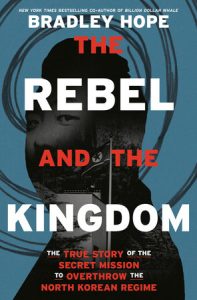
The Rebel And The Kingdom

9,000.00

In the early 2000s, Adrian Hong was a soft-spoken Yale undergraduate looking for his place in the world. After reading a harrowing account of life inside North Korea, he realized he had found a cause so pressing that he was ready to devote his life to it.

What began as a trip down the safe and well-worn path of organizing soon morphed into something more dangerous. Hong journeyed to China, outwitting Chinese security services as he helped asylum-seeking North Koreans escape across the border. Meanwhile, Hong’s secret organization, Cheollima Civil Defense (later renamed Free Joseon), began tracking the North Korean government’s activities, and its volatile third-generation ruler, Kim Jong-un. Free Joseon targeted North Korean diplomats who might be persuaded to defect, while drawing up plans for a government-in-exile. After the shocking broad-daylight assassination in 2017 of Kim Jong-nam, the dictator’s older brother, Hong, along with U.S. Marine veteran Christopher Ahn, helped ferry Kim Jong-nam’s family to safety. Then Hong took the group a step further. He initiated a series of high-stakes direct actions, culminating in an armed raid at the North Korean embassy in Madrid—an act that would put Ahn behind bars and turn Hong into one of the world’s most unlikely fugitives.

In the tradition of Jon Krakauer’s Into the Wild, The Rebel and the Kingdom is an exhilarating account of a man who turns his back on the status quo—to instead live boldly by his principles. Acclaimed journalist and bestselling author Bradley Hope—who broke numerous details of Hong’s operations in The Wall Street Journal—now reveals the full contours of this remarkable story of idealism and insanity, hubris and heroism, all set within the secret battle for the future of the world’s most mysterious and unsettling nation.

Believer

9,000.00

David Axelrod has always been a believer. Whether as a young journalist investigating city corruption, a campaign consultant guiding underdog candidates against entrenched orthodoxy, or as senior adviser to the president during one of the worst crises in American history, Axelrod held fast to his faith in the power of stories to unite diverse communities and ignite transformative political change. Now this legendary strategist, the mastermind behind Barack Obama’s historic election campaigns, shares a wealth of stories from his forty-year journey through the inner workings of American democracy. Believer is the tale of a political life well lived, of a man who never gave up on the deepest promises our country has to offer.

Believing

9,000.00

From the woman who gave the landmark testimony against Clarence Thomas as a sexual menace, a new manifesto about the origins and course of gender violence in our society; a combination of memoir, personal accounts, law, and social analysis, and a powerful call to arms from one of our most prominent and poised survivors.

China Unbound

9,000.00

While the United States stumbles, an award-winning foreign correspondent chronicles China’s dramatic moves to become a dominant power.

As the world’s second-largest economy, China is extending its influence across the globe with the complicity of democratic nations. Joanna Chiu has spent a decade tracking China’s propulsive rise, from the political aspects of the multi-billion-dollar “New Silk Road” global investment project to a growing sway on foreign countries and multilateral institutions through “United Front” efforts. Chiu offers readers background on the protests in Hong Kong, underground churches in Beijing, and exile Uyghur communities in Turkey, and exposes Beijing’s high-tech surveillance and aggressive measures that result in human rights violations against those who challenge its power. The new world disorder documented in China Unbound lays out the disturbing implications for global stability, prosperity, and civil rights everywhere.

What Britain Did To Nigeria

9,000.00

Most accounts of Nigeria’s colonisation were written by British officials, presenting it as a noble civilising mission to rid Africans of barbaric superstition and corrupt tribal leadership. Thanks to this skewed writing of history, many Nigerians today still have Empire nostalgia and view the
colonial period through rose-tinted glasses.

Max Siollun offers a bold rethink: an unromanticised history, arguing compellingly that colonialism had few benevolent intentions, but many unjust outcomes. It may have ended slavery and human sacrifice, but it was accompanied by extreme violence; ethnic and religious identity were cynically exploited to maintain control, while the forceful remoulding of longstanding legal and social practices permanently altered the culture and internal politics of indigenous communities. The aftershocks of this colonial meddling are still being felt decades after independence. Popular narratives often suggest that the economic and political turmoil are homegrown, but the reality is that Britain created many of Nigeria’s crises, and has left them behind for Nigerians to resolve.

This is a definitive, head-on confrontation with Nigeria’s experience under British rule, showing how it forever changed the country–perhaps cataclysmically.

Sex With Presidents

9,000.00

In this fascinating work of popular history, the New York Times bestselling author of Sex with Kings and The Royal Art of Poison uncovers the bedroom secrets of American presidents and explores the surprising ways voters have reacted to their leaders’ sex scandals.

While Americans have a reputation for being strait-laced, many of the nation’s leaders have been anything but puritanical. Alexander Hamilton had a steamy affair with a blackmailing prostitute. John F. Kennedy swam nude with female staff in the White House swimming pool. Is it possible the qualities needed to run for president—narcissism, a thirst for power, a desire for importance—go hand in hand with a tendency to sexual misdoing?

In this entertaining and eye-opening book, Eleanor Herman revisits some of the sex scandals that have rocked the nation’s capital and shocked the public, while asking the provocative questions: does rampant adultery show a lack of character or the stamina needed to run the country? Or perhaps both? While Americans have judged their leaders’ affairs harshly compared to other nations, did they mostly just hate being lied to? And do they now clearly care more about issues other than a politician’s sex life?

What is sex like with the most powerful man in the world? Is it better than with your average Joe? And when America finally elects a female president, will she, too, have sexual escapades in the Oval Office?

Reconsidering Reagan

8,500.00

Ronald Reagan is hailed as a transformative president and an American icon, but within his twentieth-century politics lies a racial legacy that is rarely discussed. Both political parties point to Reagan as the “right” kind of conservative but fail to acknowledge his political attacks on people of color prior to and during his presidency. Reconsidering Reagan corrects that narrative and reveals how his views, policies, and actions were devastating for Black Americans and racial minorities, and that the effects continue to resonate today.

Using research from previously untapped resources including the Black press which critically covered Reagan’s entire political career, Daniel S. Lucks traces Reagan’s gradual embrace of conservatism, his opposition to landmark civil rights legislation, his coziness with segregationists, and his skill in tapping into white anxiety about race, riding a wave of “white backlash” all the way to the Presidency. He argues that Reagan has the worst civil rights record of any President since the 1920s—including supporting South African apartheid, packing courts with conservatives, targeting laws prohibiting discrimination in education and housing, and launching the “War on Drugs”—which had cataclysmic consequences on the lives of Black and Brown people.

Linking the past to the present, Lucks expertly examines how Reagan set the blueprint for President Trump and proves that he is not an anomaly, but in fact the logical successor to bring back the racially tumultuous America that Reagan conceptualized.

Lincoln’s Mentors

8,500.00

In 1849, when Abraham Lincoln returned to Springfield, Illinois, after two seemingly uninspiring years in the U.S. House of Representatives, his political career appeared all but finished. His sense of failure was so great that friends worried about his sanity. Yet within a decade, Lincoln would reenter politics, become a leader of the Republican Party, win the 1860 presidential election, and keep America together during its most perilous period. What accounted for the turnaround?

As Michael J. Gerhardt reveals, Lincoln’s reemergence followed the same path he had taken before, in which he read voraciously and learned from the successes, failures, oratory, and political maneuvering of a surprisingly diverse handful of men, some of whom he had never met but others of whom he knew intimately—Henry Clay, Andrew Jackson, Zachary Taylor, John Todd Stuart, and Orville Browning. From their experiences and his own, Lincoln learned valuable lessons on leadership, mastering party politics, campaigning, conventions, understanding and using executive power, managing a cabinet, speechwriting and oratory, and—what would become his most enduring legacy—developing policies and rhetoric to match a constitutional vision that spoke to the monumental challenges of his time.

Without these mentors, Abraham Lincoln would likely have remained a small-town lawyer—and without Lincoln, the United States as we know it may not have survived. This book tells the unique story of how Lincoln emerged from obscurity and learned how to lead.

Strongmen

8,500.00

Ruth Ben-Ghiat is the expert on the “strongman” playbook employed by authoritarian demagogues from Mussolini to Putin—enabling her to predict with uncanny accuracy the recent experience in America and Europe. In Strongmen, she lays bare the blueprint these leaders have followed over the past 100 years, and empowers us to recognize, resist, and prevent their disastrous rule in the future.

For ours is the age of authoritarian rulers: self-proclaimed saviors of the nation who evade accountability while robbing their people of truth, treasure, and the protections of democracy. They promise law and order, then legitimize lawbreaking by financial, sexual, and other predators.

They use masculinity as a symbol of strength and a political weapon. Taking what you want, and getting away with it, becomes proof of male authority. They use propaganda, corruption, and violence to stay in power.

Vladimir Putin and Mobutu Sese Seko’s kleptocracies, Augusto Pinochet’s torture sites, Benito Mussolini and Muammar Gaddafi’s systems of sexual exploitation, and Silvio Berlusconi and Donald Trump’s relentless misinformation: all show how authoritarian rule, far from ensuring stability, is marked by destructive chaos.

No other type of leader is so transparent about prioritizing self-interest over the public good. As one country after another has discovered, the strongman is at his worst when true guidance is most needed by his country.

Recounting the acts of solidarity and dignity that have undone strongmen over the past 100 years, Ben-Ghiat makes vividly clear that only by seeing the strongman for what he is—and by valuing one another as he is unable to do—can we stop him, now and in the future.

Criminal Contagion

8,500.00

COVID-19 is reshaping and challenging governments, social order and the world economy in previously unimaginable ways–including changes to the illegal flow of goods and services. Livelihoods are shrinking or disappearing altogether, and mafias, gangsters and profiteers are adapting to find
new routes for illegal commodities, from counterfeit drugs to trafficked wildlife and people.

Shortages, lockdowns and citizen responses have brought the underworld and upperworld into greater convergence, as criminals strive to meet needs, maximize opportunities and fill governance vacuums. Unscrupulous fraudsters are touting fake remedies to desperate people: counterfeit drugs and illicit
wildlife used in traditional medicine. Social distancing and lockdowns have seen online financial transactions and cyber-communication and -operations replacing or supplementing physical shipments and interactions, again affording new opportunities for fraudsters and cyber-criminals. Heavy-handed
state responses have also, quite literally, created new illicit markets by prohibiting the sale of particular goods and services, while some elites have capitalized on the pandemic for personal or political gain.

The pandemic has cast a long shadow over the rule of law. Criminal Contagion uncovers its impacts on the global illicit economy, and unpacks the long-term implications of these extraordinary developments.

1 4 5 6 10