History & Geography

The Ogoni of the Eastern Niger Delta

8,000.00

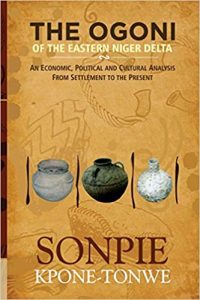
The Ogoni of the Eastern Niger Delta are an ancient African community in Southern Nigeria, whose history dates back to BC times. Their history is rich in customs, traditions, economics, politics and culture, which date back to Herodotus, the Greek historian, who wrote about the Silent Trade in West Africa”, in the 4th century BC, a story also reported by the Ogoni in their oral tradition.

Scholars frequently relate the history of West Africa to the coming of the white man into the region. The Ogoni of the Eastern Niger Delta shows that the colonialists later came to see a lot of innovations by the Ogoni; such as trade, money, industry, agriculture, leadership training, government, law, music, sea travel, war and more.

This book is a giant attempt to record and preserve these cultures for future study and development. There is a seperate volume containing fieldwork data on almost every subject for researchers to consult.

Epic African Myths & Tales

8,000.00

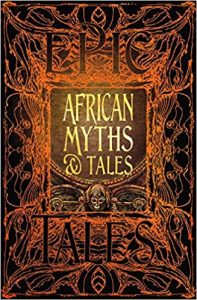
Africa south of the Sahara is a land of wide-ranging traditions and varying cultures. Despite the diversity and the lack of early written records, the continent possesses a rich body of folk tales and legends that have been passed down through the strong custom of storytelling and which often share similar elements, characters and ideas between peoples. So this collection offers a hefty selection of legends and tales – stories of the gods, creation and origins, trickster exploits, animal fables and stories which entertain and edify – from ‘Obatala Creates Mankind’, from the Yoruba people of west Africa, to ‘The Girl Of The Early Race, Who Made Stars’, from the San people of southern Africa, all collected in a gorgeous gold-foiled and embossed hardback to treasure.

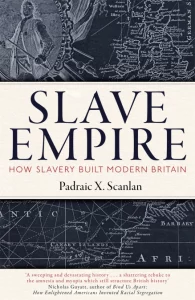
Slave Empire

7,500.00

The British empire, in sentimental myth, was more free, more just and more fair than its rivals. But this claim that the British empire was ‘free’ and that, for all its flaws, it promised liberty to all its subjects was never true. The British empire was built on slavery.

Slave Empire puts enslaved people at the centre the British empire in the eighteenth and nineteenth centuries. In intimate, human detail, the chapters show how British imperial power and industrial capitalism were inextricable from plantation slavery. With vivid original research and careful synthesis of innovative historical scholarship, Slave Empire shows that British freedom and British slavery were made together.

In the nineteenth century, Britain abolished its slave trade, and then slavery in its colonial empire. Because Britain was the first European power to abolish slavery, many Victorian Britons believed theirs was a liberal empire, promoting universal freedom and civilisation. And yet, the shape of British liberty itself was shaped by the labour of enslaved African workers. There was no bright line between British imperial exploitation and the ‘civilisation’ that the empire promised to its subjects. Nineteenth-century liberals were blind to the ways more than two centuries of colonial slavery twisted the roots of ‘British liberty’.

Freedom – free elections, free labour, free trade – were watchwords in the Victorian era, but the empire was still sustained by the labour of enslaved people, in the United States, Cuba and elsewhere. Modern Britain has inherited the legacies and contradictions of a liberal empire built on slavery. Modern capitalism and liberalism emphasise ‘freedom’ – for individuals and for markets – but are built on human bondage.

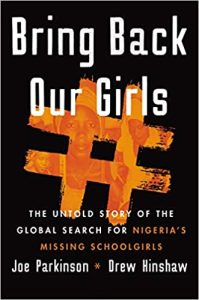
Bring Back Our Girls

7,500.00

What happens after you click Tweet? The heart-stopping definitive account of the mission to rescue hundreds of Nigerian schoolgirls whose abduction ignited a global social media campaign and a dramatic worldwide intervention.

In the spring of 2014, millions of Twitter users, including some of the world’s most famous people, unwittingly helped turn a group of 276 schoolgirls abducted by a little-known Islamist sect into a central prize in the global War on Terror by retweeting a call for their release: #BringBackOurGirls. With just four words, their tweets launched an army of would-be liberators. Soldiers and drones, spies, mercenaries, and glory hunters descended into an obscure conflict that few understood, in a remote part of Nigeria that had barely begun to use the internet.

When hostage talks and military intervention failed, the schoolgirls were forced to take survival into their own hands. As their days in captivity dragged into years, the young women learned to withstand hunger, disease, and torment, and became witnesses and victims of unspeakable brutality. Many of the girls were Christians who refused to take the one path offered them—converting to their captors’ fundamentalist creed. In secret, they sang hymns, and kept a diary, relying on their faith and friendships to stay alive.

Bring Back Our Girls unfolds across four continents, from the remote forests of northern Nigeria to the White House; from clandestine meetings in Khartoum safe houses to century-old luxury hotels on picturesque lakes in the Swiss Alps. A twenty-first century story that plumbs the promise and peril of an era whose politics are fueled by the power of hashtag advocacy, this urgent and engrossing work of investigative journalism reveals the unpredictable interconnectedness of our butterfly-wings world, where a few days of online activism can bring years of offline consequences for people continents away.

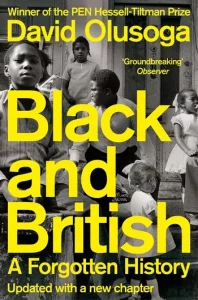
Black and British: A Forgotten History

7,500.00

In this vital re-examination of a shared history, historian and broadcaster David Olusoga tells the rich and revealing story of the long relationship between the British Isles and the people of Africa and the Caribbean.

This edition, fully revised and updated, features a new chapter encompassing the Windrush scandal and the Black Lives Matter protests of 2020, events which put black British history at the centre of urgent national debate. Black and British is vivid confirmation that black history can no longer be kept separate and marginalised. It is woven into the cultural and economic histories of the nation and it belongs to us all.

Drawing on new genealogical research, original records, and expert testimony, Black and British reaches back to Roman Britain, the medieval imagination, Elizabethan ‘blackamoors’ and the global slave-trading empire. It shows that the great industrial boom of the nineteenth century was built on American slavery, and that black Britons fought at Trafalgar and in the trenches of both World Wars. Black British history is woven into the cultural and economic histories of the nation. It is not a singular history, but one that belongs to us all.

Unflinching, confronting taboos, and revealing hitherto unknown scandals, Olusoga describes how the lives of black and white Britons have been entwined for centuries.

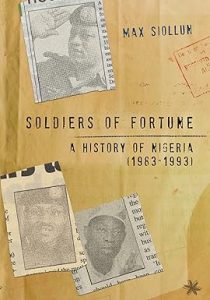
Soldiers Of Fortune

7,000.00

‘This book is the story of Nigeria’s political journey between December 31, 1983 and August 27, 1993. This is the story of how things fell apart.’

The years between 1983 and 1993 were momentous for Nigeria. Military rule was a time of increased violence, rampant corruption, coups, coup plotting and coup baiting. It moulded the conditions and character of Nigeria today, forcing seismic changes on the political, economic and religious landscape that nearly tore the country apart on several occasions.

Soldiers of Fortune is a fast-paced and thrilling narrative of the major events of the Buhari and Babangida era. The book draws on previously uncovered observations from interviews conducted with insiders (including a former member of the Brigade of Guards and Nigerian Airways personnel who witnessed the attempted kidnap of Umaru Dikko), to compile step-by-step dramatic reconstructions of disputed events and intrigues. Siollun’s fresh perspective challenges preconceived views to reveal the true story behind controversies of the period: the annulment of the June 12 election, the dubious execution of Mamman Vatsa, the foiled kidnapping of Umaru Dikko, the Orkar coup and the inconclusive case of the assassination of Dele Giwa.

Historian Max Siollun gives an intimate, fly-on-the-wall portrait of the major events and dramatis personae of the period. He paints a vivid picture of leaders such as Ibrahim Babangida, whose ‘amiable personality, effusive charm and warm bonhomie’ distracted from his determined grip on power, political cunning and retention of detested laws. Siollun also relates anecdotes from how ‘pillow talk’ had a role in the 1983 coup, to the troubled final hours of the condemned Mamman Vatsa, childhood friend of Babangida. We are reminded of the important role played by civilians in supporting and sponsoring successive coups, and as such, we are forced to reassess apparent heroes such as the business tycoon, M.K.O Abiola.

Alongside its close-up, dramatised narrative, Soldiers of Fortune also provides clear and detailed analysis of the period, revealing Nigerians’ complicity in the corruption of everyday life. It makes use of charts, lists and neatly delineated sections to pick apart the complex and often murky details of military rule, effectively demonstrating how the key events and protagonists of the period had a long-lasting impact which still resonates throughout Nigeria today.

Both gripping and informative, Soldiers of Fortune is a must-read for all Nigerians and Nigeria-watchers. Its dramatic narrative style and clear attention to detail will engage casual, journalistic and academic readers alike.

Cocaine

7,000.00

The story of cocaine isn’t just about crime and profit; it’s about psychoanalysis, about empire building, about exploitation, emancipation, and, ultimately, about power. To tell the story of the twentieth century without reference to this drug and its contribution is to miss a vital and fascinating strand of social history. Streatfeild examines the story of cocaine from its first medical uses to the worldwide chaos it causes today. His research takes him from the arcane reaches of the British Library to the isolation cells of America’s most secure prisons; from the crackhouses of New York to the jungles of Bolivia and Colombia.

The Godmother

7,000.00

The chilling story of one woman’s rise to prominence in the Italian Mafia, and the as-yet untold stories of the women who followed in her footsteps.

For as long as it has gripped our imaginations, the Mafia has been tied to an ingrained image of masculinity. We read about “made men,” “wiseguys,” and “goodfellas” leading criminal organizations whose culture prizes machismo, with women as ancillary and often-powerless characters: trivialized mistresses and long-suffering mob wives. The reality is far more complex.

In The Godmother, investigative journalist Barbie Latza Nadeau tells the stories of the women who have risen to prominence, and fallen out of favor, in the Italian mob, beginning with the most infamous of these women: Pupetta Maresca. A Mafia woman born and raised, Pupetta avenged her husband’s murder, firing 29 shots at the man who killed him.

Woven throughout Pupetta’s story is Nadeau’s diligent research, and her personal interviews with the Mafia women themselves. Nadeau takes readers inside the Mafia families to paint a complete and complex portrait of the real culture that has shaped the Mafia, and the women who are part of it.

Leaving behind the stereotypes we know from Mafia movies, The Godmother shows the Mafia in an entirely new light: full-fledged, ruthless, twenty-first-century criminal enterprises led by whoever is strong enough and smart enough to take control.

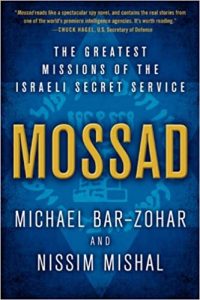
Mossad

7,000.00

For decades, Israel’s renowned security arm, the Mossad, has been widely recognized as the best intelligence service in the world. In Mossad, authors Michael Bar-Zohar and Nissim Mishal take us behind the closed curtain with riveting, eye-opening, boots-on-the-ground accounts of the most dangerous, most crucial missions in the agency’s 60-year history. These are real Mission: Impossible true stories brimming with high-octane action—from the breathtaking capture of Nazi executioner Adolph Eichmann to the recent elimination of key Iranian nuclear scientists. Anyone who is fascinated by the world of international espionage, intelligence, and covert “Black-Ops” warfare will find Mossad electrifying reading.

Mossad unveils the defining and most dangerous operations, unknown heroes, and mysterious agents of the world’s most respected—and most enigmatic—intelligence service. Here are the thrilling stories of daring top secret missions, including the capture of Adolf Eichmann, the eradication of Black September, the destruction of the Syrian nuclear facility, and the elimination of key Iranian nuclear scientists.

Drawn from intensive research and exclusive interviews with Israeli leaders and Mossad operatives, this riveting history brings to life the brave agents, deadly villains, and major battlegrounds that have shaped Israel and the world at large for more than sixty years.

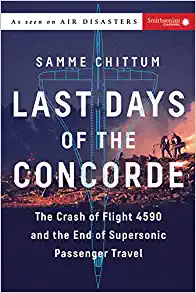
The Last Days Of The Concorde

7,000.00

The gripping true tale of a devastating plane crash, the investigation into its causes, and the race to prevent similar disasters in the future.

On July 25, 2000, a Concorde, the world’s fastest passenger plane, was taking off from Charles de Gaulle Airport in Paris when it suddenly burst into flames. An airliner capable of flying at more than twice the speed of sound, the Concorde had completed 25 years of successful flights, whisking wealthy passengers–from diplomats to rock stars to corporate titans–between continents on brief and glamorous flights. Yet on this fateful day, the chartered Concorde jet, en route to America, crashed and killed all 109 passengers and crew onboard and four people on the ground. Urgent questions immediately arose as investigators scrambled to discover what had gone wrong. What caused the fire? Could it have been prevented? And, most urgently, was the Concorde safe to fly?

Last Days of the Concorde addresses these issues and many more, offering a fascinating insider’s look at the dramatic disaster, the hunt for clues, and the systemic overhauls that followed the crash.

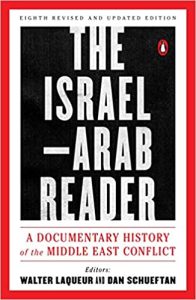
The Israel Arab Reader

7,000.00

An essential resource, newly revised and updated

In print for nearly half a century, and now in its eighth edition, The Israel-Arab Reader is an authoritative guide to over a century of conflict in the Middle East. It covers the full spectrum of a violent and checkered history—the origins of Zionism and Arab nationalism, the struggles surrounding Israel’s independence in 1948, the Six-Day War and other wars and hostilities over the decades, and the long diplomatic process and many peace initiatives.

Arranged chronologically and without bias by two veteran historians of the Middle East, this comprehensive reference brings together speeches, letters, articles, and reports involving all the major interests in the area. The eighth edition features a new introduction as well as a large new section—more than 40 pages—recounting developments over the last decade, including the intra-Palestinian factional strife between Fatah and Hamas, the roles played by Egypt and Iran in the region, enduring arguments over a two-state solution and the right of return for Palestinian refugees, and issues of human rights abuse and terrorism.

The African Lookbook: A Visual History of 100 Years of African Women

7,000.00

An unprecedented visual history of African women told in striking and subversive historical photographs―featuring an Introduction by Edwidge Danticat and a Foreword by Jacqueline Woodson.

Most of us grew up with images of African women that were purely anthropological―bright displays of exotica where the deeper personhood seemed tucked away. Or they were chronicles of war and poverty―“poverty porn.” But now, curator Catherine E. McKinley draws on her extensive collection of historical and contemporary photos to present a visual history spanning a hundred-year arc (1870–1970) of what is among the earliest photography on the continent. These images tell a different story of African women: how deeply cosmopolitan and modern they are in their style; how they were able to reclaim the tools of the colonial oppression that threatened their selfhood and livelihoods.

Featuring works by celebrated African masters, African studios of local legend, and anonymous artists, The African Lookbook captures the dignity, playfulness, austerity, grandeur, and fantasy-making of African women across centuries. McKinley also features photos by Europeans―most starkly, striking nudes―revealing the relationships between white men and the Black female sitters where, at best, a grave power imbalance lies. It’s a bittersweet truth that when there is exploitation there can also be profound resistance expressed in unexpected ways―even if it’s only in gazing back. These photos tell the story of how the sewing machine and the camera became powerful tools for women’s self-expression, revealing a truly glorious display of everyday beauty.

Showtime At The Apollo

7,000.00

Writer Ted Fox and artist James Otis Smith bring to life Harlem’s legendary theater in this graphic novel adaptation of Fox’s definitive, critically acclaimed history of the Apollo.

Since its inception as an African-American theater in 1934, the Apollo, and the thousands of entertainers who performed there, have led the way in the presentation of swing, bebop, rhythm and blues, jazz, gospel, soul, funk and hip-hop—along with the latest in dance and comedy. The Apollo has nurtured and featured thousands of artists, many of whom have become legends. The beauty they have given the world—their art—transcends the hatred, ignorance, and intolerance that often made their lives difficult. Today, the Apollo enjoys an almost mythical status. With its breathtaking art, this graphic novel adaptation of Showtime at the Apollo brings to life the theater’s legendary significance in music history, African American history, and to the culture of New York City.

We Wish To Inform You That Tomorrow We Will Be Killed With Our Families

7,000.00

Winner of the Guardian First Book award, a first-hand account one of the defining outrages of modern history.

All at once, as it seemed, something we could have only imagined was upon us – and we could still only imagine it. This is what fascinates me most in existence: the peculiar necessity of imagining what is, in fact, real.

In 1994, the Rwandan government orchestrated a campaign of extermination, in which everyone in the Hutu majority was called upon to murder everyone in the Tutsi minority. Close to a million people were slaughtered in a hundred days, and the rest of the world did nothing to stop it. A year later, Philip Gourevitch went to Rwanda to investigate the most unambiguous genocide since Hitler’s war against the Jews.

Hailed by the Guardian as one of the hundred greatest nonfiction books of all time, We Wish To Inform You That Tomorrow We Will Be Killed With Our Families is a first-hand account one of the defining outrages of modern history, an unforgettable anatomy of Rwanda’s decimation. As riveting as it is moving, it is a profound reckoning with humanity’s betrayal and its perseverance.

The New Silk Roads

7,000.00

“All roads used to lead to Rome. Today they lead to Beijing.” So argues Peter Frankopan in this revelatory new book.

In the age of Brexit and Trump, the West is buffeted by the tides of isolationism and fragmentation. Yet to the East, this is a moment of optimism as a new network of relationships takes shape along the ancient trade routes. In The New Silk Roads, Peter Frankopan takes us on an eye-opening journey through the region, from China’s breathtaking infrastructure investments to the flood of trade deals among Central Asian republics to the growing rapprochement between Turkey and Russia. This important book asks us to put aside our preconceptions and see the world from a new—and ultimately hopeful—perspective.

1 7 8 9 11