
Paperback
₦22,000.00
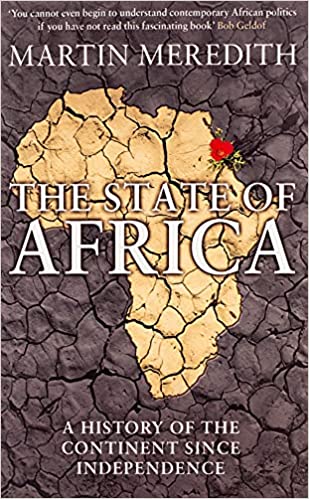
The State Of Africa
Africa is forever on our TV screens, but the bad-news stories (famine, genocide, corruption) massively outweigh the good (South Africa). Ever since the process of decolonialisation began in the mid-1950s, and arguably before, the continent has appeared to be stuck in a process of irreversible decline. Constant war, improper use of natural resources and misappropriation of revenues and aid monies contribute to an impression of a continent beyond hope. How did we get here?
What, if anything, is to be done? Weaving together the key stories and characters of the last fifty years into a stunningly compelling and coherent narrative, Martin Meredith has produced the definitive history of how European ideas of how to organise 10,000 different ethnic groups has led to what Tony Blair described as the ‘scar on the conscience of the world’. Authoritative, provocative and consistently fascinating, this is a major book on one of the most important issues facing the West today.
Out of stock
Related products

The Key Man
₦9,000.00In this compelling story of lies, greed and tarnished idealism, two Wall Street Journal reporters investigate a man who Bill Gates, Western governments, and other investors entrusted with billions of dollars to make profits and end poverty, but who now stands accused of masterminding one of the biggest, most brazen financial frauds ever.
Arif Naqvi was charismatic, inspiring, and self-made—all the qualities of a successful business leader. The founder of Abraaj, a Dubai-based private-equity firm, Naqvi was the Key Man to the global elite searching for impact investments to make money and do good. He persuaded politicians he could help stabilize the Middle East after 9/11 by providing jobs and guided executives to opportunities in cities they struggled to find on the map. Bill Gates helped him start a $1 billion fund to improve healthcare in poor countries and the UN and Interpol appointed him to boards. As Pope Francis blessed a move to harness capitalism for the good of the poor, Naqvi won the support of Obama’s administration and investors, who compared him to Tom Cruise in Mission: Impossible.
In 2018, Simon Clark and Will Louch were contacted by an anonymous whistleblower who said Naqvi had swindled investors out of hundreds of millions of dollars and offered bribes to sustain his billionaire lifestyle. Digging into the claims, Clark and Louch uncovered hundreds of documents and exposed the wrongdoing. In April 2019—months after their exposé broke—Naqvi was arrested on charges of fraud and racketeering, and faces up to 291 years in jail.
Populated by a cast of larger-than-life characters and moving across Asia, Africa, Europe and America, The Key Man is the story of how the global elite was duped by a capitalist fairytale. Clark and Louch shine a light on efforts to clean up global capital flows even as opaque private equity firms amass trillions of dollars and offshore tax havens cast a veil of secrecy which prevents regulators, investors and citizens from understanding what’s really going on in the finance industry.
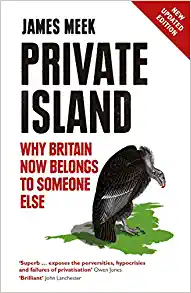
Private Island
₦4,500.00In a little over a generation the bones and sinews of the British economy – rail, energy, water, postal services, municipal housing – have been sold to remote, unaccountable private owners, often from overseas. In a series of brilliant portraits the award-winning novelist and journalist James Meek shows how Britain’s common wealth became private, and the impact it has had on us all: from the growing shortage of housing to spiralling energy bills.
Meek explores the human stories behind the incremental privatization of the nation over the last three decades. He shows how, as our national assets are sold, ordinary citizens are handed over to private tax-gatherers, and the greatest burden of taxes shifts to the poorest. In the end, it is not only public enterprises that have become private property, but we ourselves.
Urgent, powerfully written and deeply moving, this is a passionate anatomy of the state of the nation: of what we have lost and what losing it cost us – the rent we must pay to exist on this private island.
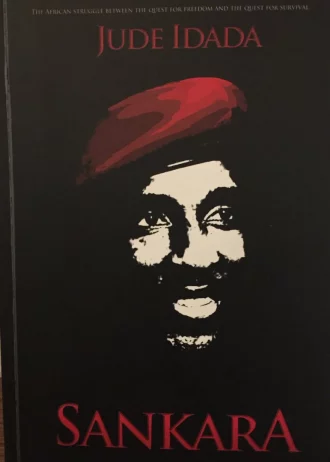
Sankara
₦2,500.00The African Renaissance is the concept that African people and nations shall overcome the current challenges confronting the continent and achieve cultural, scientific, and economic renewal.
At thirty-three, in 1983, Thomas Sankara came to power with a goal of eliminating corruption and eliminating the vestiges colonial domination. He immediately launched one of the most ambitious programmes for social and economic change ever attempted on the African continent. Sankara was assassinated by troops led by Blaise Compaoré in 1987.
It is this Thomas Sankara, held by some as one of Africa’s foremost statesmen, and derided by a small minority as a ruthless dictator, that Jude Idada sets to examine in this play. Everyone interested in history and the subject of an African Renaissance should read this play written by Jude Idada
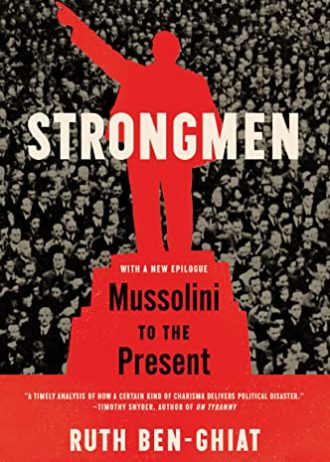
Strongmen
₦8,500.00Ruth Ben-Ghiat is the expert on the “strongman” playbook employed by authoritarian demagogues from Mussolini to Putin—enabling her to predict with uncanny accuracy the recent experience in America and Europe. In Strongmen, she lays bare the blueprint these leaders have followed over the past 100 years, and empowers us to recognize, resist, and prevent their disastrous rule in the future.
For ours is the age of authoritarian rulers: self-proclaimed saviors of the nation who evade accountability while robbing their people of truth, treasure, and the protections of democracy. They promise law and order, then legitimize lawbreaking by financial, sexual, and other predators.
They use masculinity as a symbol of strength and a political weapon. Taking what you want, and getting away with it, becomes proof of male authority. They use propaganda, corruption, and violence to stay in power.
Vladimir Putin and Mobutu Sese Seko’s kleptocracies, Augusto Pinochet’s torture sites, Benito Mussolini and Muammar Gaddafi’s systems of sexual exploitation, and Silvio Berlusconi and Donald Trump’s relentless misinformation: all show how authoritarian rule, far from ensuring stability, is marked by destructive chaos.
No other type of leader is so transparent about prioritizing self-interest over the public good. As one country after another has discovered, the strongman is at his worst when true guidance is most needed by his country.
Recounting the acts of solidarity and dignity that have undone strongmen over the past 100 years, Ben-Ghiat makes vividly clear that only by seeing the strongman for what he is—and by valuing one another as he is unable to do—can we stop him, now and in the future.
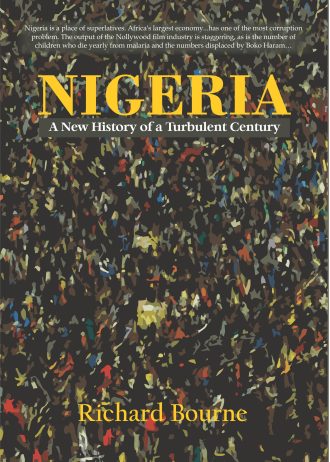
Nigeria: A New History Of A Turbulent Century
₦5,000.00Known as the African Giant, Nigeria’s story is complex and often contradictory. How, despite the ravages of colonialism, civil war, ongoing economic disappointment and most recently the Boko Haram insurgency, has the country managed to stay together for a hundred years? Why, despite an abundance of oil, mineral and agricultural wealth, have so many of its people remained in poverty? These are the key questions explored by Richard Bourne in this remarkable and wide-ranging account of Nigeria’s history, from its creation in 1914 to the historic 2015 elections and beyond.
Featuring a wealth of original research and interviews, this is an essential insight into the shaping of a country where, despite the seemingly dashed optimism that was raised at independence, there remains hope ‘the Nigeria project’ may still succeed.
Reviews
There are no reviews yet.