
Paperback

₦5,000.00
The Mafia
Drawing on two decades of original research and personal experience, multi award-winning writer the late George Carpozi Jr and William Balsamo, great nephew of the first godfather, Don Guiseppe ‘Battista’ Balsamo, trace the Mafia’s beginnings from an underground patriotic society which sprang up six hundred years ago in Sicily, through the group of Italian immigrants – the Black Hand – who savagely tore control of New York’s waterfronts away from the Irish racketeers, to the Mob which went on to run organised crime throughout Italy and America, and whose insidious influence even reached into a presidential administration.
The Mafia has long been one of the most mythical and misunderstood criminal organisations. This book, with filmic detail, behind-closed-doors dialogue and first-hand story-telling, gets deeper inside it than ever before.
Compulsively chilling, The Mafia: The First 100 Years reads like the best crime fiction, yet is the terrifying, deadly truth.
Related products
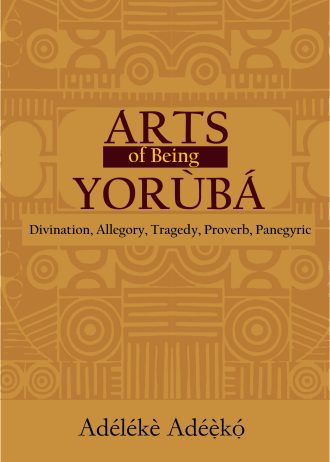
Arts Of Being Yoruba
₦5,000.00Adélékè Adéeko documents Yorùbá patterns of behavior and articulates a philosophy of how to be Yorùbá in this innovative study. As he focuses on historical writings, Ifá divination practices, the use of proverbs in contemporary speech, photography, gendered ideas of dressing well, and the formalities of ceremony and speech at celebratory occasions
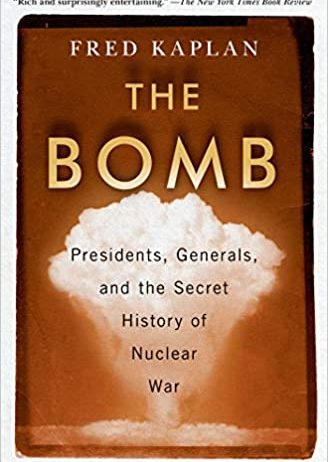
The Bomb
₦7,000.00Fred Kaplan, hailed by TheNew York Times as “a rare combination of defense intellectual and pugnacious reporter,” takes us into the White House Situation Room, the Joint Chiefs of Staff’s “Tank” in the Pentagon, and the vast chambers of Strategic Command to bring us the untold stories—based on exclusive interviews and previously classified documents—of how America’s presidents and generals have thought about, threatened, broached, and just barely avoided nuclear war from the dawn of the atomic age until today.
Kaplan’s historical research and deep reporting will stand as the permanent record of politics. Discussing theories that have dominated nightmare scenarios from Hiroshima and Nagasaki, Kaplan presents the unthinkable in terms of mass destruction and demonstrates how the nuclear war reality will not go away, regardless of the dire consequences.
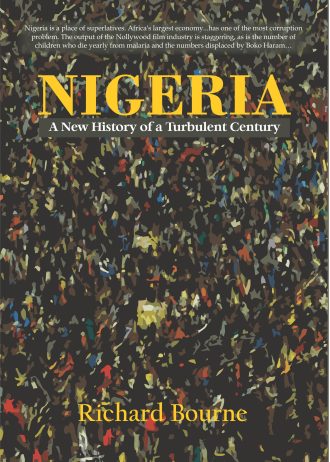
Nigeria: A New History Of A Turbulent Century
₦5,000.00Known as the African Giant, Nigeria’s story is complex and often contradictory. How, despite the ravages of colonialism, civil war, ongoing economic disappointment and most recently the Boko Haram insurgency, has the country managed to stay together for a hundred years? Why, despite an abundance of oil, mineral and agricultural wealth, have so many of its people remained in poverty? These are the key questions explored by Richard Bourne in this remarkable and wide-ranging account of Nigeria’s history, from its creation in 1914 to the historic 2015 elections and beyond.
Featuring a wealth of original research and interviews, this is an essential insight into the shaping of a country where, despite the seemingly dashed optimism that was raised at independence, there remains hope ‘the Nigeria project’ may still succeed.
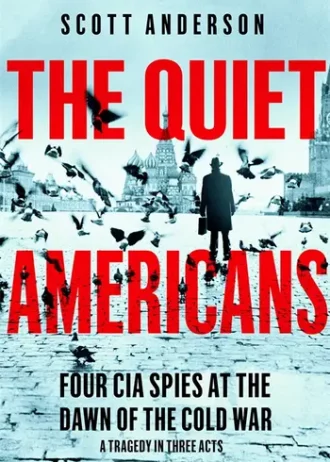
The Quiet Americans
₦6,500.00At the end of World War II, the United States dominated the world militarily, economically, and in moral standing – seen as the victor over tyranny and a champion of freedom. But it was clear – to some – that the Soviet Union was already executing a plan to expand and foment revolution around the world. The American government’s strategy in response relied on the secret efforts of a newly-formed CIA.
The Quiet Americans chronicles the exploits of four spies – Michael Burke, a charming former football star fallen on hard times, Frank Wisner, the scion of a wealthy Southern family, Peter Sichel, a sophisticated German Jew who escaped the Nazis, and Edward Lansdale, a brilliant ad executive. The four ran covert operations across the globe, trying to outwit the ruthless KGB in Berlin, parachuting commandos into Eastern Europe, plotting coups, and directing wars against Communist insurgents in Asia.
But time and again their efforts went awry, thwarted by a combination of stupidity and ideological rigidity at the highest levels of the government – and more profoundly, the decision to abandon American ideals. By the mid-1950s, the Soviet Union had a stranglehold on Eastern Europe, the US had begun its disastrous intervention in Vietnam, and America, the beacon of democracy, was overthrowing democratically elected governments and earning the hatred of much of the world. All of this culminated in an act of betrayal and cowardice that would lock the Cold War into place for decades to come.
Anderson brings to the telling of this story all the narrative brio, deep research, sceptical eye, and lively prose that made Lawrence in Arabia a major international bestseller. The intertwined lives of these men began in a common purpose of defending freedom, but the ravages of the Cold War led them to different fates. Two would quit the CIA in despair, stricken by the moral compromises they had to make; one became the archetype of the duplicitous and destructive American spy; and one would be so heartbroken he would take his own life.
Scott Anderson’s The Quiet Americans is the story of these four men. It is also the story of how the United States, at the very pinnacle of its power, managed to permanently damage its moral standing in the world.

What Britain Did To Nigeria
₦9,000.00Most accounts of Nigeria’s colonisation were written by British officials, presenting it as a noble civilising mission to rid Africans of barbaric superstition and corrupt tribal leadership. Thanks to this skewed writing of history, many Nigerians today still have Empire nostalgia and view the
colonial period through rose-tinted glasses.
Max Siollun offers a bold rethink: an unromanticised history, arguing compellingly that colonialism had few benevolent intentions, but many unjust outcomes. It may have ended slavery and human sacrifice, but it was accompanied by extreme violence; ethnic and religious identity were cynically exploited to maintain control, while the forceful remoulding of longstanding legal and social practices permanently altered the culture and internal politics of indigenous communities. The aftershocks of this colonial meddling are still being felt decades after independence. Popular narratives often suggest that the economic and political turmoil are homegrown, but the reality is that Britain created many of Nigeria’s crises, and has left them behind for Nigerians to resolve.
This is a definitive, head-on confrontation with Nigeria’s experience under British rule, showing how it forever changed the country–perhaps cataclysmically.
Reviews
There are no reviews yet.