
Paperback
₦7,000.00
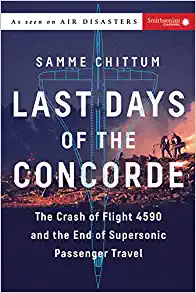
The Last Days Of The Concorde
The gripping true tale of a devastating plane crash, the investigation into its causes, and the race to prevent similar disasters in the future.
On July 25, 2000, a Concorde, the world’s fastest passenger plane, was taking off from Charles de Gaulle Airport in Paris when it suddenly burst into flames. An airliner capable of flying at more than twice the speed of sound, the Concorde had completed 25 years of successful flights, whisking wealthy passengers–from diplomats to rock stars to corporate titans–between continents on brief and glamorous flights. Yet on this fateful day, the chartered Concorde jet, en route to America, crashed and killed all 109 passengers and crew onboard and four people on the ground. Urgent questions immediately arose as investigators scrambled to discover what had gone wrong. What caused the fire? Could it have been prevented? And, most urgently, was the Concorde safe to fly?
Last Days of the Concorde addresses these issues and many more, offering a fascinating insider’s look at the dramatic disaster, the hunt for clues, and the systemic overhauls that followed the crash.
Related products
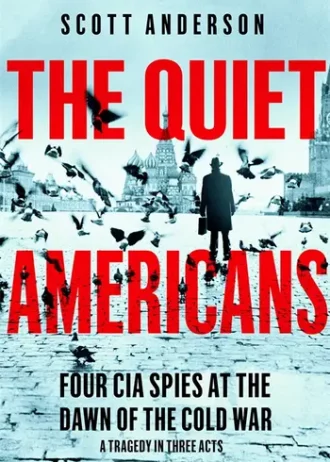
The Quiet Americans
₦6,500.00At the end of World War II, the United States dominated the world militarily, economically, and in moral standing – seen as the victor over tyranny and a champion of freedom. But it was clear – to some – that the Soviet Union was already executing a plan to expand and foment revolution around the world. The American government’s strategy in response relied on the secret efforts of a newly-formed CIA.
The Quiet Americans chronicles the exploits of four spies – Michael Burke, a charming former football star fallen on hard times, Frank Wisner, the scion of a wealthy Southern family, Peter Sichel, a sophisticated German Jew who escaped the Nazis, and Edward Lansdale, a brilliant ad executive. The four ran covert operations across the globe, trying to outwit the ruthless KGB in Berlin, parachuting commandos into Eastern Europe, plotting coups, and directing wars against Communist insurgents in Asia.
But time and again their efforts went awry, thwarted by a combination of stupidity and ideological rigidity at the highest levels of the government – and more profoundly, the decision to abandon American ideals. By the mid-1950s, the Soviet Union had a stranglehold on Eastern Europe, the US had begun its disastrous intervention in Vietnam, and America, the beacon of democracy, was overthrowing democratically elected governments and earning the hatred of much of the world. All of this culminated in an act of betrayal and cowardice that would lock the Cold War into place for decades to come.
Anderson brings to the telling of this story all the narrative brio, deep research, sceptical eye, and lively prose that made Lawrence in Arabia a major international bestseller. The intertwined lives of these men began in a common purpose of defending freedom, but the ravages of the Cold War led them to different fates. Two would quit the CIA in despair, stricken by the moral compromises they had to make; one became the archetype of the duplicitous and destructive American spy; and one would be so heartbroken he would take his own life.
Scott Anderson’s The Quiet Americans is the story of these four men. It is also the story of how the United States, at the very pinnacle of its power, managed to permanently damage its moral standing in the world.
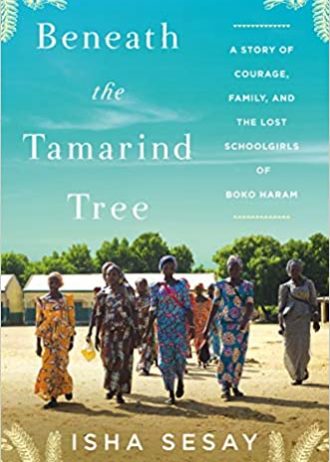
Beneath the Tamarind Tree
₦5,000.00In the early morning of April 14, 2014, the militant Islamic group Boko Haram violently burst into the small town of Chibok, Nigeria, and abducted 276 girls from their school dorm rooms. From poor families, these girls were determined to make better lives for themselves, but pursuing an education made them targets, resulting in one of the most high-profile abductions in modern history. While the Chibok kidnapping made international headlines, and prompted the #BringBackOurGirls movement, many unanswered questions surrounding that fateful night remain about the girls’ experiences in captivity, and where many of them are today.
In Beneath the Tamarind Tree, Isha Sesay tells this story as no one else can. Originally from Sierra Leone, Sesay led CNN’s Africa reporting for more than a decade, and she was on the front lines when this story broke. With unprecedented access to a group of girls who made it home, she follows the journeys of Priscilla, Saa, and Dorcas in an uplifting tale of sisterhood and survival.
Sesay delves into the Nigerian government’s inadequate response to the kidnapping, exposes the hierarchy of how the news gets covered, and synthesizes crucial lessons about global national security. She also reminds us of the personal sacrifice required of journalists to bring us the truth at a time of growing mistrust of the media. Beneath the Tamarind Tree is a gripping read and a story of resilience with a soaring message of hope at its core, reminding us of the ever-present truth that progress for all of us hinges on unleashing the potential of women.

Epic African Myths & Tales
₦8,000.00Africa south of the Sahara is a land of wide-ranging traditions and varying cultures. Despite the diversity and the lack of early written records, the continent possesses a rich body of folk tales and legends that have been passed down through the strong custom of storytelling and which often share similar elements, characters and ideas between peoples. So this collection offers a hefty selection of legends and tales – stories of the gods, creation and origins, trickster exploits, animal fables and stories which entertain and edify – from ‘Obatala Creates Mankind’, from the Yoruba people of west Africa, to ‘The Girl Of The Early Race, Who Made Stars’, from the San people of southern Africa, all collected in a gorgeous gold-foiled and embossed hardback to treasure.

The State Of Africa
₦22,000.00Africa is forever on our TV screens, but the bad-news stories (famine, genocide, corruption) massively outweigh the good (South Africa). Ever since the process of decolonialisation began in the mid-1950s, and arguably before, the continent has appeared to be stuck in a process of irreversible decline. Constant war, improper use of natural resources and misappropriation of revenues and aid monies contribute to an impression of a continent beyond hope. How did we get here?
What, if anything, is to be done? Weaving together the key stories and characters of the last fifty years into a stunningly compelling and coherent narrative, Martin Meredith has produced the definitive history of how European ideas of how to organise 10,000 different ethnic groups has led to what Tony Blair described as the ‘scar on the conscience of the world’. Authoritative, provocative and consistently fascinating, this is a major book on one of the most important issues facing the West today.
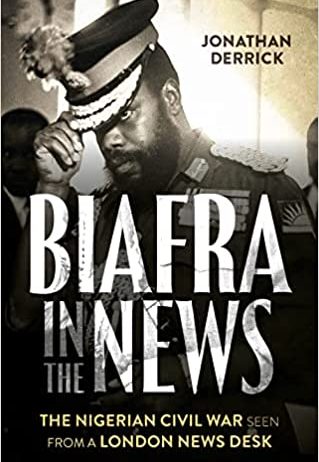
Biafra In The News
₦10,000.00Fifty years ago, Nigeria endured a period of violent disturbance leading to the breakaway of the Eastern Region under the name Biafra. The resulting conflict (1967-70) aroused shock and protests around the world because of mass starvation in the war zone. While Britain supplied arms to the federal
Nigerian government, and France to the Biafrans, relief agencies with contributions from countless individuals organized a memorable airlift of food and medicine to the Biafrans’ Uli airstrip.
Jonathan Derrick, then a journalist for the London weekly West Africa, followed these events closely and
recorded the war in the magazine’s news pages, right up to the federal forces’ final victory and the remarkable reconciliation between supporters of Biafra–predominantly Igbo–and other Nigerians. He later worked for some years in Nigeria, and has studied much of the material published on the war
since 1970.
Here, he recounts the history of the conflict as documented in West Africa, referring to later literature on and analysis of the events, which inspired passion at the time and have provoked debate ever since. His account deals with myths, misapprehensions and controversies surrounding the conflict, while recalling the tragic facts of a grim episode in African history.
Reviews
There are no reviews yet.