
Paperback
₦11,000.00
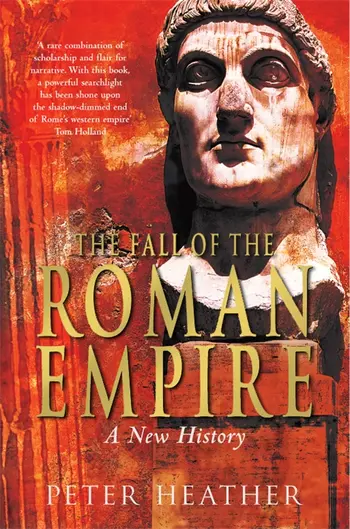
The Fall Of The Roman Empire
In AD 378 the Roman Empire had been the unrivalled superpower of Europe for well over four hundred years. And yet, August that year saw a small group of German-speaking asylum-seekers rout a vast Imperial army at Hadrianople, killing the Emperor and establishing themselves on Roman territory. Within a hundred years the last Emperor of the Western Empire had been deposed. What had gone wrong?
In this ground breaking book, Peter Heather proproses a stunning new solution to one of the greatest mysteries of history. Mixing authoratative analysis with thrilling narrative, he brings fresh insight into the panorama of the empire’s end, from the bejewelled splendour of the imperial court to the dripping forests of “Barbaricum”. He examines the extraordinary success story that was the Roman Empire and uses a new understanding of its continued strength and enduring limitations to show how Europe’s barbarians, transformed by centuries of contact with Rome, eventually pulled it apart.
Out of stock
Related products


Arts Of Being Yoruba
₦5,000.00Adélékè Adéeko documents Yorùbá patterns of behavior and articulates a philosophy of how to be Yorùbá in this innovative study. As he focuses on historical writings, Ifá divination practices, the use of proverbs in contemporary speech, photography, gendered ideas of dressing well, and the formalities of ceremony and speech at celebratory occasions

Beneath the Tamarind Tree
₦5,000.00In the early morning of April 14, 2014, the militant Islamic group Boko Haram violently burst into the small town of Chibok, Nigeria, and abducted 276 girls from their school dorm rooms. From poor families, these girls were determined to make better lives for themselves, but pursuing an education made them targets, resulting in one of the most high-profile abductions in modern history. While the Chibok kidnapping made international headlines, and prompted the #BringBackOurGirls movement, many unanswered questions surrounding that fateful night remain about the girls’ experiences in captivity, and where many of them are today.
In Beneath the Tamarind Tree, Isha Sesay tells this story as no one else can. Originally from Sierra Leone, Sesay led CNN’s Africa reporting for more than a decade, and she was on the front lines when this story broke. With unprecedented access to a group of girls who made it home, she follows the journeys of Priscilla, Saa, and Dorcas in an uplifting tale of sisterhood and survival.
Sesay delves into the Nigerian government’s inadequate response to the kidnapping, exposes the hierarchy of how the news gets covered, and synthesizes crucial lessons about global national security. She also reminds us of the personal sacrifice required of journalists to bring us the truth at a time of growing mistrust of the media. Beneath the Tamarind Tree is a gripping read and a story of resilience with a soaring message of hope at its core, reminding us of the ever-present truth that progress for all of us hinges on unleashing the potential of women.
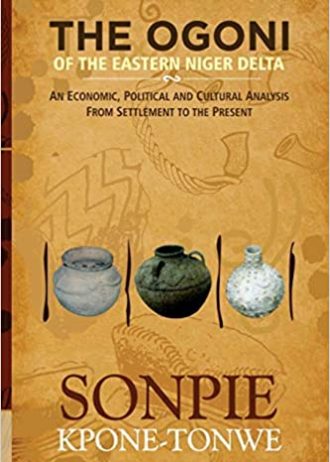
The Ogoni of the Eastern Niger Delta
₦8,000.00The Ogoni of the Eastern Niger Delta are an ancient African community in Southern Nigeria, whose history dates back to BC times. Their history is rich in customs, traditions, economics, politics and culture, which date back to Herodotus, the Greek historian, who wrote about the Silent Trade in West Africa”, in the 4th century BC, a story also reported by the Ogoni in their oral tradition.
Scholars frequently relate the history of West Africa to the coming of the white man into the region. The Ogoni of the Eastern Niger Delta shows that the colonialists later came to see a lot of innovations by the Ogoni; such as trade, money, industry, agriculture, leadership training, government, law, music, sea travel, war and more.
This book is a giant attempt to record and preserve these cultures for future study and development. There is a seperate volume containing fieldwork data on almost every subject for researchers to consult.
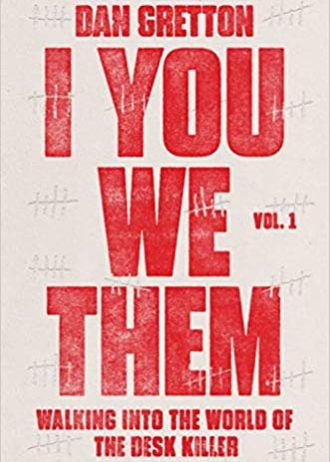
I You We Them
₦15,000.00A landmark historical investigation into crimes against humanity and the nature of evil
Vast and revelatory, Dan Gretton’s I You We Them is an unprecedented study of the perpetrators of crimes against humanity: the “desk killers” who ordered and directed some of the worst atrocities of the modern era. From Albert Speer’s complicity in Nazi barbarism to Royal Dutch Shell’s role in the murders of the Nigerian activist Ken Saro-Wiwa and the rest of the Ogoni Nine, Gretton probes the depths of the figure “who, by giving orders, uses paper or a phone or a computer to kill, instead of a gun.”
Over the past twenty years, Gretton has interviewed survivors and perpetrators, and pored over archives and thousands of pages of testimony. His insight into the psychology of the desk killer is contextualized by the journey he took to penetrate it. Woven into the narrative are his contemplative interludes―perspectives gleaned during walks in the woods, reminiscences about a lost love, and considerations of timeless moral conundrums. The result is a genre-bending work steeped as much in personal reflection as it is in literature and historical and psychological illumination.
A synthesis of history, reportage, and memoir, I You We Them is the first volume of a groundbreaking journal of discovery that bears witness to and reckons with the largest and most pressing questions before humanity.

The Key Man
₦9,000.00In this compelling story of lies, greed and tarnished idealism, two Wall Street Journal reporters investigate a man who Bill Gates, Western governments, and other investors entrusted with billions of dollars to make profits and end poverty, but who now stands accused of masterminding one of the biggest, most brazen financial frauds ever.
Arif Naqvi was charismatic, inspiring, and self-made—all the qualities of a successful business leader. The founder of Abraaj, a Dubai-based private-equity firm, Naqvi was the Key Man to the global elite searching for impact investments to make money and do good. He persuaded politicians he could help stabilize the Middle East after 9/11 by providing jobs and guided executives to opportunities in cities they struggled to find on the map. Bill Gates helped him start a $1 billion fund to improve healthcare in poor countries and the UN and Interpol appointed him to boards. As Pope Francis blessed a move to harness capitalism for the good of the poor, Naqvi won the support of Obama’s administration and investors, who compared him to Tom Cruise in Mission: Impossible.
In 2018, Simon Clark and Will Louch were contacted by an anonymous whistleblower who said Naqvi had swindled investors out of hundreds of millions of dollars and offered bribes to sustain his billionaire lifestyle. Digging into the claims, Clark and Louch uncovered hundreds of documents and exposed the wrongdoing. In April 2019—months after their exposé broke—Naqvi was arrested on charges of fraud and racketeering, and faces up to 291 years in jail.
Populated by a cast of larger-than-life characters and moving across Asia, Africa, Europe and America, The Key Man is the story of how the global elite was duped by a capitalist fairytale. Clark and Louch shine a light on efforts to clean up global capital flows even as opaque private equity firms amass trillions of dollars and offshore tax havens cast a veil of secrecy which prevents regulators, investors and citizens from understanding what’s really going on in the finance industry.
Reviews
There are no reviews yet.