
Paperback

₦6,500.00
The Character Edge
True leadership is about character – this is the key to winning ‘the right way’.
In a world where we’re bombarded by messages of ‘winning at any cost’, dishonest politicians, CEOs committing fraud, disgraced military commanders and cheating athletes, integrity matters more than ever. The Character Edge explains the powerful role character plays in trust, culture and leadership, and offers readers tools to exercise and strengthen their own.
Reaching from the battlefield to the classroom and beyond, former superintendent of West Point Robert Caslen and professor of psychology Dr Michael Matthews explore the vital link between strong character and strong leadership, and explain why the latter cannot exist without the former.
Out of stock
Related products
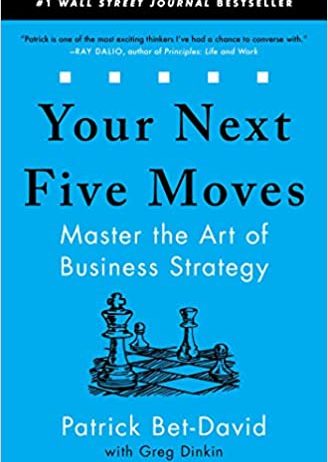
Your Next Five Moves: Master the Art of Business Strategy
₦27,000.00Both successful entrepreneurs and chess grandmasters have the vision to look at the pieces in front of them and anticipate their next five moves. In this book, Patrick Bet-David “helps entrepreneurs understand exactly what they need to do next” (Brian Tracy, author of Eat That Frog!) by translating this skill into a valuable methodology. Whether you feel like you’ve hit a wall, lost your fire, or are looking for innovative strategies to take your business to the next level, Your Next Five Moves has the answers.
You will gain:
CLARITY on what you want and who you want to be.
STRATEGY to help you reason in the war room and the board room.
GROWTH TACTICS for good times and bad.
SKILLS for building the right team based on strong values.
INSIGHT on power plays and the art of applying leverage.
Combining these principles and revelations drawn from Patrick’s own rise to successful CEO, Your Next Five Moves is a must-read for any serious executive, strategist, or entrepreneur.
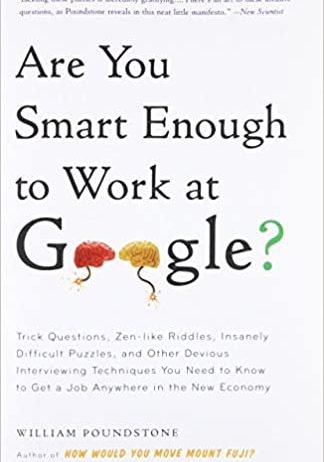
Are You Smart Enough To Work At Google?
₦5,000.00You are shrunk to the height of a nickel and thrown in a blender. The blades start moving in 60 seconds. What do you do?
If you want to work at Google, or any of America’s best companies, you need to have an answer to this and other puzzling questions. Are You Smart Enough to Work at Google? guides readers through the surprising solutions to dozens of the most challenging interview questions. The book covers the importance of creative thinking, ways to get a leg up on the competition, what your Facebook page says about you, and much more.
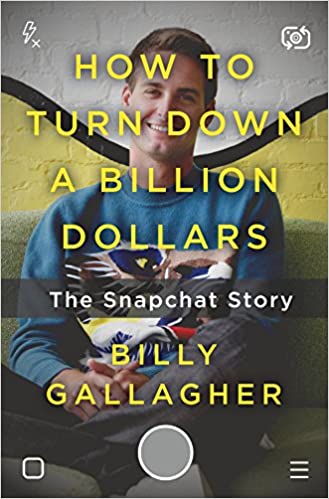
How To Turn Down A Billion Dollars: The Snapchat Story
₦4,500.00The improbable and exhilarating story of the rise of Snapchat from a frat boy fantasy to a multi-billion dollar internet unicorn that has dramatically changed the way we communicate.
In 2013 Evan Spiegel, the brash CEO of the social network Snapchat, and his co-founder Bobby Murphy stunned the press when they walked away from a three-billion-dollar offer from Facebook: how could an app teenagers use to text dirty photos dream of a higher valuation? Was this hubris, or genius?
In How to Turn Down a Billion Dollars, tech journalist Billy Gallagher takes us inside the rise of one of Silicon Valley’s hottest start-ups. Snapchat developed from a simple wish for disappearing pictures as Stanford junior Reggie Brown nursed regrets about photos he had sent. After an epic feud between best friends, Brown lost his stake in the company, while Spiegel has gone on to make a name for himself as a visionary―if ruthless―CEO worth billions, linked to celebrities like Taylor Swift and his wife, Miranda Kerr.
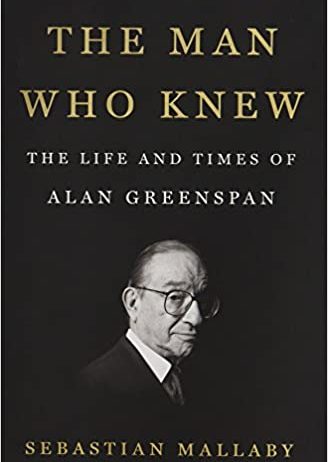
The Man Who Knew
₦8,000.00Greenspan’s life is a quintessential American success story: raised by a single mother in the Jewish émigré community of Washington Heights, he was a math prodigy who found a niche as a stats-crunching consultant. A master at explaining the economic weather to captains of industry, he translated that skill into advising Richard Nixon in his 1968 campaign. This led to a perch on the White House Council of Economic Advisers, and then to a dazzling array of business and government roles, from which the path to the Fed was relatively clear. A fire-breathing libertarian and disciple of Ayn Rand in his youth who once called the Fed’s creation a historic mistake, Mallaby shows how Greenspan reinvented himself as a pragmatist once in power. In his analysis, and in his core mission of keeping inflation in check, he was a maestro indeed, and hailed as such. At his retirement in 2006, he was lauded as the age’s necessary man, the veritable God in the machine, the global economy’s avatar. His memoirs sold for record sums to publishers around the world.
But then came 2008. Mallaby’s story lands with both feet on the great crash which did so much to damage Alan Greenspan’s reputation. Mallaby argues that the conventional wisdom is off base: Greenspan wasn’t a naïve ideologue who believed greater regulation was unnecessary. He had pressed for greater regulation of some key areas of finance over the years, and had gotten nowhere. To argue that he didn’t know the risks in irrational markets is to miss the point. He knew more than almost anyone; the question is why he didn’t act, and whether anyone else could or would have. A close reading of Greenspan’s life provides fascinating answers to these questions, answers whose lessons we would do well to heed. Because perhaps Mallaby’s greatest lesson is that economic statesmanship, like political statesmanship, is the art of the possible. The Man Who Knew is a searching reckoning with what exactly comprised the art, and the possible, in the career of Alan Greenspan.
Reviews
There are no reviews yet.