
Paperback
₦9,000.00
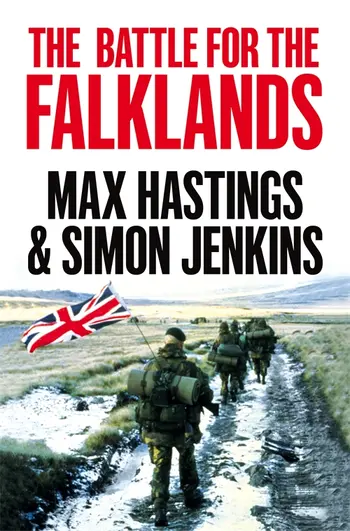
The Battle For The Falklands
The Battle for the Falklands is a thoughtful and informed analysis of an astonishing chapter in modern British history from journalist and military historian Sir Max Hastings and political editor Simon Jenkins.
Ten weeks. 28,000 soldiers. 8,000 miles from home.
The Falklands War in 1982 was one of the strangest in British history. At the time, many Britons saw it as a tragic absurdity – thousands of men sent overseas for a tiny relic of empire – but the British victory over the Argentinians not only confirmed the quality of British arms but also boosted the political fortunes of Thatcher’s Conservative government. However, it left a chequered aftermath and was later overshadowed by the two Gulf wars.
Max Hastings’ and Simon Jenkins’ account of the conflict is a modern classic of war reportage and the definitive book on the conflict.
Related products
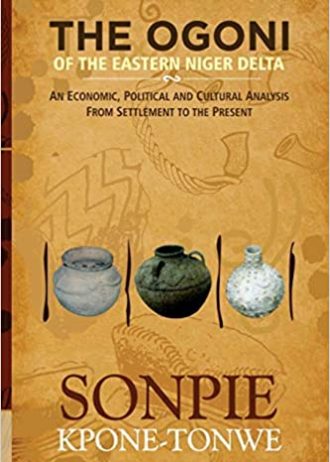
The Ogoni of the Eastern Niger Delta
₦8,000.00The Ogoni of the Eastern Niger Delta are an ancient African community in Southern Nigeria, whose history dates back to BC times. Their history is rich in customs, traditions, economics, politics and culture, which date back to Herodotus, the Greek historian, who wrote about the Silent Trade in West Africa”, in the 4th century BC, a story also reported by the Ogoni in their oral tradition.
Scholars frequently relate the history of West Africa to the coming of the white man into the region. The Ogoni of the Eastern Niger Delta shows that the colonialists later came to see a lot of innovations by the Ogoni; such as trade, money, industry, agriculture, leadership training, government, law, music, sea travel, war and more.
This book is a giant attempt to record and preserve these cultures for future study and development. There is a seperate volume containing fieldwork data on almost every subject for researchers to consult.

What Britain Did To Nigeria
₦9,000.00Most accounts of Nigeria’s colonisation were written by British officials, presenting it as a noble civilising mission to rid Africans of barbaric superstition and corrupt tribal leadership. Thanks to this skewed writing of history, many Nigerians today still have Empire nostalgia and view the
colonial period through rose-tinted glasses.
Max Siollun offers a bold rethink: an unromanticised history, arguing compellingly that colonialism had few benevolent intentions, but many unjust outcomes. It may have ended slavery and human sacrifice, but it was accompanied by extreme violence; ethnic and religious identity were cynically exploited to maintain control, while the forceful remoulding of longstanding legal and social practices permanently altered the culture and internal politics of indigenous communities. The aftershocks of this colonial meddling are still being felt decades after independence. Popular narratives often suggest that the economic and political turmoil are homegrown, but the reality is that Britain created many of Nigeria’s crises, and has left them behind for Nigerians to resolve.
This is a definitive, head-on confrontation with Nigeria’s experience under British rule, showing how it forever changed the country–perhaps cataclysmically.
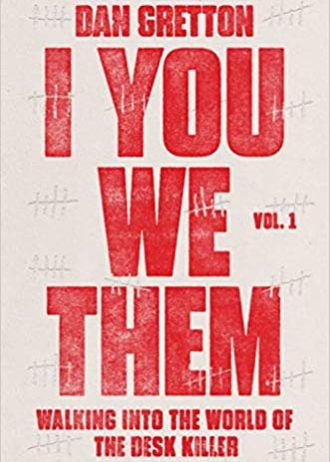
I You We Them
₦15,000.00A landmark historical investigation into crimes against humanity and the nature of evil
Vast and revelatory, Dan Gretton’s I You We Them is an unprecedented study of the perpetrators of crimes against humanity: the “desk killers” who ordered and directed some of the worst atrocities of the modern era. From Albert Speer’s complicity in Nazi barbarism to Royal Dutch Shell’s role in the murders of the Nigerian activist Ken Saro-Wiwa and the rest of the Ogoni Nine, Gretton probes the depths of the figure “who, by giving orders, uses paper or a phone or a computer to kill, instead of a gun.”
Over the past twenty years, Gretton has interviewed survivors and perpetrators, and pored over archives and thousands of pages of testimony. His insight into the psychology of the desk killer is contextualized by the journey he took to penetrate it. Woven into the narrative are his contemplative interludes―perspectives gleaned during walks in the woods, reminiscences about a lost love, and considerations of timeless moral conundrums. The result is a genre-bending work steeped as much in personal reflection as it is in literature and historical and psychological illumination.
A synthesis of history, reportage, and memoir, I You We Them is the first volume of a groundbreaking journal of discovery that bears witness to and reckons with the largest and most pressing questions before humanity.
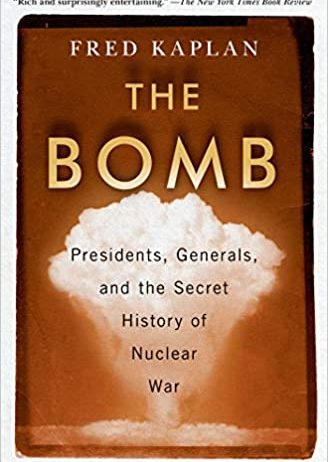
The Bomb
₦7,000.00Fred Kaplan, hailed by TheNew York Times as “a rare combination of defense intellectual and pugnacious reporter,” takes us into the White House Situation Room, the Joint Chiefs of Staff’s “Tank” in the Pentagon, and the vast chambers of Strategic Command to bring us the untold stories—based on exclusive interviews and previously classified documents—of how America’s presidents and generals have thought about, threatened, broached, and just barely avoided nuclear war from the dawn of the atomic age until today.
Kaplan’s historical research and deep reporting will stand as the permanent record of politics. Discussing theories that have dominated nightmare scenarios from Hiroshima and Nagasaki, Kaplan presents the unthinkable in terms of mass destruction and demonstrates how the nuclear war reality will not go away, regardless of the dire consequences.
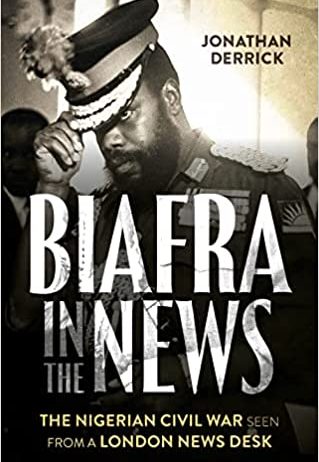
Biafra In The News
₦10,000.00Fifty years ago, Nigeria endured a period of violent disturbance leading to the breakaway of the Eastern Region under the name Biafra. The resulting conflict (1967-70) aroused shock and protests around the world because of mass starvation in the war zone. While Britain supplied arms to the federal
Nigerian government, and France to the Biafrans, relief agencies with contributions from countless individuals organized a memorable airlift of food and medicine to the Biafrans’ Uli airstrip.
Jonathan Derrick, then a journalist for the London weekly West Africa, followed these events closely and
recorded the war in the magazine’s news pages, right up to the federal forces’ final victory and the remarkable reconciliation between supporters of Biafra–predominantly Igbo–and other Nigerians. He later worked for some years in Nigeria, and has studied much of the material published on the war
since 1970.
Here, he recounts the history of the conflict as documented in West Africa, referring to later literature on and analysis of the events, which inspired passion at the time and have provoked debate ever since. His account deals with myths, misapprehensions and controversies surrounding the conflict, while recalling the tragic facts of a grim episode in African history.
Reviews
There are no reviews yet.