Hardcover
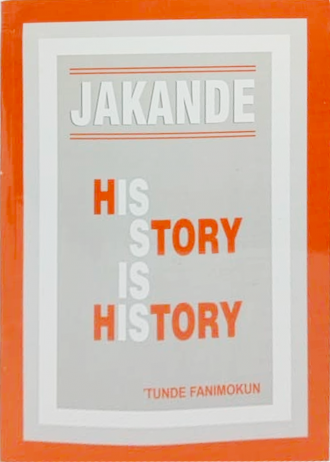
Jakande: His Story Is History
₦5,000.00This book is the story of Alhaji Chief (Dr) Lateef Kayode Jakande who was the first civilian governor of Lagos State (1979 – 1983) and the Honourable Minister of Works and Housing (1993 – 1995).

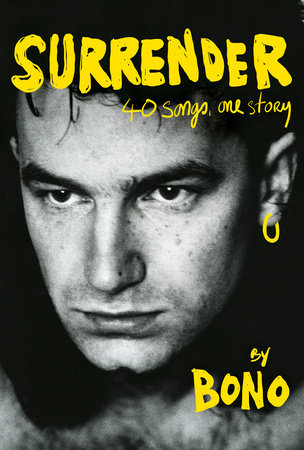
₦13,000.00
As one of the music world’s most iconic artists and the cofounder of the organizations ONE and (RED), Bono’s career has been written about extensively. But in Surrender, it’s Bono who picks up the pen, writing for the first time about his remarkable life and those he has shared it with. In his unique voice, Bono takes us from his early days growing up in Dublin, including the sudden loss of his mother when he was fourteen, to U2’s unlikely journey to become one of the world’s most influential rock bands, to his more than twenty years of activism dedicated to the fight against AIDS and extreme poverty. Writing with candor, self-reflection, and humor, Bono opens the aperture on his life—and the family, friends, and faith that have sustained, challenged, and shaped him.
Surrender’s subtitle, 40 Songs, One Story, is a nod to the book’s forty chapters, which are each named after a U2 song. Bono has also created forty original drawings for Surrender, which appear throughout the book.
This book is the story of Alhaji Chief (Dr) Lateef Kayode Jakande who was the first civilian governor of Lagos State (1979 – 1983) and the Honourable Minister of Works and Housing (1993 – 1995).
When The Mauritanian was first published as Guantánamo Diary in 2015—heavily redacted by the U.S. government—Mohamedou Ould Slahi was still imprisoned at the detainee camp in Guantánamo Bay, Cuba, despite a federal court ruling ordering his release, and it was unclear when or if he would ever see freedom. In October 2016 he was finally released and reunited with his family. During his fourteen-year imprisonment the United States never charged him with a crime.
Now he is able to tell his story in full, with previously censored material restored. This searing diary is not merely a vivid record of a miscarriage of justice, but a deeply personal memoir—terrifying, darkly humorous, and surprisingly gracious. The Mauritanian is a document of immense emotional power and historical importance.
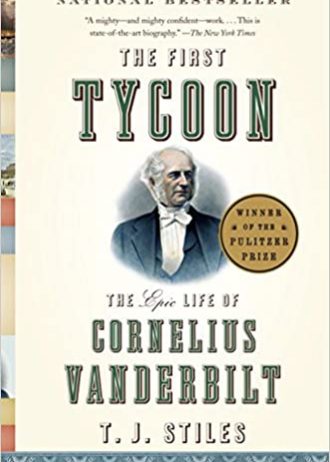
In this groundbreaking biography, T.J. Stiles tells the dramatic story of Cornelius “Commodore” Vanderbilt, the combative man and American icon who, through his genius and force of will, did more than perhaps any other individual to create modern capitalism. Meticulously researched and elegantly written, The First Tycoon describes an improbable life, from Vanderbilt’s humble birth during the presidency of George Washington to his death as one of the richest men in American history. In between we see how the Commodore helped to launch the transportation revolution, propel the Gold Rush, reshape Manhattan, and invent the modern corporation. Epic in its scope and success, the life of Vanderbilt is also the story of the rise of America itself.
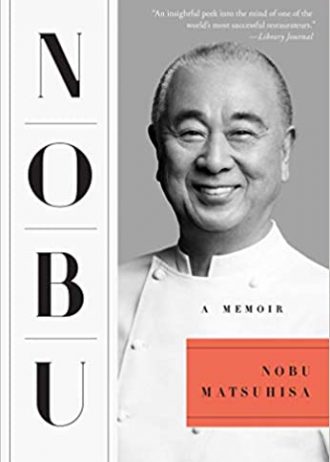
As one of the world’s most widely acclaimed restaurateurs, Nobu’s influence on food and hospitality can be found at the highest levels of haute-cuisine to the food trucks you frequent during the work week—this is the Nobu that the public knows.
But now, we are finally introduced to the private Nobu: the man who failed three times before starting the restaurant that would grow into an empire; the man who credits the love and support of his family as the only thing keeping him from committing suicide when his first restaurant burned down; and the man who values the busboy who makes sure each glass is crystal clear as highly as the chef who slices the fish for Omakase perfectly.
What makes Nobu special, and what made him famous, is the spirit of what exists on these pages. He has the traditional Japanese perspective that there is great pride to be found in every element of doing a job well—no matter how humble that job is. Furthermore, he shows us repeatedly that success is as much about perseverance in the face of adversity as it is about innate talent.
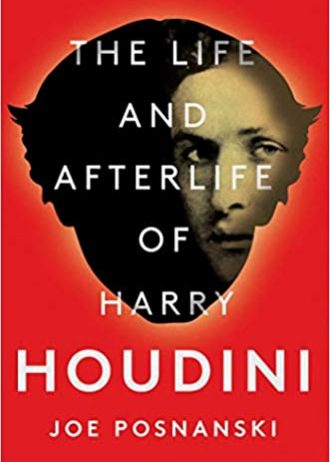
Nearly a century after Harry Houdini died on Halloween in 1926, he feels as modern and alive as ever. The name Houdini still leaps to mind whenever we witness a daring escape. The baby who frees herself from her crib? Houdini. The dog who vanishes and reappears in the neighbor’s garden? Houdini. Every generation produces new disciples of the magician, from household names in magic like David Copperfield and David Blaine to countless other followers whose lives have been transformed by the power of Houdini.
In The Life and Afterlife of Harry Houdini, award-winning journalist and #1 New York Times bestselling author Joe Posnanski enters Houdini World to understand why the magician still enthralls people. Posnanski immerses himself in Houdini’s past and present, visiting landmarks, museums (including one owned by Copperfield), attractions, and private archives. Filled with false histories and improbable facts, Houdini’s life is an irresistible contradiction. His sweeping afterlife is no less fascinating.
In rural Pennsylvania, a thirteen-year-old girl finds the courage to leave a violent home after learning that Houdini ran away to join the circus; she eventually becomes the first female magician to saw a man in half on television. In Australia, an eight-year-old boy with a learning impediment feels worthless until he sees an old poster of Houdini advertising “Nothing on earth can hold Houdini prisoner,” and begins his path to becoming that nation’s most popular magician. In California, an actor and Vietnam War veteran finds purpose in his life by uncovering the secrets of his hero.
But the unique phenomenon of Houdini was always more than his death-defying stunts or his ability to escape handcuffs and straitjackets. It is also about the power of imagination and self-invention. His incredible transformation from Ehrich Weiss, humble Hungarian immigrant and rabbi’s son, into the self-named Harry Houdini has won him a slice of immortality. No one has withstood the test of time quite like Houdini.
Fueled by Posnanski’s personal obsession with the magician—and magic itself—The Life and Afterlife of Harry Houdini is a poignant odyssey of discovery, blending biography, memoir, and first-person reporting to trace Houdini’s metamorphosis into an iconic figure who has inspired millions. Posnanski takes us on a joyous, thrilling, and, yes, magical journey to discover why Houdini endures—and what he still has to teach the world about wonder.
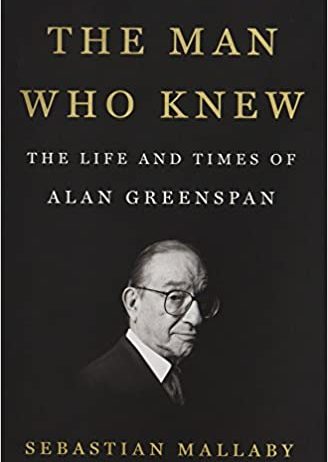
Greenspan’s life is a quintessential American success story: raised by a single mother in the Jewish émigré community of Washington Heights, he was a math prodigy who found a niche as a stats-crunching consultant. A master at explaining the economic weather to captains of industry, he translated that skill into advising Richard Nixon in his 1968 campaign. This led to a perch on the White House Council of Economic Advisers, and then to a dazzling array of business and government roles, from which the path to the Fed was relatively clear. A fire-breathing libertarian and disciple of Ayn Rand in his youth who once called the Fed’s creation a historic mistake, Mallaby shows how Greenspan reinvented himself as a pragmatist once in power. In his analysis, and in his core mission of keeping inflation in check, he was a maestro indeed, and hailed as such. At his retirement in 2006, he was lauded as the age’s necessary man, the veritable God in the machine, the global economy’s avatar. His memoirs sold for record sums to publishers around the world.
But then came 2008. Mallaby’s story lands with both feet on the great crash which did so much to damage Alan Greenspan’s reputation. Mallaby argues that the conventional wisdom is off base: Greenspan wasn’t a naïve ideologue who believed greater regulation was unnecessary. He had pressed for greater regulation of some key areas of finance over the years, and had gotten nowhere. To argue that he didn’t know the risks in irrational markets is to miss the point. He knew more than almost anyone; the question is why he didn’t act, and whether anyone else could or would have. A close reading of Greenspan’s life provides fascinating answers to these questions, answers whose lessons we would do well to heed. Because perhaps Mallaby’s greatest lesson is that economic statesmanship, like political statesmanship, is the art of the possible. The Man Who Knew is a searching reckoning with what exactly comprised the art, and the possible, in the career of Alan Greenspan.

Reviews
There are no reviews yet.