Paperback
“Shoes” is a visual extravaganza, a celebration of women’s footwear with over 1,000 photographs of shoes in glorious color.


₦15,000.00
Paperback
“Shoes” is a visual extravaganza, a celebration of women’s footwear with over 1,000 photographs of shoes in glorious color.
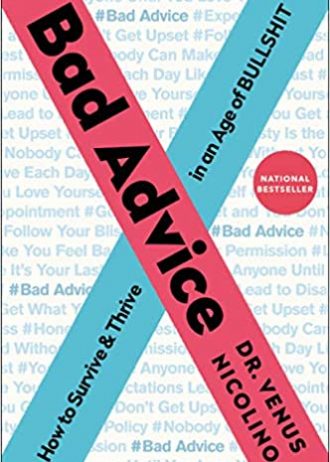
In Bad Advice, relationship expert Dr. Venus Nicolino—a.k.a. Dr. V—takes a blowtorch to the shrink-wrapped, “feel good” BS that passes for self-help these days.
When you’re heartbroken, what do you hear? You can’t love anyone until you love yourself. When someone’s hurt you? Nobody can make you feel bad without your permission. When you’re just a little too positive? Expectations lead to disappointment.
Pop culture noise gives Bad Advice the varnish of truthiness and inspiration. But it’s not truth; it’s not inspiration. It’s bullshit. And at its root, all Bad Advice operates off the same lie: Emotions are optional. In Bad Advice, Dr. V delivers a bracing truth serum, in the form of Good Advice—an antidote to the bullshit, from “Just Be Yourself” to “Live Each Day Like It’s Your Last,” that teaches you to live your life in a way that honors who you are, what you need, and how you feel.
Smart and irreverent, Dr. V fuses the brains and insight of a nerdy Ph.D. with the heart of a doting Italian Mother and the artful profanity of a Philly trucker. Dr. V’s signature combination of humor, hard science, and heart make Bad Advice an iconoclastic course-correction like no other. A fiercely sharp wake-up call that tackles some of self-help’s most damaging truisms, Bad Advice is a never shy guide to tapping into your full potential.
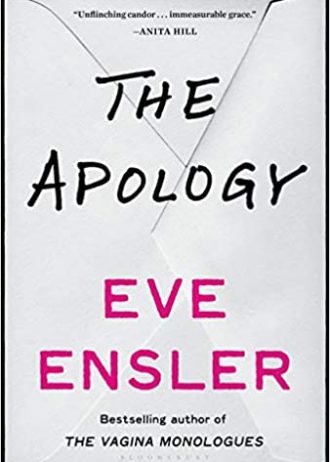
Like millions of women, Eve Ensler has been waiting much of her lifetime for an apology. Sexually and physically abused by her father, Eve has struggled her whole life from this betrayal, longing for an honest reckoning from a man who is long dead. After years of work as an anti-violence activist, she decided she would wait no longer; an apology could be imagined, by her, for her, to her. The Apology, written by Eve from her father’s point of view in the words she longed to hear, attempts to transform the abuse she suffered with unflinching truthfulness, compassion, and an expansive vision for the future.
Through The Apology Eve has set out to provide a new way for herself and a possible road for others, so that survivors of abuse may finally envision how to be free. She grapples with questions she has sought answers to since she first realized the impact of her father’s abuse on her life: How do we offer a doorway rather than a locked cell? How do we move from humiliation to revelation, from curtailing behavior to changing it, from condemning perpetrators to calling them to reckoning? What will it take for abusers to genuinely apologize?
Remarkable and original, The Apology is an acutely transformational look at how, from the wounds of sexual abuse, we can begin to re-emerge and heal. It is revolutionary, asking everything of each of us: courage, honesty, and forgiveness.
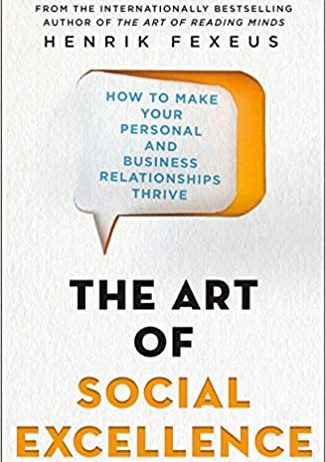
Research has increasingly shown that nonverbal communication prowess is absolutely essential in seemingly unrelated areas of our lives (investment decisions, salary levels, etc.) However, as our society becomes more modernized and we incorporate new forms of technology into our daily interactions, we are becoming less and less capable of understanding one another as we should.
In The Art of Social Excellence, Henrik Fexeus combines his own expert knowledge as a mentalist with psychology studies to create a complete guide to social interaction. He covers it all: from overcoming your conversational fears in a large group of people, to excelling in the workplace, to winning an argument with your partner. He breaks down various rhetorical strategies in detail, and provides helpful steps and checklists for the reader to check their progress in a social encounter.
Anyone who has ever felt awkward or misunderstood in social situations will benefit from reading this book, and with proper implementation of Fexeus’s principles, can achieve superior social skills.
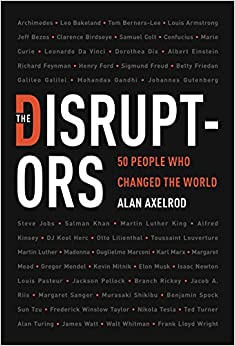
Meet 50 women and men who broke the rules . . . and changed the world.
What does Charles Darwin have in common with Johannes Gutenberg—or with Jackson Pollock, Martin Luther, Betty Friedan, Steve Jobs, and DJ Kool Herc? They were the disruptors, upending cultural, technical, spiritual, or scientific paradigms and altering the way we live forever. Bestselling author Alan Axelrod presents engaging profiles, accompanied by original line drawings, of 50 visionaries who rewrote the rules. Their innovations range from the printing press (Gutenberg) to the fight for women’s equality (Friedan), from the smartphone (Jobs) to the invention of hip-hop (Herc).
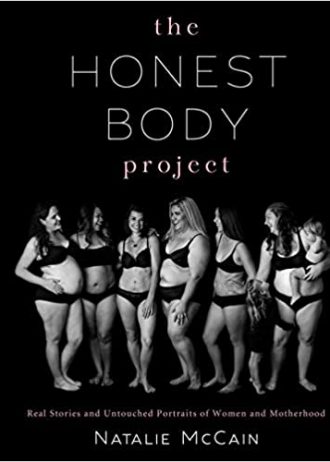
Only 4 percent of women around the world consider themselves to be beautiful, according to research done by Dove, and twenty million women suffer from significant eating disorders at some point in their life—The Honest Body Project was created to combat this tragic problem of poor body image in our society.
Founded by photographer Natalie McCain, this project is opening the eyes of women around the world and helping them to see the beauty both outside and inside of themselves. It is a collection of black and white portraits and stories, raw and untouched, from hundreds of women who have bared their hearts and souls to be a part of the project. Natalie tastefully photographs the women in their underwear, showing off their natural shapes and “imperfections.” There is no editing done after the fact, and the natural beauty of these women—from all backgrounds and walks of life—shines through the lens. Together, they create a beautiful, honest picture of both motherhood and what it means to be a woman. Topics include body image issues, breast cancer, depression (postpartum and otherwise), anxiety, bottle feeding versus breast feeding, aging, and more.
The Honest Body Project is a breath of fresh air, breaking down walls and helping women learn that they are not alone in their hardships. It wants to help women everywhere contribute to a better world, and to learn to love themselves and appreciate their bodies for what they are: perfectly imperfect. It is time to celebrate the true form of women.
How do we talk about bias? How do we address racial disparities and inequities? What role do our institutions play in creating, maintaining, and magnifying those inequities? What role do we play? With a perspective that is at once scientific, investigative, and informed by personal experience, Dr. Jennifer Eberhardt offers us the language and courage we need to face one of the biggest and most troubling issues of our time. She exposes racial bias at all levels of society—in our neighborhoods, schools, workplaces, and criminal justice system. Yet she also offers us tools to address it. Eberhardt shows us how we can be vulnerable to bias but not doomed to live under its grip. Racial bias is a problem that we all have a role to play in solving.
Reviews
There are no reviews yet.