
Paperback
₦14,000.00
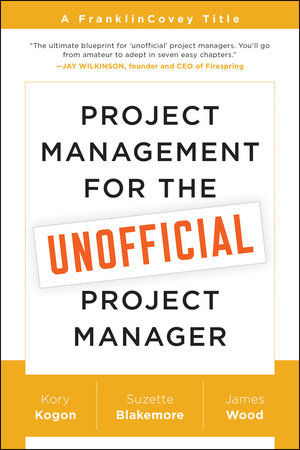
Project Management for the Unofficial Project Manager
In today’s workplace, employees are routinely expected to coordinate and manage projects. Yet, chances are, you aren’t formally trained in managing projects—you’re an unofficial project manager.
FranklinCovey experts Kory Kogon, Suzette Blakemore, and James Wood understand the importance of leadership in project completion and explain that people are crucial in the formula for success.
Project Management for the Unofficial Project Manager offers practical, real-world insights for effective project management and guides you through the essentials of the people and project management process:
Initiate
Plan
Execute
Monitor/Control
Close
Unofficial project managers in any arena will benefit from the accessible, engaging real-life anecdotes, memorable “Project Management Proverbs,” and quick reviews at the end of each chapter.
If you’re struggling to keep your projects organized, this book is for you. If you manage projects without the benefit of a team, this book is also for you. Change the way you think about project management—”project manager” may not be your official title or necessarily your dream job, but with the right strategies, you can excel.
Out of stock
Related products
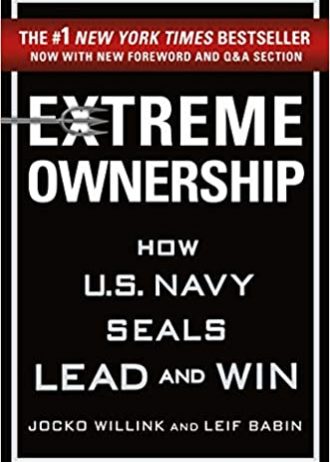
Extreme Ownership
₦7,500.00An updated edition of the blockbuster bestselling leadership book that took America and the world by storm, two U.S. Navy SEAL officers who led the most highly decorated special operations unit of the Iraq War demonstrate how to apply powerful leadership principles from the battlefield to business and life. Now with an excerpt from the authors’ new book, THE DICHOTOMY OF LEADERSHIP.
Combat, the most intense and dynamic environment imaginable, teaches the toughest leadership lessons, with absolutely everything at stake. Jocko Willink and Leif Babin learned this reality first-hand on the most violent and dangerous battlefield in Iraq. As leaders of SEAL Team Three’s Task Unit Bruiser, their mission was one many thought impossible: help U.S. forces secure Ramadi, a violent, insurgent-held city deemed “all but lost.” In gripping, firsthand accounts of heroism, tragic loss, and hard-won victories, they learned that leadership―at every level―is the most important factor in whether a team succeeds or fails.
Willink and Babin returned home from deployment and instituted SEAL leadership training to pass on their harsh lessons learned in combat to help forge the next generation of SEAL leaders. After leaving the SEAL Teams, they launched a company, Echelon Front, to teach those same leadership principles to leaders in businesses, companies, and organizations across the civilian sector. Since that time, they have trained countless leaders and worked with hundreds of companies in virtually every industry across the U.S. and internationally, teaching them how to develop their own high-performance teams and most effectively lead those teams to dominate their battlefields.
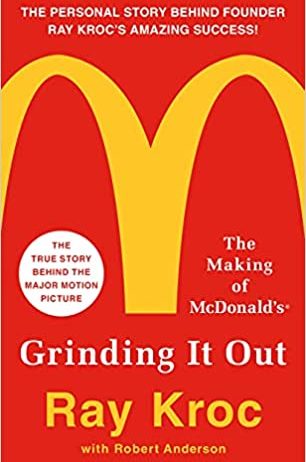
Grinding It Out: The Making of McDonald’s
₦9,000.00Few entrepreneurs can claim to have radically changed the way we live, and Ray Kroc is one of them. His revolutions in food-service automation, franchising, shared national training, and advertising have earned him a place beside the men and women who have founded not only businesses, but entire empires. But even more interesting than Ray Kroc the business man is Ray Kroc the man. Not your typical self-made tycoon, Kroc was fifty-two years old when he opened his first franchise. In Grinding It Out, you’ll meet the man behind McDonald’s, one of the largest fast-food corporations in the world with over 32,000 stores around the globe.
Irrepressible enthusiast, intuitive people person, and born storyteller, Kroc will fascinate and inspire you on every page.
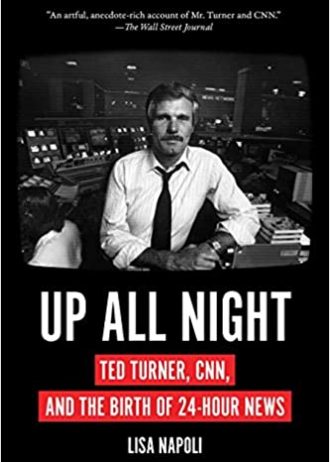
Up All Night: Ted Turner, CNN, and the Birth of 24-Hour News
₦7,500.00The wild inside story of the birth of CNN and dawn of the age of 24-hour news
How did we get from an age of dignified nightly news broadcasts on three national networks to the age of 24-hour news channels and constantly breaking news? The answer—thanks to Ted Turner and an oddball cast of cable television visionaries, big league rejects, and nonunion newbies—can be found in the basement of an abandoned country club in Atlanta. Because it was there, in the summer of 1980, that this motley crew launched CNN.
Lisa Napoli’s Up All Night is an entertaining inside look at the founding of the upstart network that set out to change the way news was delivered and consumed, and succeeded beyond even the wildest imaginings of its charismatic and uncontrollable founder. Mixing media history, a business adventure story, and great characters, this is a fun book on the making of the world we live in now.
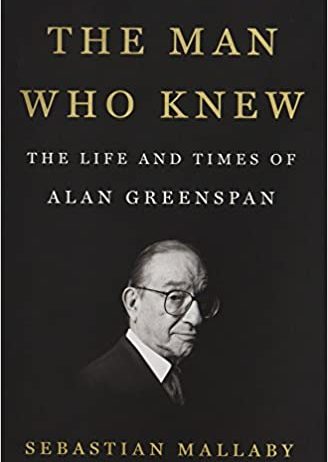
The Man Who Knew
₦8,000.00Greenspan’s life is a quintessential American success story: raised by a single mother in the Jewish émigré community of Washington Heights, he was a math prodigy who found a niche as a stats-crunching consultant. A master at explaining the economic weather to captains of industry, he translated that skill into advising Richard Nixon in his 1968 campaign. This led to a perch on the White House Council of Economic Advisers, and then to a dazzling array of business and government roles, from which the path to the Fed was relatively clear. A fire-breathing libertarian and disciple of Ayn Rand in his youth who once called the Fed’s creation a historic mistake, Mallaby shows how Greenspan reinvented himself as a pragmatist once in power. In his analysis, and in his core mission of keeping inflation in check, he was a maestro indeed, and hailed as such. At his retirement in 2006, he was lauded as the age’s necessary man, the veritable God in the machine, the global economy’s avatar. His memoirs sold for record sums to publishers around the world.
But then came 2008. Mallaby’s story lands with both feet on the great crash which did so much to damage Alan Greenspan’s reputation. Mallaby argues that the conventional wisdom is off base: Greenspan wasn’t a naïve ideologue who believed greater regulation was unnecessary. He had pressed for greater regulation of some key areas of finance over the years, and had gotten nowhere. To argue that he didn’t know the risks in irrational markets is to miss the point. He knew more than almost anyone; the question is why he didn’t act, and whether anyone else could or would have. A close reading of Greenspan’s life provides fascinating answers to these questions, answers whose lessons we would do well to heed. Because perhaps Mallaby’s greatest lesson is that economic statesmanship, like political statesmanship, is the art of the possible. The Man Who Knew is a searching reckoning with what exactly comprised the art, and the possible, in the career of Alan Greenspan.
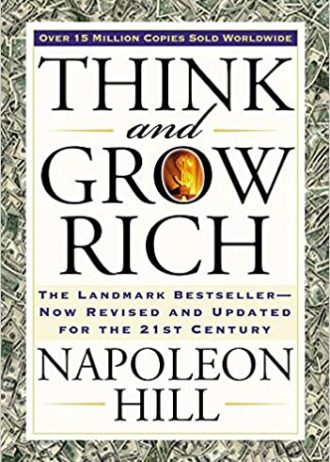
Think and Grow Rich
₦4,500.00Think and Grow Rich has been called the “Granddaddy of All Motivational Literature.” It was the first book to boldly ask, “What makes a winner?” The man who asked and listened for the answer, Napoleon Hill, is now counted in the top ranks of the world’s winners himself.
The most famous of all teachers of success spent “a fortune and the better part of a lifetime of effort” to produce the “Law of Success” philosophy that forms the basis of his books and that is so powerfully summarized in this one.
In the original Think and Grow Rich, published in 1937, Hill draws on stories of Andrew Carnegie, Thomas Edison, Henry Ford, and other millionaires of his generation to illustrate his principles. In the updated version, Arthur R. Pell, Ph.D., a nationally known author, lecturer, and consultant in human resources management and an expert in applying Hill’s thought, deftly interweaves anecdotes of how contemporary millionaires and billionaires, such as Bill Gates, Mary Kay Ash, Dave Thomas, and Sir John Templeton, achieved their wealth. Outmoded or arcane terminology and examples are faithfully refreshed to preclude any stumbling blocks to a new generation of readers.
Reviews
There are no reviews yet.