
Hardcover

₦5,000.00
Nigeria: A New History Of A Turbulent Century
Known as the African Giant, Nigeria’s story is complex and often contradictory. How, despite the ravages of colonialism, civil war, ongoing economic disappointment and most recently the Boko Haram insurgency, has the country managed to stay together for a hundred years? Why, despite an abundance of oil, mineral and agricultural wealth, have so many of its people remained in poverty? These are the key questions explored by Richard Bourne in this remarkable and wide-ranging account of Nigeria’s history, from its creation in 1914 to the historic 2015 elections and beyond.
Featuring a wealth of original research and interviews, this is an essential insight into the shaping of a country where, despite the seemingly dashed optimism that was raised at independence, there remains hope ‘the Nigeria project’ may still succeed.
Out of stock
Related products
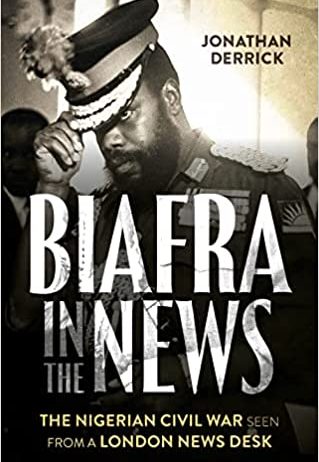
Biafra In The News
₦10,000.00Fifty years ago, Nigeria endured a period of violent disturbance leading to the breakaway of the Eastern Region under the name Biafra. The resulting conflict (1967-70) aroused shock and protests around the world because of mass starvation in the war zone. While Britain supplied arms to the federal
Nigerian government, and France to the Biafrans, relief agencies with contributions from countless individuals organized a memorable airlift of food and medicine to the Biafrans’ Uli airstrip.
Jonathan Derrick, then a journalist for the London weekly West Africa, followed these events closely and
recorded the war in the magazine’s news pages, right up to the federal forces’ final victory and the remarkable reconciliation between supporters of Biafra–predominantly Igbo–and other Nigerians. He later worked for some years in Nigeria, and has studied much of the material published on the war
since 1970.
Here, he recounts the history of the conflict as documented in West Africa, referring to later literature on and analysis of the events, which inspired passion at the time and have provoked debate ever since. His account deals with myths, misapprehensions and controversies surrounding the conflict, while recalling the tragic facts of a grim episode in African history.
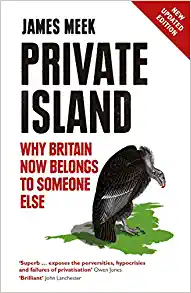
Private Island
₦4,500.00In a little over a generation the bones and sinews of the British economy – rail, energy, water, postal services, municipal housing – have been sold to remote, unaccountable private owners, often from overseas. In a series of brilliant portraits the award-winning novelist and journalist James Meek shows how Britain’s common wealth became private, and the impact it has had on us all: from the growing shortage of housing to spiralling energy bills.
Meek explores the human stories behind the incremental privatization of the nation over the last three decades. He shows how, as our national assets are sold, ordinary citizens are handed over to private tax-gatherers, and the greatest burden of taxes shifts to the poorest. In the end, it is not only public enterprises that have become private property, but we ourselves.
Urgent, powerfully written and deeply moving, this is a passionate anatomy of the state of the nation: of what we have lost and what losing it cost us – the rent we must pay to exist on this private island.
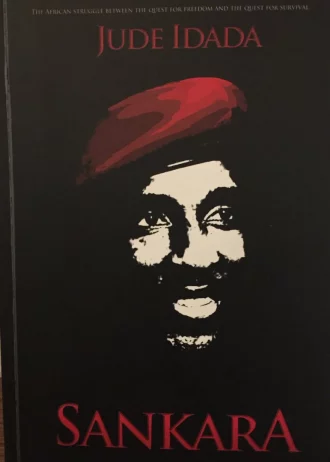
Sankara
₦2,500.00The African Renaissance is the concept that African people and nations shall overcome the current challenges confronting the continent and achieve cultural, scientific, and economic renewal.
At thirty-three, in 1983, Thomas Sankara came to power with a goal of eliminating corruption and eliminating the vestiges colonial domination. He immediately launched one of the most ambitious programmes for social and economic change ever attempted on the African continent. Sankara was assassinated by troops led by Blaise Compaoré in 1987.
It is this Thomas Sankara, held by some as one of Africa’s foremost statesmen, and derided by a small minority as a ruthless dictator, that Jude Idada sets to examine in this play. Everyone interested in history and the subject of an African Renaissance should read this play written by Jude Idada

Assad Or We Burn The Country
₦7,000.00From a Pulitzer Prize-nominated journalist specializing in the Middle East, this groundbreaking account of the Syrian Civil War reveals the never-before-published true story of a 21st-century humanitarian disaster.
In spring 2011, Syrian President Bashar al-Assad turned to his friend and army commander, Manaf Tlass, for advice about how to respond to Arab Spring-inspired protests. Tlass pushed for conciliation but Assad decided to crush the uprising — an act which would catapult the country into an eight-year long war, killing almost half a million and fueling terrorism and a global refugee crisis.
Assad or We Burn the Country examines Syria’s tragedy through the generational saga of the Assad and Tlass families, once deeply intertwined and now estranged in Bashar’s bloody quest to preserve his father’s inheritance. By drawing on his own reporting experience in Damascus and exclusive interviews with Tlass, Dagher takes readers within palace walls to reveal the family behind the destruction of a country and the chaos of an entire region.
Dagher shows how one of the world’s most vicious police states came to be and explains how a regional conflict extended globally, engulfing the Middle East and pitting the United States and Russia against one another. Timely, propulsive, and expertly reported, Assad or We Burn the Country is the definitive account of this global crisis, going far beyond the news story that has dominated headlines for years.
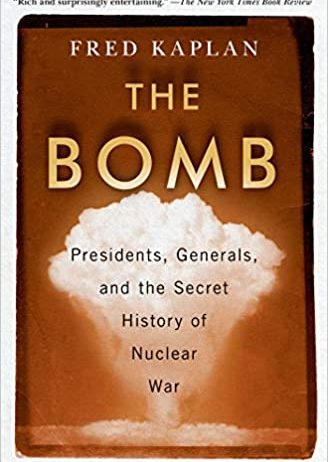
The Bomb
₦7,000.00Fred Kaplan, hailed by TheNew York Times as “a rare combination of defense intellectual and pugnacious reporter,” takes us into the White House Situation Room, the Joint Chiefs of Staff’s “Tank” in the Pentagon, and the vast chambers of Strategic Command to bring us the untold stories—based on exclusive interviews and previously classified documents—of how America’s presidents and generals have thought about, threatened, broached, and just barely avoided nuclear war from the dawn of the atomic age until today.
Kaplan’s historical research and deep reporting will stand as the permanent record of politics. Discussing theories that have dominated nightmare scenarios from Hiroshima and Nagasaki, Kaplan presents the unthinkable in terms of mass destruction and demonstrates how the nuclear war reality will not go away, regardless of the dire consequences.
Reviews
There are no reviews yet.