Hardcover
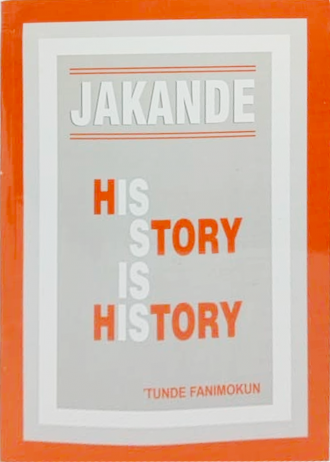
Jakande: His Story Is History
₦5,000.00This book is the story of Alhaji Chief (Dr) Lateef Kayode Jakande who was the first civilian governor of Lagos State (1979 – 1983) and the Honourable Minister of Works and Housing (1993 – 1995).


₦4,000.00
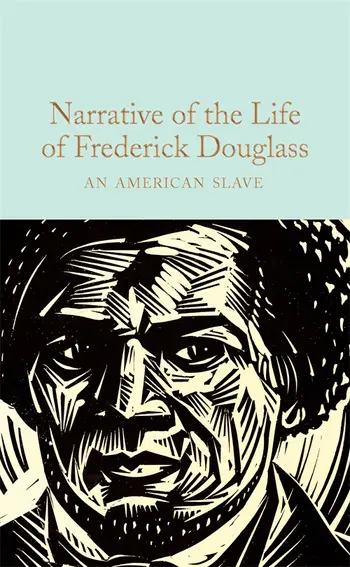
The most famous memoir of its kind and a key text in the anti-slavery movement, Narrative of the Life of Frederick Douglass tells the striking and emotionally charged story of one man’s journey from slavery to freedom.
Complete & Unabridged. Part of the Macmillan Collector’s Library; a series of stunning, clothbound, pocket-sized classics with gold foiled edges and ribbon markers. These beautiful books make perfect gifts or a treat for any book lover. This edition is introduced by Dr Lydia Plath.
Born into a life of slavery in Maryland in 1818, Frederick Douglass spent his youth passed from master to master, from city to field, and subjected to unimaginable cruelty. Along this journey he sought knowledge, he learned to read and write, and he discovered that education was his key to salvation. Using everything he learned and fuelled by all he was forced to endure, Douglass managed to escape and then, eventually, to free himself from slavery. Narrative of the Life of Frederick Douglass, a startlingly honest account of his struggle, played a fundamental role in the abolition of slavery, a movement that Douglass dedicated his life to.
Out of stock
Hardcover
This book is the story of Alhaji Chief (Dr) Lateef Kayode Jakande who was the first civilian governor of Lagos State (1979 – 1983) and the Honourable Minister of Works and Housing (1993 – 1995).
In February 2013, the arch-conservative Pope Benedict XVI made a startling announcement: he would resign, making him the first pope to willingly vacate his office in over 700 years. Reeling from the news, the College of Cardinals rushed to Rome to congregate in the Sistine Chapel to pick his successor. Their unlikely choice? Francis, the first non-European pope in 1,200 years, a onetime tango club bouncer, a passionate soccer fan, a man with the common touch.
Why did Benedict walk away at the height of power, knowing his successor might be someone whose views might undo his legacy? How did Francis – who used to ride the bus to work back in his native Buenos Aires – adjust to life as leader to a billion followers? If, as the Church teaches, the pope is infallible, how can two living popes who disagree on almost everything both be right? Having immersed himself in these men’s lives to write the screenplay for The Two Popes, Anthony McCarten masterfully weaves their stories into one gripping narrative. From Benedict and Francis’s formative experiences in war-torn Germany and Argentina to the sexual abuse scandal that continues to rock the Church to its foundations to the intrigue and the occasional comedy of life in the Vatican, The Two Popes glitters with the darker and the lighter details of one of the world’s most opaque but significant institutions.
Beyoncé. Her name conjures more than music, it has come to be synonymous with beauty, glamour, power, creativity, love, and romance. Her performances are legendary, her album releases events. She is not even forty but she has already rewritten the Beyoncé playbook more than half a dozen times. She is consistently provocative, political and surprising. As a solo artist, she has sold more than 100 million records. She has won 22 Grammys and is the most-nominated woman artist in the history of Grammy awards. Her 2018 performance at Coachella wowed the world. The New York Times wrote: “There’s not likely to be a more meaningful, absorbing, forceful and radical performance by an American musician this year or any year soon.” Artist, business woman, mother, daughter, sister, wife, black feminist, Queen Bey is endlessly fascinating.
Queen Bey features a diverse range of voices, from star academics to outspoken cultural critics to Hollywood and music stars. Some of the essays include
“Beychella is Proof That Beyoncé is the Greatest Performer Alive. I’m Not Arguing.” by Luvvie Ajayi
“On the Journey Together,” by Lena Waithe
“All Her Single Ladies” by Kid Fury
“Beyoncé the Brave” by Reshma Saujani
“Beyoncé’s Radical Ways” by Carmen Perez
“The King of Pop and the Queen of Everything” by Michael Eric Dyson
“The Beauty of Beyoncé” by Fatima Robinson
“King Bey” by Treva B. Lindsey
“Meridonial: Beyoncé’s Southern Roots and References” by Robin M. Boylorn
“B & V: A Love Letter” by Caroline Clarke
In this comprehensive, revelatory biography—fifteen years of interviews and research in the making—historian Jane Sherron De Hart explores the central experiences that crucially shaped Ginsburg’s passion for justice, her advocacy for gender equality, and her meticulous jurisprudence.
At the heart of her story and abiding beliefs is her Jewish background, specifically the concept of tikkun olam, the Hebrew injunction to “repair the world,” with its profound meaning for a young girl who grew up during the Holocaust and World War II.
Ruth’s journey begins with her mother, who died tragically young but whose intellect inspired her daughter’s feminism. It stretches from Ruth’s days as a baton twirler at Brooklyn’s James Madison High School to Cornell University to Harvard and Columbia Law Schools; to becoming one of the first female law professors in the country and having to fight for equal pay and hide her second pregnancy to avoid losing her job; to becoming the director of the ACLU’s Women’s Rights Project and arguing momentous anti-sex discrimination cases before the U.S. Supreme Court.
All this, even before being nominated in 1993 to become the second woman on the Court, where her crucial decisions and dissents are still making history. Intimately, personably told, this biography offers unprecedented insight into a pioneering life and legal career whose profound mark on American jurisprudence, American society, and our American character and spirit will reverberate deep into the twenty-first century and beyond.
Greenspan’s life is a quintessential American success story: raised by a single mother in the Jewish émigré community of Washington Heights, he was a math prodigy who found a niche as a stats-crunching consultant. A master at explaining the economic weather to captains of industry, he translated that skill into advising Richard Nixon in his 1968 campaign. This led to a perch on the White House Council of Economic Advisers, and then to a dazzling array of business and government roles, from which the path to the Fed was relatively clear. A fire-breathing libertarian and disciple of Ayn Rand in his youth who once called the Fed’s creation a historic mistake, Mallaby shows how Greenspan reinvented himself as a pragmatist once in power. In his analysis, and in his core mission of keeping inflation in check, he was a maestro indeed, and hailed as such. At his retirement in 2006, he was lauded as the age’s necessary man, the veritable God in the machine, the global economy’s avatar. His memoirs sold for record sums to publishers around the world.
But then came 2008. Mallaby’s story lands with both feet on the great crash which did so much to damage Alan Greenspan’s reputation. Mallaby argues that the conventional wisdom is off base: Greenspan wasn’t a naïve ideologue who believed greater regulation was unnecessary. He had pressed for greater regulation of some key areas of finance over the years, and had gotten nowhere. To argue that he didn’t know the risks in irrational markets is to miss the point. He knew more than almost anyone; the question is why he didn’t act, and whether anyone else could or would have. A close reading of Greenspan’s life provides fascinating answers to these questions, answers whose lessons we would do well to heed. Because perhaps Mallaby’s greatest lesson is that economic statesmanship, like political statesmanship, is the art of the possible. The Man Who Knew is a searching reckoning with what exactly comprised the art, and the possible, in the career of Alan Greenspan.
As one of the world’s most widely acclaimed restaurateurs, Nobu’s influence on food and hospitality can be found at the highest levels of haute-cuisine to the food trucks you frequent during the work week—this is the Nobu that the public knows.
But now, we are finally introduced to the private Nobu: the man who failed three times before starting the restaurant that would grow into an empire; the man who credits the love and support of his family as the only thing keeping him from committing suicide when his first restaurant burned down; and the man who values the busboy who makes sure each glass is crystal clear as highly as the chef who slices the fish for Omakase perfectly.
What makes Nobu special, and what made him famous, is the spirit of what exists on these pages. He has the traditional Japanese perspective that there is great pride to be found in every element of doing a job well—no matter how humble that job is. Furthermore, he shows us repeatedly that success is as much about perseverance in the face of adversity as it is about innate talent.
Reviews
There are no reviews yet.