Paperback
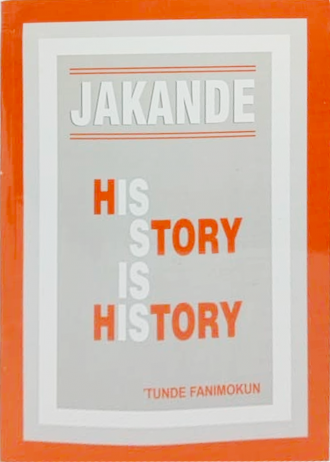
Jakande: His Story Is History
₦5,000.00This book is the story of Alhaji Chief (Dr) Lateef Kayode Jakande who was the first civilian governor of Lagos State (1979 – 1983) and the Honourable Minister of Works and Housing (1993 – 1995).

₦5,000.00
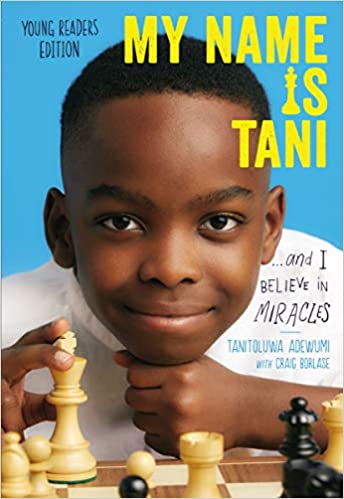
An amazing, miraculous refugee story of coming to America, the young readers edition of Tani Adewumi’s story will inspire kids looking for true stories of doing hard things.
At eight years old, Tani Adewumi, a refugee, won the 2019 New York State Chess Championship after playing the game for only a year–and while homeless.
Tani and his family fled Boko Haram’s reign of terror in Nigeria to come to the United States, where they lived in a New York City homeless shelter while waiting to be granted religious asylum. Tani began attending a public elementary school and decided he wanted to join the chess program, but it required a fee. Tani’s mother reached out to the coach, who offered Tani a scholarship–and a year later the young immigrant became a chess champion.
Out of stock
This book is the story of Alhaji Chief (Dr) Lateef Kayode Jakande who was the first civilian governor of Lagos State (1979 – 1983) and the Honourable Minister of Works and Housing (1993 – 1995).
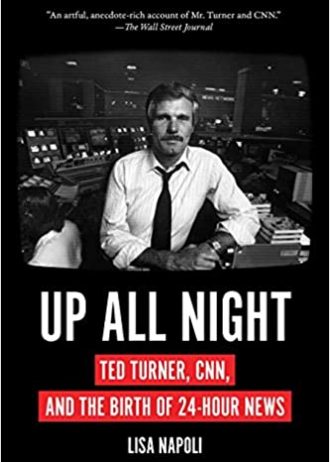
The wild inside story of the birth of CNN and dawn of the age of 24-hour news
How did we get from an age of dignified nightly news broadcasts on three national networks to the age of 24-hour news channels and constantly breaking news? The answer—thanks to Ted Turner and an oddball cast of cable television visionaries, big league rejects, and nonunion newbies—can be found in the basement of an abandoned country club in Atlanta. Because it was there, in the summer of 1980, that this motley crew launched CNN.
Lisa Napoli’s Up All Night is an entertaining inside look at the founding of the upstart network that set out to change the way news was delivered and consumed, and succeeded beyond even the wildest imaginings of its charismatic and uncontrollable founder. Mixing media history, a business adventure story, and great characters, this is a fun book on the making of the world we live in now.
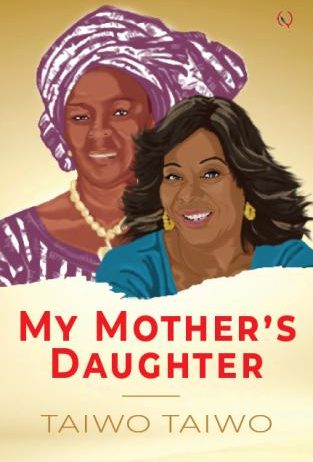
Chief Mrs Taiwo Taiwo, an unstoppable force, passionate and driven to deliver change, and to help others in Nigeria, especially in her hometown of Lagos. She brings her energy, humour, and disarming honesty to every page—from her encounters with brutal racism as a child in the UK, her fresh perspective on 1960s Europe as a teenager, to her cultural disconnect on returning to Lagos in the early 1970s.
With clear-sightedness and determination, she takes on daunting business battles and philanthropic challenges in education, urban renewal, and grief counselling. Taiwo’s life has privilege but also tragedy. Her story shows us a determined Nigerian who has taken life full-on and delivers everything she can to make things better for people who pass her way. Despite numerous setbacks, she remains optimistic and passionate for change.
Serena Williams is the most successful tennis player – male or female – of the modern, professional era, with more Grand Slams than either Steffi Graf or Roger Federer.
Always a fierce competitor, her story – which began on the cracked public courts of Compton, L.A. – is also one of overcoming challenges through sheer determination, drive and talent.
In this innovative illustrated biography, Serena’s tennis is explored like never before: stunning graphics explore her serving patterns, signature power groundstrokes, and her movement – as well as showcasing her astonishing records, spanning over two decades in the tennis elite.
Drawing on conversations with Serena over the course of her career, and on interviews with those closest to her, this is the ultimate celebration of arguably the greatest tennis player of all time and, without question, a true global icon.
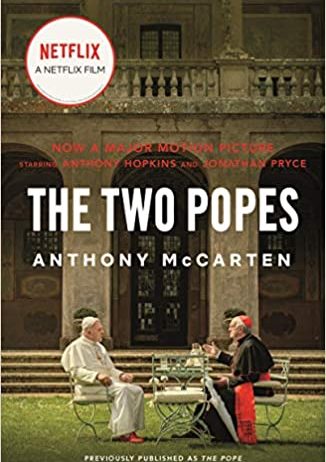
In February 2013, the arch-conservative Pope Benedict XVI made a startling announcement: he would resign, making him the first pope to willingly vacate his office in over 700 years. Reeling from the news, the College of Cardinals rushed to Rome to congregate in the Sistine Chapel to pick his successor. Their unlikely choice? Francis, the first non-European pope in 1,200 years, a onetime tango club bouncer, a passionate soccer fan, a man with the common touch.
Why did Benedict walk away at the height of power, knowing his successor might be someone whose views might undo his legacy? How did Francis – who used to ride the bus to work back in his native Buenos Aires – adjust to life as leader to a billion followers? If, as the Church teaches, the pope is infallible, how can two living popes who disagree on almost everything both be right? Having immersed himself in these men’s lives to write the screenplay for The Two Popes, Anthony McCarten masterfully weaves their stories into one gripping narrative. From Benedict and Francis’s formative experiences in war-torn Germany and Argentina to the sexual abuse scandal that continues to rock the Church to its foundations to the intrigue and the occasional comedy of life in the Vatican, The Two Popes glitters with the darker and the lighter details of one of the world’s most opaque but significant institutions.
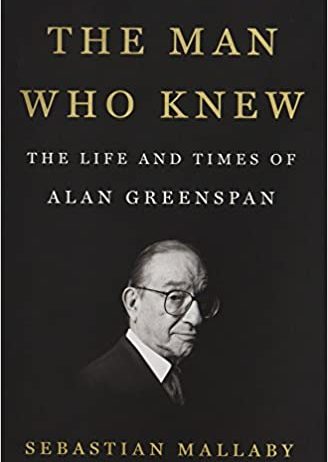
Greenspan’s life is a quintessential American success story: raised by a single mother in the Jewish émigré community of Washington Heights, he was a math prodigy who found a niche as a stats-crunching consultant. A master at explaining the economic weather to captains of industry, he translated that skill into advising Richard Nixon in his 1968 campaign. This led to a perch on the White House Council of Economic Advisers, and then to a dazzling array of business and government roles, from which the path to the Fed was relatively clear. A fire-breathing libertarian and disciple of Ayn Rand in his youth who once called the Fed’s creation a historic mistake, Mallaby shows how Greenspan reinvented himself as a pragmatist once in power. In his analysis, and in his core mission of keeping inflation in check, he was a maestro indeed, and hailed as such. At his retirement in 2006, he was lauded as the age’s necessary man, the veritable God in the machine, the global economy’s avatar. His memoirs sold for record sums to publishers around the world.
But then came 2008. Mallaby’s story lands with both feet on the great crash which did so much to damage Alan Greenspan’s reputation. Mallaby argues that the conventional wisdom is off base: Greenspan wasn’t a naïve ideologue who believed greater regulation was unnecessary. He had pressed for greater regulation of some key areas of finance over the years, and had gotten nowhere. To argue that he didn’t know the risks in irrational markets is to miss the point. He knew more than almost anyone; the question is why he didn’t act, and whether anyone else could or would have. A close reading of Greenspan’s life provides fascinating answers to these questions, answers whose lessons we would do well to heed. Because perhaps Mallaby’s greatest lesson is that economic statesmanship, like political statesmanship, is the art of the possible. The Man Who Knew is a searching reckoning with what exactly comprised the art, and the possible, in the career of Alan Greenspan.

Reviews
There are no reviews yet.