Paperback
Enjoy a plethora of positions to both spice up your love life and satisfy your sex life! Providing top tips to make each day a sex adventure, with 365 ways to reach the summit of pleasure.


₦20,000.00
Paperback
Enjoy a plethora of positions to both spice up your love life and satisfy your sex life! Providing top tips to make each day a sex adventure, with 365 ways to reach the summit of pleasure.
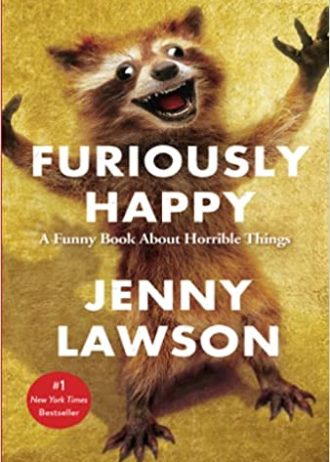
#1 New York Times Bestseller
In Furiously Happy, a humor memoir tinged with just enough tragedy and pathos to make it worthwhile, Jenny Lawson examines her own experience with severe depression and a host of other conditions, and explains how it has led her to live life to the fullest:
“I’ve often thought that people with severe depression have developed such a well for experiencing extreme emotion that they might be able to experience extreme joy in a way that ‘normal people’ also might never understand. And that’s what Furiously Happy is all about.”
Jenny’s readings are standing room only, with fans lining up to have Jenny sign their bottles of Xanax or Prozac as often as they are to have her sign their books. Furiously Happy appeals to Jenny’s core fan base but also transcends it. There are so many people out there struggling with depression and mental illness, either themselves or someone in their family―and in Furiously Happy they will find a member of their tribe offering up an uplifting message (via a taxidermied roadkill raccoon). Let’s Pretend This Never Happened ostensibly was about embracing your own weirdness, but deep down it was about family. Furiously Happy is about depression and mental illness, but deep down it’s about joy―and who doesn’t want a bit more of that?
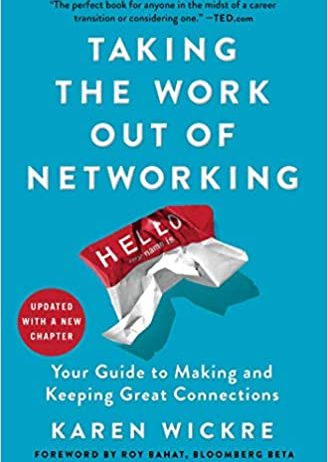
Former Google executive, editorial director of Twitter, self-described introvert, and “the best-connected Silicon Valley figure you’ve never heard of” (Walt Mossberg, Wall Street Journal), offers networking advice for anyone who has ever canceled a coffee date due to social anxiety. Learn to nurture a vibrant circle of reliable contacts without leaving your comfort zone.
Networking has garnered a reputation as a sort of necessary evil. Some people relish the opportunity to boldly work the room, introduce themselves to strangers, and find common career ground—but for many others, the experience is awkward, or even terrifying.
The common networking advice for introverts are variations on the theme of overcoming or “fixing” their quiet tendencies. But Karen Wickre is a self-described introvert who has worked in Silicon Valley for thirty years. She shows you how to embrace your quiet nature and “make genuine connections that last, that we can nurture across the world for all kinds of purposes” (Chris Anderson, head of TED).
Karen’s “embrace your quiet side” approach is for anyone who finds themselves shying away from traditional networking activities, or for those who would rather be curled up with a good book on a Friday night than out at a party. With compelling arguments and creative strategies, this “practical, easy-to-use” (Sree Sreenivasan, former chief digital officer of Columbia University) book is a perfect guide.
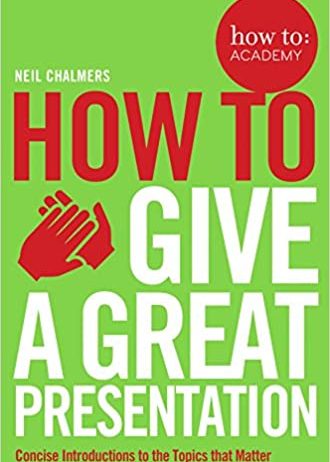
How often have you made a successful presentation one day and the next day made a complete mess of the same material? If your delivery of presentations is all too variable, don’t despair—help is at hand. This book shows you how successful spoken communications work within a simple and executable framework of rules and techniques, and reveals how to avoid the pitfalls that exist to undermine your efforts. Expert advice, illustrated with a host of relevant examples, will ensure that you’ll have no more problems making impressive presentations each and every time.
Social scientist Brené Brown, PhD, MSW, has sparked a global conversation about the experiences that bring meaning to our lives—experiences of courage, vulnerability, love, belonging, shame, and empathy. In Braving the Wilderness, Brown redefines what it means to truly belong in an age of increased polarization. With her trademark mix of research, storytelling, and honesty, Brown will again change the cultural conversation while mapping a clear path to true belonging.
Brown argues that we’re experiencing a spiritual crisis of disconnection, and introduces four practices of true belonging that challenge everything we believe about ourselves and each other. She writes, “True belonging requires us to believe in and belong to ourselves so fully that we can find sacredness both in being a part of something and in standing alone when necessary. But in a culture that’s rife with perfectionism and pleasing, and with the erosion of civility, it’s easy to stay quiet, hide in our ideological bunkers, or fit in rather than show up as our true selves and brave the wilderness of uncertainty and criticism. But true belonging is not something we negotiate or accomplish with others; it’s a daily practice that demands integrity and authenticity. It’s a personal commitment that we carry in our hearts.” Brown offers us the clarity and courage we need to find our way back to ourselves and to each other. And that path cuts right through the wilderness. Brown writes, “The wilderness is an untamed, unpredictable place of solitude and searching. It is a place as dangerous as it is breathtaking, a place as sought after as it is feared. But it turns out to be the place of true belonging, and it’s the bravest and most sacred place you will ever stand.”
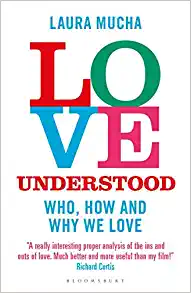
For Love Understood, Laura Mucha has interviewed hundreds of strangers, from the ages of 8 to 95 in more than 40 countries, asking them to share their most personal stories, feelings, and insights about love and relationships. These intimate and illuminating conversations raised important questions, such as:
– How does your upbringing influence your relationships?
– Does love at first sight exist? Should you “just know?”
– What should you look for in a partner?
– Is monogamy natural?
– Why do people cheat?
– How do you know when it’s time to walk away?
Drawing on psychology, philosophy, anthropology and statistics, Love Understood combines evidence, theory and everyday experience and is the perfect read for anyone who is curious about how we thing, feel and behave when it comes to love.
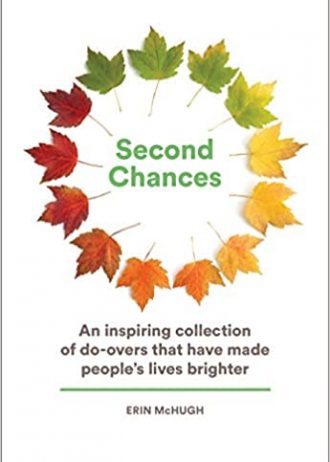
Second Chances is a hopeful and thoughtful compendium of anecdotes from people who have wanted another chance at something—and have taken it. It’s the big stuff like going back to college after the kids have grown up, as well as the little things like getting a judo belt when you thought you could hardly manage a push-up. The book collects the hopeful examples of people who found a leg up, another spurt of energy, a hidden talent, or even an untapped strength, sometimes with the unexpected help of friends or strangers. Combining the feel-good qualities of One Good Deed and the crowdsourcing methods of Like My Mother Always Said, Erin McHugh’s latest book is an inspirational guide about letting the future win over the past.
Reviews
There are no reviews yet.