Paperback
Jakande: His Story Is History
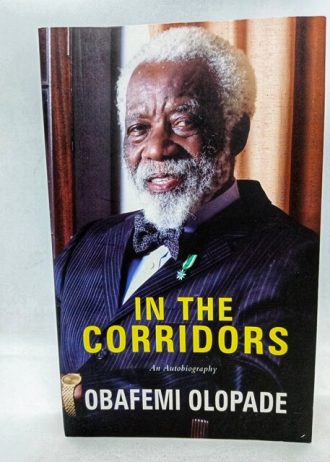
₦5,000.00This book is the story of Alhaji Chief (Dr) Lateef Kayode Jakande who was the first civilian governor of Lagos State (1979 – 1983) and the Honourable Minister of Works and Housing (1993 – 1995).


₦2,000.00
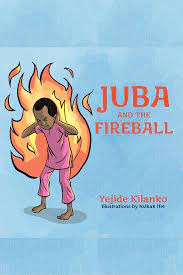
Ten-year-old Juba has a temper and cannot control it. It often starts as a spark in his stomach. After breaking a precious dyeing pot, Juba’s mother sends him to his father’s blacksmith shop where Baami tells Juba a story about a thrown stone and a missing eye.
Juba and the Fireball is a story about family, kindness and respect. How should children manage emotions? Find some of the answers in its pages.
Out of stock
This book is the story of Alhaji Chief (Dr) Lateef Kayode Jakande who was the first civilian governor of Lagos State (1979 – 1983) and the Honourable Minister of Works and Housing (1993 – 1995).
Chidi Amuta’s columns in major Nigerian newspapers and magazines have been compulsory reading for successive generations of Nigerians over the last two and a half decades. Easily one of the most respected and informed voices in contemporary Nigerian public discourse, Amuta’s writing stands out for its sheer intellectual sweep and an arresting command and control of the English language.
Amuta comes to the table with a consistently nationalistic perspective and an incisive analytical insight that is often prophetic. At once fearless and acerbic, he is unsparing and unfailingly engaging.
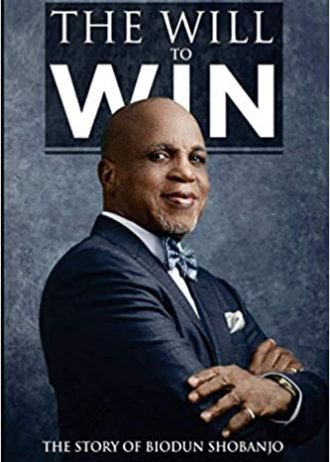
The Will to Win: The Story of Biodun Shobanjo is fundamentally a deliberative evaluation of leadership and enterprise management. It is as much a biographical portrait of Nigeria’s ‘Czar of Advertising’ as it is a story of the major developments in the world of marketing communications in Nigeria as it involves Shobanjo. It sheds light on his persona and gives a comprehensive overview of who he is. It is a lucidly engaging work through which the reader understands his parentage, family life and most poignantly, his professional and business life. In a land with few authentic heroes or achievers, Biodun Shobanjo’s contributions, achievements and place are deservedly presented. The avalanche of information provided, the depth of treatment given to it, and the sources consulted make this work a productive venture. The reader is assured of an excursion in history, career development, ambition, decision – making, entrepreneurship, business management, office politics, people management, success and failure. It is a positive work that is faithful to its theme: the path to success is guided by the will to win.
Set on the outskirts of Umuahia, Nigeria and narrated by a chi, or guardian spirit, An Orchestra of Minorities tells the story of Chinonso, a young poultry farmer whose soul is ignited when he sees a woman attempting to jump from a highway bridge. Horrified by her recklessness, Chinonso joins her on the roadside and hurls two of his prized chickens into the water below to express the severity of such a fall. The woman, Ndali, is stopped her in her tracks.
Bonded by this night on the bridge, Chinonso and Ndali fall in love. But Ndali is from a wealthy family and struggles to imagine a future near a chicken coop. When her family objects to the union because he is uneducated, Chinonso sells most of his possessions to attend a college in Cyprus. But when he arrives he discovers there is no place at the school for him, and that he has been utterly duped by the young Nigerian who has made the arrangements… Penniless, homeless, and furious at a world which continues to relegate him to the sidelines, Chinonso gets further away from his dream, from Ndali and the farm he called home.
Spanning continents, traversing the earth and cosmic spaces, and told by a narrator who has lived for hundreds of years, the novel is a contemporary twist of Homer’s Odyssey. Written in the mythic style of the Igbo literary tradition, Chigozie Obioma weaves a heart-wrenching epic about destiny and determination.
Reviews
There are no reviews yet.