Paperback


₦6,000.00
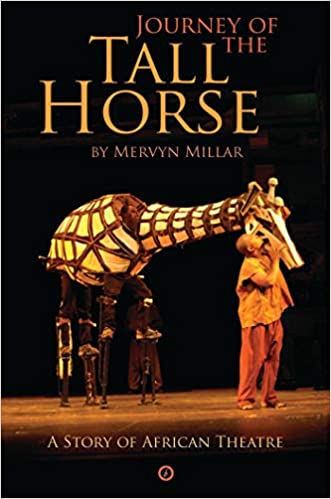
Journey Of The Tall Horse
With its mix of magnificent puppets, live actors, captivating costumes and evocative music, video projection and dance, Tall Horse has enchanted theatregoers worldwide. This spectacular production is the result of an exceptional meeting between South Africa’s Handspring Puppet Company and Mali’s Sogolon Puppet Troupe.
Assistant Director Mervyn Millar had unique access to the production, from development workshops through rehearsals to the first performances for the world tour.
This publication includes photographs of the production and a playscript of Tall Horse by Khephra Burns.
Related products
Great State
₦6,500.00China is one of the oldest states in the world. It achieved its approximate current borders with the Ascendancy of the Yuan dynasty in the 13th century, and despite the passing of one Imperial dynasty to the next, it has maintained them for the eight centuries since. Even the European colonial powers at the height of their power could not move past coastal enclaves. Thus, China remained China through the Ming, the Qing, the Republic, the Occupation, and Communism.
But, despite the desires of some of the most powerful people in the Great State through the ages, China has never been alone in the world. It has had to contend with invaders from the steppe and the challenges posed by foreign traders and imperialists. Indeed, its rulers for the majority of the last eight centuries have not been Chinese.
Timothy Brook examines China’s relationship with the world from the Yuan through to the present by following the stories of ordinary and extraordinary people navigating the spaces where China met and meets the world. Bureaucrats, horse traders, spiritual leaders, explorers, pirates, emperors, invaders, migrant workers, traitors, and visionaries: this is a history of China as no one has told it before.
The State Of Africa
₦22,000.00Africa is forever on our TV screens, but the bad-news stories (famine, genocide, corruption) massively outweigh the good (South Africa). Ever since the process of decolonialisation began in the mid-1950s, and arguably before, the continent has appeared to be stuck in a process of irreversible decline. Constant war, improper use of natural resources and misappropriation of revenues and aid monies contribute to an impression of a continent beyond hope. How did we get here?
What, if anything, is to be done? Weaving together the key stories and characters of the last fifty years into a stunningly compelling and coherent narrative, Martin Meredith has produced the definitive history of how European ideas of how to organise 10,000 different ethnic groups has led to what Tony Blair described as the ‘scar on the conscience of the world’. Authoritative, provocative and consistently fascinating, this is a major book on one of the most important issues facing the West today.
Nigeria: A New History Of A Turbulent Century
₦5,000.00Known as the African Giant, Nigeria’s story is complex and often contradictory. How, despite the ravages of colonialism, civil war, ongoing economic disappointment and most recently the Boko Haram insurgency, has the country managed to stay together for a hundred years? Why, despite an abundance of oil, mineral and agricultural wealth, have so many of its people remained in poverty? These are the key questions explored by Richard Bourne in this remarkable and wide-ranging account of Nigeria’s history, from its creation in 1914 to the historic 2015 elections and beyond.
Featuring a wealth of original research and interviews, this is an essential insight into the shaping of a country where, despite the seemingly dashed optimism that was raised at independence, there remains hope ‘the Nigeria project’ may still succeed.
Forged In Crisis
₦6,000.00An enthralling historical narrative filled with critical leadership insights, Forged in Crisis, by celebrated Harvard Business School historian Nancy Koehn, spotlights five masters of crisis: polar explorer Ernest Shackleton; President Abraham Lincoln; legendary abolitionist Frederick Douglass; Nazi-resisting clergyman Dietrich Bonhoeffer; and environmental crusader Rachel Carson.
What do such disparate figures have in common? Why do their extraordinary stories continue to amaze and inspire? In delivering the answers to those questions, Nancy Koehn offers a remarkable template by which to judge those in our own time to whom the public has given its trust.
She begins each of the book’s five sections by showing her protagonist on the precipice of a great crisis: Shackleton marooned on an Antarctic ice floe; Lincoln on the verge of seeing the Union collapse; escaped slave Douglass facing possible capture; Bonhoeffer agonizing over how to counter absolute evil with faith; Carson racing against the cancer ravaging her in a bid to save the planet. The narrative then reaches back to each person’s childhood and shows the individual growing—step by step—into the person he or she will ultimately become. Significantly, as we follow each leader’s against-all-odds journey, we begin to glean an essential truth: leaders are not born but made. In a book dense with epiphanies, the most galvanizing one may be that the power to lead courageously resides in each of us.
Whether it’s read as a repository of great insight or as exceptionally rendered human drama, Forged in Crisis stands as a towering achievement.
Biafra In The News
₦10,000.00Fifty years ago, Nigeria endured a period of violent disturbance leading to the breakaway of the Eastern Region under the name Biafra. The resulting conflict (1967-70) aroused shock and protests around the world because of mass starvation in the war zone. While Britain supplied arms to the federal
Nigerian government, and France to the Biafrans, relief agencies with contributions from countless individuals organized a memorable airlift of food and medicine to the Biafrans’ Uli airstrip.
Jonathan Derrick, then a journalist for the London weekly West Africa, followed these events closely and
recorded the war in the magazine’s news pages, right up to the federal forces’ final victory and the remarkable reconciliation between supporters of Biafra–predominantly Igbo–and other Nigerians. He later worked for some years in Nigeria, and has studied much of the material published on the war
since 1970.
Here, he recounts the history of the conflict as documented in West Africa, referring to later literature on and analysis of the events, which inspired passion at the time and have provoked debate ever since. His account deals with myths, misapprehensions and controversies surrounding the conflict, while recalling the tragic facts of a grim episode in African history.
Reviews
There are no reviews yet.