
Hardcover

₦11,000.00
How To Be A Founder
An essential guide to equip the next generation of founders with the mindset and tools they need to take the leap to become globally successful entrepreneurs.
Featuring a foreword by Reid Hoffman, founder of LinkedIn, this fascinating handbook inspires potential founders and provides essential guidance and advice for people who want to create their own start-up and build a successful company. This book answers the question “how do I get started?” It takes the reader from making the decision to plunge into entrepreneurship, through the process of choosing and developing an idea and team, all the way to raising capital and working with VCs and angel investors.
Alice Bentinck and Matt Clifford are the co-founders of Entrepreneur First (EF). Over the last decade, they have worked with thousands of ambitious individuals across the world, supporting them to become founders. Those individuals have now built companies worth billions of dollars that are taking on some of the world’s biggest challenges, including finding hard-to-spot cancers, tackling climate change and building new financial platforms. In How to Be a Founder, the authors share advice, insights and lessons from their decade of experience working with individuals to become successful founders. The book covers what you need to do today to start your journey as a founder and the steps to take to maximise your chances of building a high-growth, scalable company. You’ll also hear advice from some of the world’s best investors and entrepreneurs who have built some of most iconic technology companies of our time.
Out of stock
Related products

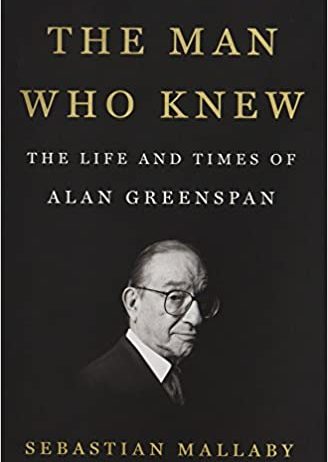
The Man Who Knew
₦8,000.00Greenspan’s life is a quintessential American success story: raised by a single mother in the Jewish émigré community of Washington Heights, he was a math prodigy who found a niche as a stats-crunching consultant. A master at explaining the economic weather to captains of industry, he translated that skill into advising Richard Nixon in his 1968 campaign. This led to a perch on the White House Council of Economic Advisers, and then to a dazzling array of business and government roles, from which the path to the Fed was relatively clear. A fire-breathing libertarian and disciple of Ayn Rand in his youth who once called the Fed’s creation a historic mistake, Mallaby shows how Greenspan reinvented himself as a pragmatist once in power. In his analysis, and in his core mission of keeping inflation in check, he was a maestro indeed, and hailed as such. At his retirement in 2006, he was lauded as the age’s necessary man, the veritable God in the machine, the global economy’s avatar. His memoirs sold for record sums to publishers around the world.
But then came 2008. Mallaby’s story lands with both feet on the great crash which did so much to damage Alan Greenspan’s reputation. Mallaby argues that the conventional wisdom is off base: Greenspan wasn’t a naïve ideologue who believed greater regulation was unnecessary. He had pressed for greater regulation of some key areas of finance over the years, and had gotten nowhere. To argue that he didn’t know the risks in irrational markets is to miss the point. He knew more than almost anyone; the question is why he didn’t act, and whether anyone else could or would have. A close reading of Greenspan’s life provides fascinating answers to these questions, answers whose lessons we would do well to heed. Because perhaps Mallaby’s greatest lesson is that economic statesmanship, like political statesmanship, is the art of the possible. The Man Who Knew is a searching reckoning with what exactly comprised the art, and the possible, in the career of Alan Greenspan.
Think and Grow Rich
₦4,500.00Think and Grow Rich has been called the “Granddaddy of All Motivational Literature.” It was the first book to boldly ask, “What makes a winner?” The man who asked and listened for the answer, Napoleon Hill, is now counted in the top ranks of the world’s winners himself.
The most famous of all teachers of success spent “a fortune and the better part of a lifetime of effort” to produce the “Law of Success” philosophy that forms the basis of his books and that is so powerfully summarized in this one.
In the original Think and Grow Rich, published in 1937, Hill draws on stories of Andrew Carnegie, Thomas Edison, Henry Ford, and other millionaires of his generation to illustrate his principles. In the updated version, Arthur R. Pell, Ph.D., a nationally known author, lecturer, and consultant in human resources management and an expert in applying Hill’s thought, deftly interweaves anecdotes of how contemporary millionaires and billionaires, such as Bill Gates, Mary Kay Ash, Dave Thomas, and Sir John Templeton, achieved their wealth. Outmoded or arcane terminology and examples are faithfully refreshed to preclude any stumbling blocks to a new generation of readers.
The Power of Why
₦4,000.00The urge to question is natural for small children—just ask any parent. But few of us are aware that it is also one of the most vital tools for success. In The Power of Why, Amanda Lang shows how curiosity and the ability to ask the right questions fuels innovation and can drive change not just in business but also in our personal lives.
Weaving together the latest research with in-depth profiles of innovators from around the world, Lang explores how to harness and develop the power of curiosity. She reveals how a major retailer set out to discover what really makes men happy—and was stunned by the results. She finds out why, at one particular hospital, nurses think it’s better if they don’t wash their hands. She learns why the most common methods of brainstorming don’t actually work and discovers a new soccer ball that could change the world.
A book that challenges conventional wisdom and offers practical, inspiring advice, The Power of Why shows how it’s possible to reignite your innate curiosity and overcome long-standing barriers—leaving you more creative, productive and fulfilled in your job and happier in your relationships.

An Ugly Truth: Inside Facebook’s Battle for Domination
₦15,000.00Award-winning New York Times reporters Sheera Frenkel and Cecilia Kang unveil the tech story of our times in a riveting, behind-the-scenes exposé that offers the definitive account of Facebook’s fall from grace.
Once one of Silicon Valley’s greatest success stories, Facebook has been under constant fire for the past five years, roiled by controversies and crises. It turns out that while the tech giant was connecting the world, they were also mishandling users’ data, spreading fake news, and amplifying dangerous, polarizing hate speech.
The company, many said, had simply lost its way. But the truth is far more complex. Leadership decisions enabled, and then attempted to deflect attention from, the crises. Time after time, Facebook’s engineers were instructed to create tools that encouraged people to spend as much time on the platform as possible, even as those same tools boosted inflammatory rhetoric, conspiracy theories, and partisan filter bubbles. And while consumers and lawmakers focused their outrage on privacy breaches and misinformation, Facebook solidified its role as the world’s most voracious data-mining machine, posting record profits, and shoring up its dominance via aggressive lobbying efforts.
Drawing on their unrivaled sources, Sheera Frenkel and Cecilia Kang take readers inside the complex court politics, alliances and rivalries within the company to shine a light on the fatal cracks in the architecture of the tech behemoth. Their explosive, exclusive reporting led them to a shocking conclusion: The missteps of the last five years were not an anomaly but an inevitability—this is how Facebook was built to perform. In a period of great upheaval, growth has remained the one constant under the leadership of Mark Zuckerberg and Sheryl Sandberg. Both have been held up as archetypes of uniquely 21st century executives—he the tech “boy genius” turned billionaire, she the ultimate woman in business, an inspiration to millions through her books and speeches. But sealed off in tight circles of advisers and hobbled by their own ambition and hubris, each has stood by as their technology is coopted by hate-mongers, criminals and corrupt political regimes across the globe, with devastating consequences. In An Ugly Truth, they are at last held accountable.
Love is Just Damn Good Business: Do What You Love in the Service of the People Who Love What You Do
₦12,500.00It’s time to toss aside the touchy-feely notions of love in business and acknowledge the real power that it holds. Love is not only appropriate in the context of business, it’s the foundation of great leadership. To put it bluntly: love is just damn good business. That’s the simple but profound truth that leadership consultant Steve Farber has discovered in his extensive work with Fortune 100 companies and other successful businesses. His game-changing approach to love as a practical business strategy will help you to:
• Identify your passions―and share them with others
• Create a culture of love at work―and spark innovation, productivity, and joy
• Serve your customers, so they love how you treat them―and have them coming back for more
• Invest time in making personal connections―that are mutually rewarding
• Focus on serving the needs of others―they’re going to love it
• Do what you love―and make it your business, so others love it, too
The proven principles you’ll find in this book will help you lay the groundwork for a thriving, competitive enterprise. When love is part of your organization’s framework and operationalized in its culture, employees and customers feel genuinely valued. Employees who are passionate about the work that they do are more loyal, innovative, creative, and inspired, and that translates to great customer experience. They don’t serve others out of obligation, but because of a genuine desire to improve people’s lives. And when customers reciprocate by loving your products, your services, and your people, that’s when something great happens. That’s when you get loyalty. That’s when you get raving fans. It’s a refreshingly human way of doing business.
In addition to Farber’s field-tested strategies, you’ll find inspiring case studies from a wide range of industries and leaders, revealing self-assessment quizzes, and practical pointers on how to build a corporate culture based on love, the ultimate competitive advantage. At the end of the day, it’s just damn good business.
Reviews
There are no reviews yet.