Paperback


₦8,000.00
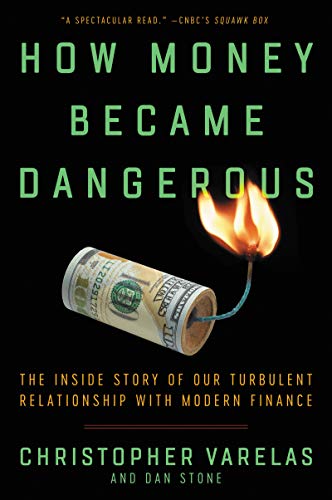
How Money Became Dangerous
Over the past few decades, the increasingly complex financial world has come to feel like an enigma – a rogue force seemingly controlled by no one. From an industry veteran, How Money Became Dangerous captures the key deals, developments, and players that made the financial world what it is today.
Out of stock
Related products
The Law & Practice of Real Estate Investment Trusts – Paperback
₦5,000.00In ten expertly written chapters, the author dissects the core elements and defining characteristics of REITs and provides analysis of the origin, growth, global spread, legal structure and governance of them.
The Spotify Play: How CEO and Founder Daniel Ek Beat Apple, Google and Amazon in the Race for Audio Dominance
₦8,500.00Steve Jobs tried to stop this moment from ever happening. Google and Microsoft made bids to preempt it. The music industry blocked it time and again. Yet, on a summer’s eve in 2011, the whiz kid CEO of a Swedish start-up celebrated his company’s US launch.
In the midst of the Apple-Android tech war and a music label crusade against piracy and illegal downloading, Spotify redrew the battle lines, sent shockwaves through Silicon Valley, and got the hardline executives at Universal, Sony, and Warner to sign with its “free-mium” platform.
In The Spotify Play, now adapted into an upcoming Netflix Original series, Swedish investigative tech journalists Sven Carlsson and Jonas Leijonhufvud, who covered the company from its inception, draw upon hundreds of interviews, previously untapped sources, and in-depth reporting on figures like Mark Zuckerberg, Sean Parker, Steve Jobs, Taylor Swift, Jay-Z, Pony Ma Huateng, and Jimmy Iovine. They have captured the riveting David vs. Goliath story of a disruptive innovator who played the industry giants in a quest to revolutionize the consumption of sound, building today’s largest online source of audio, with more than 50 million songs, one million-plus podcasts, and over 300 million users.
Lights Out
₦10,000.00This is the definitive history of General Electric’s epic decline, as told by the two Wall Street Journal reporters who covered its fall.
Since its founding in 1892, GE has been more than just a corporation. For generations, it was job security, a solidly safe investment, and an elite business education for top managers.
GE electrified America, powering everything from lightbulbs to turbines, and became fully integrated into the American societal mindset as few companies ever had. And after two decades of leadership under legendary CEO Jack Welch, GE entered the twenty-first century as America’s most valuable corporation. Yet, fewer than two decades later, the GE of old was gone.
Lights Out examines how Welch’s handpicked successor, Jeff Immelt, tried to fix flaws in Welch’s profit machine, while stumbling headlong into mistakes of his own. In the end, GE’s traditional win-at-all-costs driven culture seemed to lose its direction, which ultimately caused the company’s decline on both a personal and organizational scale. Lights Out details how one of America’s all-time great companies has been reduced to a cautionary tale for our times.
The Ride of a Lifetime
₦15,000.00Robert Iger became CEO of The Walt Disney Company in 2005, during a difficult time. Competition was more intense than ever and technology was changing faster than at any time in the company’s history. His vision came down to three clear ideas: Recommit to the concept that quality matters, embrace technology instead of fighting it, and think bigger—think global—and turn Disney into a stronger brand in international markets.
Today, Disney is the largest, most admired media company in the world, counting Pixar, Marvel, Lucasfilm, and 21st Century Fox among its properties. Its value is nearly five times what it was when Iger took over, and he is recognized as one of the most innovative and successful CEOs of our era.
In The Ride of a Lifetime, Robert Iger shares the lessons he learned while running Disney and leading its 220,000-plus employees, and he explores the principles that are necessary for true leadership, including:
• Optimism. Even in the face of difficulty, an optimistic leader will find the path toward the best possible outcome and focus on that, rather than give in to pessimism and blaming.
• Courage. Leaders have to be willing to take risks and place big bets. Fear of failure destroys creativity.
• Decisiveness. All decisions, no matter how difficult, can be made on a timely basis. Indecisiveness is both wasteful and destructive to morale.
• Fairness. Treat people decently, with empathy, and be accessible to them.
This book is about the relentless curiosity that has driven Iger for forty-five years, since the day he started as the lowliest studio grunt at ABC. It’s also about thoughtfulness and respect, and a decency-over-dollars approach that has become the bedrock of every project and partnership Iger pursues, from a deep friendship with Steve Jobs in his final years to an abiding love of the Star Wars mythology.
Reviews
There are no reviews yet.