Paperback


₦5,000.00
Honour For Sale
The murder of Dele Giwa remains on the infamous list of Nigeria’s unsolved murders. More than twenty-five years after Nigeria’s first ever parcel bomb ended the life of one of the country’s most colourful investigative journalists, the case has refused to be laid to rest. In Honour for Sale, Debo Basorun, with the insight of his proximity to some of the dramatis personae, examines the lurid circumstances of this controversial murder. He unearths a web of ‘intrigue and treachery, clannishness and base humanity’ of some of the men in uniform who, only recently, ran the affairs of the country.
Out of stock
Related products
Great State
₦6,500.00China is one of the oldest states in the world. It achieved its approximate current borders with the Ascendancy of the Yuan dynasty in the 13th century, and despite the passing of one Imperial dynasty to the next, it has maintained them for the eight centuries since. Even the European colonial powers at the height of their power could not move past coastal enclaves. Thus, China remained China through the Ming, the Qing, the Republic, the Occupation, and Communism.
But, despite the desires of some of the most powerful people in the Great State through the ages, China has never been alone in the world. It has had to contend with invaders from the steppe and the challenges posed by foreign traders and imperialists. Indeed, its rulers for the majority of the last eight centuries have not been Chinese.
Timothy Brook examines China’s relationship with the world from the Yuan through to the present by following the stories of ordinary and extraordinary people navigating the spaces where China met and meets the world. Bureaucrats, horse traders, spiritual leaders, explorers, pirates, emperors, invaders, migrant workers, traitors, and visionaries: this is a history of China as no one has told it before.
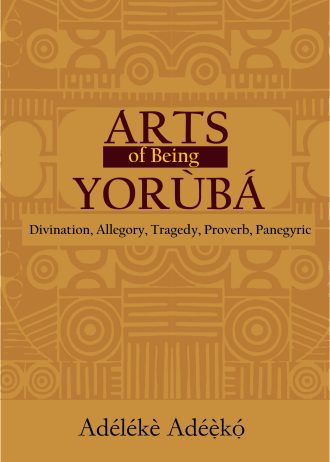
Arts Of Being Yoruba
₦5,000.00Adélékè Adéeko documents Yorùbá patterns of behavior and articulates a philosophy of how to be Yorùbá in this innovative study. As he focuses on historical writings, Ifá divination practices, the use of proverbs in contemporary speech, photography, gendered ideas of dressing well, and the formalities of ceremony and speech at celebratory occasions
What Britain Did To Nigeria
₦9,000.00Most accounts of Nigeria’s colonisation were written by British officials, presenting it as a noble civilising mission to rid Africans of barbaric superstition and corrupt tribal leadership. Thanks to this skewed writing of history, many Nigerians today still have Empire nostalgia and view the
colonial period through rose-tinted glasses.
Max Siollun offers a bold rethink: an unromanticised history, arguing compellingly that colonialism had few benevolent intentions, but many unjust outcomes. It may have ended slavery and human sacrifice, but it was accompanied by extreme violence; ethnic and religious identity were cynically exploited to maintain control, while the forceful remoulding of longstanding legal and social practices permanently altered the culture and internal politics of indigenous communities. The aftershocks of this colonial meddling are still being felt decades after independence. Popular narratives often suggest that the economic and political turmoil are homegrown, but the reality is that Britain created many of Nigeria’s crises, and has left them behind for Nigerians to resolve.
This is a definitive, head-on confrontation with Nigeria’s experience under British rule, showing how it forever changed the country–perhaps cataclysmically.
Strongmen
₦8,500.00Ruth Ben-Ghiat is the expert on the “strongman” playbook employed by authoritarian demagogues from Mussolini to Putin—enabling her to predict with uncanny accuracy the recent experience in America and Europe. In Strongmen, she lays bare the blueprint these leaders have followed over the past 100 years, and empowers us to recognize, resist, and prevent their disastrous rule in the future.
For ours is the age of authoritarian rulers: self-proclaimed saviors of the nation who evade accountability while robbing their people of truth, treasure, and the protections of democracy. They promise law and order, then legitimize lawbreaking by financial, sexual, and other predators.
They use masculinity as a symbol of strength and a political weapon. Taking what you want, and getting away with it, becomes proof of male authority. They use propaganda, corruption, and violence to stay in power.
Vladimir Putin and Mobutu Sese Seko’s kleptocracies, Augusto Pinochet’s torture sites, Benito Mussolini and Muammar Gaddafi’s systems of sexual exploitation, and Silvio Berlusconi and Donald Trump’s relentless misinformation: all show how authoritarian rule, far from ensuring stability, is marked by destructive chaos.
No other type of leader is so transparent about prioritizing self-interest over the public good. As one country after another has discovered, the strongman is at his worst when true guidance is most needed by his country.
Recounting the acts of solidarity and dignity that have undone strongmen over the past 100 years, Ben-Ghiat makes vividly clear that only by seeing the strongman for what he is—and by valuing one another as he is unable to do—can we stop him, now and in the future.
The Key Man
₦9,000.00In this compelling story of lies, greed and tarnished idealism, two Wall Street Journal reporters investigate a man who Bill Gates, Western governments, and other investors entrusted with billions of dollars to make profits and end poverty, but who now stands accused of masterminding one of the biggest, most brazen financial frauds ever.
Arif Naqvi was charismatic, inspiring, and self-made—all the qualities of a successful business leader. The founder of Abraaj, a Dubai-based private-equity firm, Naqvi was the Key Man to the global elite searching for impact investments to make money and do good. He persuaded politicians he could help stabilize the Middle East after 9/11 by providing jobs and guided executives to opportunities in cities they struggled to find on the map. Bill Gates helped him start a $1 billion fund to improve healthcare in poor countries and the UN and Interpol appointed him to boards. As Pope Francis blessed a move to harness capitalism for the good of the poor, Naqvi won the support of Obama’s administration and investors, who compared him to Tom Cruise in Mission: Impossible.
In 2018, Simon Clark and Will Louch were contacted by an anonymous whistleblower who said Naqvi had swindled investors out of hundreds of millions of dollars and offered bribes to sustain his billionaire lifestyle. Digging into the claims, Clark and Louch uncovered hundreds of documents and exposed the wrongdoing. In April 2019—months after their exposé broke—Naqvi was arrested on charges of fraud and racketeering, and faces up to 291 years in jail.
Populated by a cast of larger-than-life characters and moving across Asia, Africa, Europe and America, The Key Man is the story of how the global elite was duped by a capitalist fairytale. Clark and Louch shine a light on efforts to clean up global capital flows even as opaque private equity firms amass trillions of dollars and offshore tax havens cast a veil of secrecy which prevents regulators, investors and citizens from understanding what’s really going on in the finance industry.
Reviews
There are no reviews yet.