
Hardcover
₦8,000.00
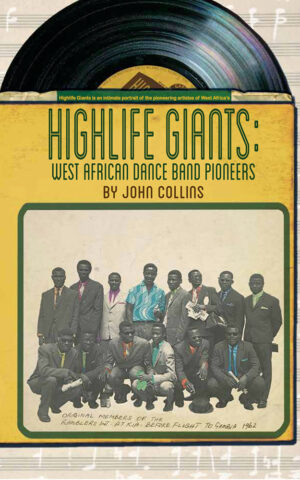
Highlife Giants
As West Africa’s oldest form of popular music, highlife was the soundtrack of the independence era. Its influence still resonates today.
Highlife Giants is an intimate portrait of the pioneering artistes of West Africa’s music scene from the 1920s onwards. It contains interviews with stars such as E.T Mensah, Kofo Ghanaba, King Bruce, Bobby Benson, Victor Uwaifo, and Ignace De Souza revealing priceless behind-the-scenes moments such as Louis Armstrong giving Eddie Okonta a trumpet with a golden mouthpiece after seeing him perform. Highlife Giants charts the development of this rich and varied popular form which is hugely influential on contemporary West African music from Afrobeat to hiplife.
Blending European and African-American styles with traditional African patterns, highlife music contributed to the development of post-independence national identity in both Ghana and Nigeria. As such, highlife remains crucial in generating social commentary, protest and contributing to the formation of a pan-African musical identity.
For those who lived through the era, Highlife Giants will be a compendium that invokes treasured memories. For their children and grandchildren, this book will inspire an interest in the rich musical history of West Africa
Out of stock
Related products
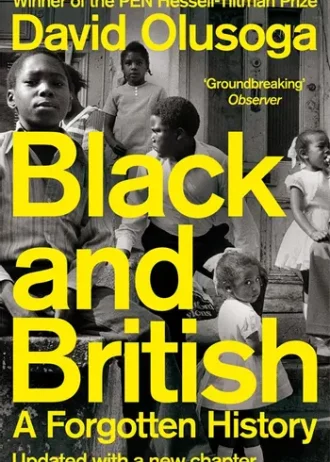
Black and British: A Forgotten History
₦7,500.00In this vital re-examination of a shared history, historian and broadcaster David Olusoga tells the rich and revealing story of the long relationship between the British Isles and the people of Africa and the Caribbean.
This edition, fully revised and updated, features a new chapter encompassing the Windrush scandal and the Black Lives Matter protests of 2020, events which put black British history at the centre of urgent national debate. Black and British is vivid confirmation that black history can no longer be kept separate and marginalised. It is woven into the cultural and economic histories of the nation and it belongs to us all.
Drawing on new genealogical research, original records, and expert testimony, Black and British reaches back to Roman Britain, the medieval imagination, Elizabethan ‘blackamoors’ and the global slave-trading empire. It shows that the great industrial boom of the nineteenth century was built on American slavery, and that black Britons fought at Trafalgar and in the trenches of both World Wars. Black British history is woven into the cultural and economic histories of the nation. It is not a singular history, but one that belongs to us all.
Unflinching, confronting taboos, and revealing hitherto unknown scandals, Olusoga describes how the lives of black and white Britons have been entwined for centuries.

What Britain Did To Nigeria
₦9,000.00Most accounts of Nigeria’s colonisation were written by British officials, presenting it as a noble civilising mission to rid Africans of barbaric superstition and corrupt tribal leadership. Thanks to this skewed writing of history, many Nigerians today still have Empire nostalgia and view the
colonial period through rose-tinted glasses.
Max Siollun offers a bold rethink: an unromanticised history, arguing compellingly that colonialism had few benevolent intentions, but many unjust outcomes. It may have ended slavery and human sacrifice, but it was accompanied by extreme violence; ethnic and religious identity were cynically exploited to maintain control, while the forceful remoulding of longstanding legal and social practices permanently altered the culture and internal politics of indigenous communities. The aftershocks of this colonial meddling are still being felt decades after independence. Popular narratives often suggest that the economic and political turmoil are homegrown, but the reality is that Britain created many of Nigeria’s crises, and has left them behind for Nigerians to resolve.
This is a definitive, head-on confrontation with Nigeria’s experience under British rule, showing how it forever changed the country–perhaps cataclysmically.
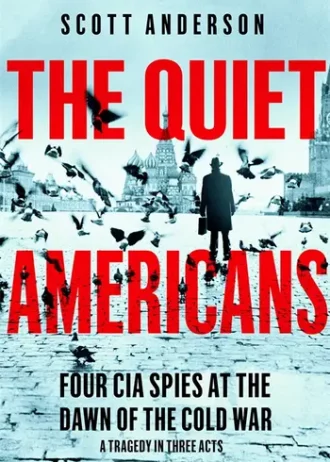
The Quiet Americans
₦6,500.00At the end of World War II, the United States dominated the world militarily, economically, and in moral standing – seen as the victor over tyranny and a champion of freedom. But it was clear – to some – that the Soviet Union was already executing a plan to expand and foment revolution around the world. The American government’s strategy in response relied on the secret efforts of a newly-formed CIA.
The Quiet Americans chronicles the exploits of four spies – Michael Burke, a charming former football star fallen on hard times, Frank Wisner, the scion of a wealthy Southern family, Peter Sichel, a sophisticated German Jew who escaped the Nazis, and Edward Lansdale, a brilliant ad executive. The four ran covert operations across the globe, trying to outwit the ruthless KGB in Berlin, parachuting commandos into Eastern Europe, plotting coups, and directing wars against Communist insurgents in Asia.
But time and again their efforts went awry, thwarted by a combination of stupidity and ideological rigidity at the highest levels of the government – and more profoundly, the decision to abandon American ideals. By the mid-1950s, the Soviet Union had a stranglehold on Eastern Europe, the US had begun its disastrous intervention in Vietnam, and America, the beacon of democracy, was overthrowing democratically elected governments and earning the hatred of much of the world. All of this culminated in an act of betrayal and cowardice that would lock the Cold War into place for decades to come.
Anderson brings to the telling of this story all the narrative brio, deep research, sceptical eye, and lively prose that made Lawrence in Arabia a major international bestseller. The intertwined lives of these men began in a common purpose of defending freedom, but the ravages of the Cold War led them to different fates. Two would quit the CIA in despair, stricken by the moral compromises they had to make; one became the archetype of the duplicitous and destructive American spy; and one would be so heartbroken he would take his own life.
Scott Anderson’s The Quiet Americans is the story of these four men. It is also the story of how the United States, at the very pinnacle of its power, managed to permanently damage its moral standing in the world.
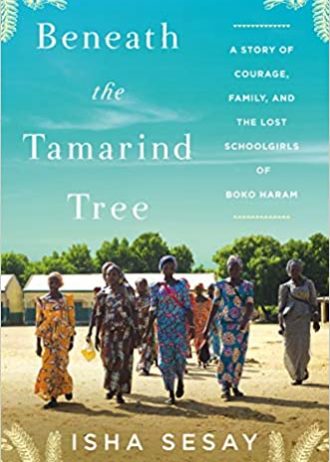
Beneath the Tamarind Tree
₦5,000.00In the early morning of April 14, 2014, the militant Islamic group Boko Haram violently burst into the small town of Chibok, Nigeria, and abducted 276 girls from their school dorm rooms. From poor families, these girls were determined to make better lives for themselves, but pursuing an education made them targets, resulting in one of the most high-profile abductions in modern history. While the Chibok kidnapping made international headlines, and prompted the #BringBackOurGirls movement, many unanswered questions surrounding that fateful night remain about the girls’ experiences in captivity, and where many of them are today.
In Beneath the Tamarind Tree, Isha Sesay tells this story as no one else can. Originally from Sierra Leone, Sesay led CNN’s Africa reporting for more than a decade, and she was on the front lines when this story broke. With unprecedented access to a group of girls who made it home, she follows the journeys of Priscilla, Saa, and Dorcas in an uplifting tale of sisterhood and survival.
Sesay delves into the Nigerian government’s inadequate response to the kidnapping, exposes the hierarchy of how the news gets covered, and synthesizes crucial lessons about global national security. She also reminds us of the personal sacrifice required of journalists to bring us the truth at a time of growing mistrust of the media. Beneath the Tamarind Tree is a gripping read and a story of resilience with a soaring message of hope at its core, reminding us of the ever-present truth that progress for all of us hinges on unleashing the potential of women.

Witness To Justice
₦4,000.00Witness to Justice is a personal account of the author’s time on ‘The Judicial Commission for the investigation of Human Rights Violation’ to which he was appointed by President Olusegun Obasanjo in June 1999. An incisive look at the systematic devaluation of human life that took place in Nigeria during the years of military rule, along with the culture of impunity that emerged over that period.
Reviews
There are no reviews yet.