Paperback
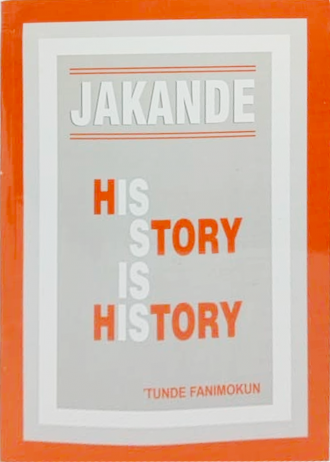
Jakande: His Story Is History
₦5,000.00This book is the story of Alhaji Chief (Dr) Lateef Kayode Jakande who was the first civilian governor of Lagos State (1979 – 1983) and the Honourable Minister of Works and Housing (1993 – 1995).


₦7,000.00
How did Ralphie Lifshitz from the Bronx become Ralph Lauren, the world’s leading arbiter of old-money WASP fashion style? That’s the central question posed by Michael Gross. He answers it by tracing Lauren’s self-transformation from fledgling tie designer to corporate head of a worldwide billion-dollar business empire.
This book is the story of Alhaji Chief (Dr) Lateef Kayode Jakande who was the first civilian governor of Lagos State (1979 – 1983) and the Honourable Minister of Works and Housing (1993 – 1995).
The wild inside story of the birth of CNN and dawn of the age of 24-hour news
How did we get from an age of dignified nightly news broadcasts on three national networks to the age of 24-hour news channels and constantly breaking news? The answer—thanks to Ted Turner and an oddball cast of cable television visionaries, big league rejects, and nonunion newbies—can be found in the basement of an abandoned country club in Atlanta. Because it was there, in the summer of 1980, that this motley crew launched CNN.
Lisa Napoli’s Up All Night is an entertaining inside look at the founding of the upstart network that set out to change the way news was delivered and consumed, and succeeded beyond even the wildest imaginings of its charismatic and uncontrollable founder. Mixing media history, a business adventure story, and great characters, this is a fun book on the making of the world we live in now.
The Kennedys have always been a family of charismatic adventurers, raised to take risks and excel, living by the dual family mottos: “To whom much is given, much is expected” and “Win at all costs.” And they do—but at a price.
Across decades and generations, the Kennedys have occupied a unique place in the American imagination: charmed, cursed, at once familiar and unknowable. The House of Kennedy is a revealing, fascinating account of America’s most storied family, as told by America’s most trusted storyteller.
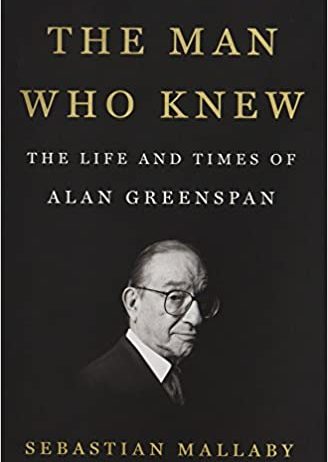
Greenspan’s life is a quintessential American success story: raised by a single mother in the Jewish émigré community of Washington Heights, he was a math prodigy who found a niche as a stats-crunching consultant. A master at explaining the economic weather to captains of industry, he translated that skill into advising Richard Nixon in his 1968 campaign. This led to a perch on the White House Council of Economic Advisers, and then to a dazzling array of business and government roles, from which the path to the Fed was relatively clear. A fire-breathing libertarian and disciple of Ayn Rand in his youth who once called the Fed’s creation a historic mistake, Mallaby shows how Greenspan reinvented himself as a pragmatist once in power. In his analysis, and in his core mission of keeping inflation in check, he was a maestro indeed, and hailed as such. At his retirement in 2006, he was lauded as the age’s necessary man, the veritable God in the machine, the global economy’s avatar. His memoirs sold for record sums to publishers around the world.
But then came 2008. Mallaby’s story lands with both feet on the great crash which did so much to damage Alan Greenspan’s reputation. Mallaby argues that the conventional wisdom is off base: Greenspan wasn’t a naïve ideologue who believed greater regulation was unnecessary. He had pressed for greater regulation of some key areas of finance over the years, and had gotten nowhere. To argue that he didn’t know the risks in irrational markets is to miss the point. He knew more than almost anyone; the question is why he didn’t act, and whether anyone else could or would have. A close reading of Greenspan’s life provides fascinating answers to these questions, answers whose lessons we would do well to heed. Because perhaps Mallaby’s greatest lesson is that economic statesmanship, like political statesmanship, is the art of the possible. The Man Who Knew is a searching reckoning with what exactly comprised the art, and the possible, in the career of Alan Greenspan.
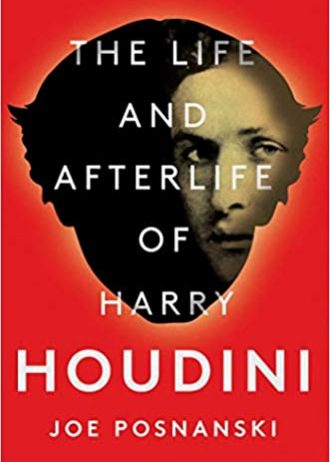
Nearly a century after Harry Houdini died on Halloween in 1926, he feels as modern and alive as ever. The name Houdini still leaps to mind whenever we witness a daring escape. The baby who frees herself from her crib? Houdini. The dog who vanishes and reappears in the neighbor’s garden? Houdini. Every generation produces new disciples of the magician, from household names in magic like David Copperfield and David Blaine to countless other followers whose lives have been transformed by the power of Houdini.
In The Life and Afterlife of Harry Houdini, award-winning journalist and #1 New York Times bestselling author Joe Posnanski enters Houdini World to understand why the magician still enthralls people. Posnanski immerses himself in Houdini’s past and present, visiting landmarks, museums (including one owned by Copperfield), attractions, and private archives. Filled with false histories and improbable facts, Houdini’s life is an irresistible contradiction. His sweeping afterlife is no less fascinating.
In rural Pennsylvania, a thirteen-year-old girl finds the courage to leave a violent home after learning that Houdini ran away to join the circus; she eventually becomes the first female magician to saw a man in half on television. In Australia, an eight-year-old boy with a learning impediment feels worthless until he sees an old poster of Houdini advertising “Nothing on earth can hold Houdini prisoner,” and begins his path to becoming that nation’s most popular magician. In California, an actor and Vietnam War veteran finds purpose in his life by uncovering the secrets of his hero.
But the unique phenomenon of Houdini was always more than his death-defying stunts or his ability to escape handcuffs and straitjackets. It is also about the power of imagination and self-invention. His incredible transformation from Ehrich Weiss, humble Hungarian immigrant and rabbi’s son, into the self-named Harry Houdini has won him a slice of immortality. No one has withstood the test of time quite like Houdini.
Fueled by Posnanski’s personal obsession with the magician—and magic itself—The Life and Afterlife of Harry Houdini is a poignant odyssey of discovery, blending biography, memoir, and first-person reporting to trace Houdini’s metamorphosis into an iconic figure who has inspired millions. Posnanski takes us on a joyous, thrilling, and, yes, magical journey to discover why Houdini endures—and what he still has to teach the world about wonder.

Serena Williams is the most successful tennis player – male or female – of the modern, professional era, with more Grand Slams than either Steffi Graf or Roger Federer.
Always a fierce competitor, her story – which began on the cracked public courts of Compton, L.A. – is also one of overcoming challenges through sheer determination, drive and talent.
In this innovative illustrated biography, Serena’s tennis is explored like never before: stunning graphics explore her serving patterns, signature power groundstrokes, and her movement – as well as showcasing her astonishing records, spanning over two decades in the tennis elite.
Drawing on conversations with Serena over the course of her career, and on interviews with those closest to her, this is the ultimate celebration of arguably the greatest tennis player of all time and, without question, a true global icon.
Reviews
There are no reviews yet.