
Hardcover

₦10,000.00
Gandhi: The Years That Changed The World
Opening in July 1914, as Mohandas Gandhi leaves South Africa to return to India, Gandhi: The Years That Changed the World, 1914-1918 traces the Mahatma’s life over the three decades preceding his assassination. Drawing on new archival materials, acclaimed historian Ramachandra Guha follows Gandhi’s struggle to deliver India from British rule, to forge harmonious relations between India’s Hindus and Muslims, to end the pernicious practice of untouchability, and to nurture India’s economic and moral self-reliance. He shows how in each of these campaigns, Gandhi adapted methods of nonviolence that successfully challenged British authority and would influence revolutionary movements throughout the world.
A revelatory look at the complexity of Gandhi’s thinking and motives, the book is a luminous portrait of not only the man himself, but also those closest to him—family, friends, and political and social leaders.
Out of stock
Related products

The Key Man
₦9,000.00In this compelling story of lies, greed and tarnished idealism, two Wall Street Journal reporters investigate a man who Bill Gates, Western governments, and other investors entrusted with billions of dollars to make profits and end poverty, but who now stands accused of masterminding one of the biggest, most brazen financial frauds ever.
Arif Naqvi was charismatic, inspiring, and self-made—all the qualities of a successful business leader. The founder of Abraaj, a Dubai-based private-equity firm, Naqvi was the Key Man to the global elite searching for impact investments to make money and do good. He persuaded politicians he could help stabilize the Middle East after 9/11 by providing jobs and guided executives to opportunities in cities they struggled to find on the map. Bill Gates helped him start a $1 billion fund to improve healthcare in poor countries and the UN and Interpol appointed him to boards. As Pope Francis blessed a move to harness capitalism for the good of the poor, Naqvi won the support of Obama’s administration and investors, who compared him to Tom Cruise in Mission: Impossible.
In 2018, Simon Clark and Will Louch were contacted by an anonymous whistleblower who said Naqvi had swindled investors out of hundreds of millions of dollars and offered bribes to sustain his billionaire lifestyle. Digging into the claims, Clark and Louch uncovered hundreds of documents and exposed the wrongdoing. In April 2019—months after their exposé broke—Naqvi was arrested on charges of fraud and racketeering, and faces up to 291 years in jail.
Populated by a cast of larger-than-life characters and moving across Asia, Africa, Europe and America, The Key Man is the story of how the global elite was duped by a capitalist fairytale. Clark and Louch shine a light on efforts to clean up global capital flows even as opaque private equity firms amass trillions of dollars and offshore tax havens cast a veil of secrecy which prevents regulators, investors and citizens from understanding what’s really going on in the finance industry.
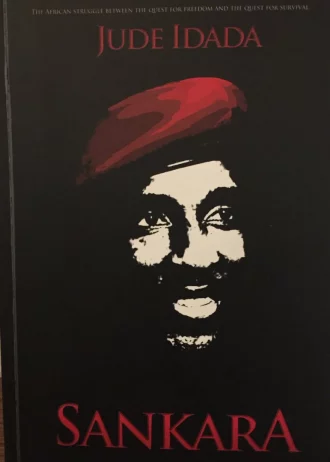
Sankara
₦2,500.00The African Renaissance is the concept that African people and nations shall overcome the current challenges confronting the continent and achieve cultural, scientific, and economic renewal.
At thirty-three, in 1983, Thomas Sankara came to power with a goal of eliminating corruption and eliminating the vestiges colonial domination. He immediately launched one of the most ambitious programmes for social and economic change ever attempted on the African continent. Sankara was assassinated by troops led by Blaise Compaoré in 1987.
It is this Thomas Sankara, held by some as one of Africa’s foremost statesmen, and derided by a small minority as a ruthless dictator, that Jude Idada sets to examine in this play. Everyone interested in history and the subject of an African Renaissance should read this play written by Jude Idada
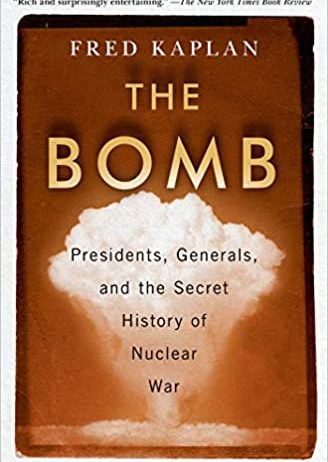
The Bomb
₦7,000.00Fred Kaplan, hailed by TheNew York Times as “a rare combination of defense intellectual and pugnacious reporter,” takes us into the White House Situation Room, the Joint Chiefs of Staff’s “Tank” in the Pentagon, and the vast chambers of Strategic Command to bring us the untold stories—based on exclusive interviews and previously classified documents—of how America’s presidents and generals have thought about, threatened, broached, and just barely avoided nuclear war from the dawn of the atomic age until today.
Kaplan’s historical research and deep reporting will stand as the permanent record of politics. Discussing theories that have dominated nightmare scenarios from Hiroshima and Nagasaki, Kaplan presents the unthinkable in terms of mass destruction and demonstrates how the nuclear war reality will not go away, regardless of the dire consequences.
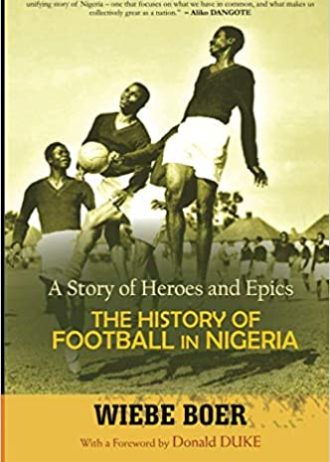
A Story of Heroes and Epics: The History of Football in Nigeria
₦5,000.00For a country where heroes are hardly celebrated and epic football is almost forgotten, this book takes the reader on an enthralling historical excursion. The most detailed and certainly the best written account of the pre-Independence history of Nigerian football. Wiebe Boer has combined facts and figures with fluid prose in delivering a most engaging narration.
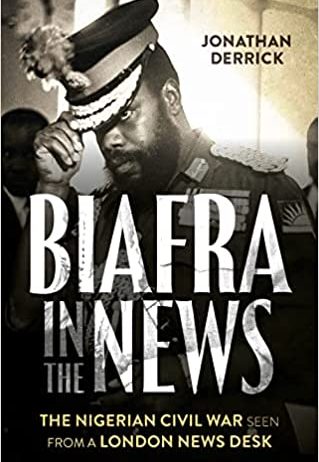
Biafra In The News
₦10,000.00Fifty years ago, Nigeria endured a period of violent disturbance leading to the breakaway of the Eastern Region under the name Biafra. The resulting conflict (1967-70) aroused shock and protests around the world because of mass starvation in the war zone. While Britain supplied arms to the federal
Nigerian government, and France to the Biafrans, relief agencies with contributions from countless individuals organized a memorable airlift of food and medicine to the Biafrans’ Uli airstrip.
Jonathan Derrick, then a journalist for the London weekly West Africa, followed these events closely and
recorded the war in the magazine’s news pages, right up to the federal forces’ final victory and the remarkable reconciliation between supporters of Biafra–predominantly Igbo–and other Nigerians. He later worked for some years in Nigeria, and has studied much of the material published on the war
since 1970.
Here, he recounts the history of the conflict as documented in West Africa, referring to later literature on and analysis of the events, which inspired passion at the time and have provoked debate ever since. His account deals with myths, misapprehensions and controversies surrounding the conflict, while recalling the tragic facts of a grim episode in African history.
Reviews
There are no reviews yet.