Paperback


₦5,000.00
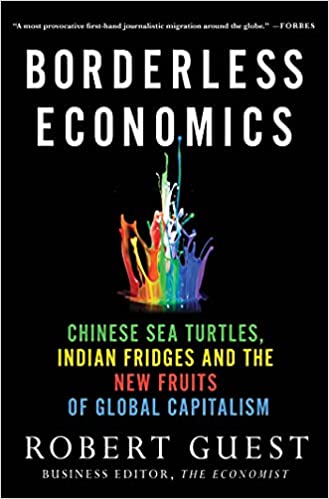
Borderless Economics
A century ago, migrants often crossed an ocean and never saw their homelands again. Today, they call―or Skype―home the moment their flight has landed, and that’s just the beginning. Thanks to cheap travel and easy communication, immigrants everywhere stay in intimate contact with their native countries, creating powerful cross-border networks.
In Borderless Economics, Robert Guest, The Economist’s global business editor, travels through dozens of countries and 44 American states, observing how these networks create wealth, spread ideas, and foster innovation. Covering phenomena such as how young Chinese studying in the West are infecting China with democratic ideals, to why the so-called “brain drain”―the flow of educated migrants from poor countries to rich ones―actually reduces global poverty, this is a fascinating look at how migration makes the world wealthier and happier.
Related products
The Cartiers
₦13,000.00The Cartiers is the revealing tale of a jewelry dynasty—four generations, from revolutionary France to the 1970s. At its heart are the three Cartier brothers whose motto was “Never copy, only create” and who made their family firm internationally famous in the early days of the twentieth century, thanks to their unique and complementary talents: Louis, the visionary designer who created the first men’s wristwatch to help an aviator friend tell the time without taking his hands off the controls of his flying machine; Pierre, the master dealmaker who bought the New York headquarters on Fifth Avenue for a double-stranded natural pearl necklace; and Jacques, the globe-trotting gemstone expert whose travels to India gave Cartier access to the world’s best rubies, emeralds, and sapphires, inspiring the celebrated Tutti Frutti jewelry.
Francesca Cartier Brickell, whose great-grandfather was the youngest of the brothers, has traveled the world researching her family’s history, tracking down those connected with her ancestors and discovering long-lost pieces of the puzzle along the way. Now she reveals never-before-told dramas, romances, intrigues, betrayals, and more.
The Cartiers also offers a behind-the-scenes look at the firm’s most iconic jewelry—the notoriously cursed Hope Diamond, the Romanov emeralds, the classic panther pieces—and the long line of stars from the worlds of fashion, film, and royalty who wore them, from Indian maharajas and Russian grand duchesses to Wallis Simpson, Coco Chanel, and Elizabeth Taylor.
How To Turn Down A Billion Dollars: The Snapchat Story
₦4,500.00The improbable and exhilarating story of the rise of Snapchat from a frat boy fantasy to a multi-billion dollar internet unicorn that has dramatically changed the way we communicate.
In 2013 Evan Spiegel, the brash CEO of the social network Snapchat, and his co-founder Bobby Murphy stunned the press when they walked away from a three-billion-dollar offer from Facebook: how could an app teenagers use to text dirty photos dream of a higher valuation? Was this hubris, or genius?
In How to Turn Down a Billion Dollars, tech journalist Billy Gallagher takes us inside the rise of one of Silicon Valley’s hottest start-ups. Snapchat developed from a simple wish for disappearing pictures as Stanford junior Reggie Brown nursed regrets about photos he had sent. After an epic feud between best friends, Brown lost his stake in the company, while Spiegel has gone on to make a name for himself as a visionary―if ruthless―CEO worth billions, linked to celebrities like Taylor Swift and his wife, Miranda Kerr.
Love is Just Damn Good Business: Do What You Love in the Service of the People Who Love What You Do
₦12,500.00It’s time to toss aside the touchy-feely notions of love in business and acknowledge the real power that it holds. Love is not only appropriate in the context of business, it’s the foundation of great leadership. To put it bluntly: love is just damn good business. That’s the simple but profound truth that leadership consultant Steve Farber has discovered in his extensive work with Fortune 100 companies and other successful businesses. His game-changing approach to love as a practical business strategy will help you to:
• Identify your passions―and share them with others
• Create a culture of love at work―and spark innovation, productivity, and joy
• Serve your customers, so they love how you treat them―and have them coming back for more
• Invest time in making personal connections―that are mutually rewarding
• Focus on serving the needs of others―they’re going to love it
• Do what you love―and make it your business, so others love it, too
The proven principles you’ll find in this book will help you lay the groundwork for a thriving, competitive enterprise. When love is part of your organization’s framework and operationalized in its culture, employees and customers feel genuinely valued. Employees who are passionate about the work that they do are more loyal, innovative, creative, and inspired, and that translates to great customer experience. They don’t serve others out of obligation, but because of a genuine desire to improve people’s lives. And when customers reciprocate by loving your products, your services, and your people, that’s when something great happens. That’s when you get loyalty. That’s when you get raving fans. It’s a refreshingly human way of doing business.
In addition to Farber’s field-tested strategies, you’ll find inspiring case studies from a wide range of industries and leaders, revealing self-assessment quizzes, and practical pointers on how to build a corporate culture based on love, the ultimate competitive advantage. At the end of the day, it’s just damn good business.
Are You Smart Enough To Work At Google?
₦5,000.00You are shrunk to the height of a nickel and thrown in a blender. The blades start moving in 60 seconds. What do you do?
If you want to work at Google, or any of America’s best companies, you need to have an answer to this and other puzzling questions. Are You Smart Enough to Work at Google? guides readers through the surprising solutions to dozens of the most challenging interview questions. The book covers the importance of creative thinking, ways to get a leg up on the competition, what your Facebook page says about you, and much more.
The Man Who Knew
₦8,000.00Greenspan’s life is a quintessential American success story: raised by a single mother in the Jewish émigré community of Washington Heights, he was a math prodigy who found a niche as a stats-crunching consultant. A master at explaining the economic weather to captains of industry, he translated that skill into advising Richard Nixon in his 1968 campaign. This led to a perch on the White House Council of Economic Advisers, and then to a dazzling array of business and government roles, from which the path to the Fed was relatively clear. A fire-breathing libertarian and disciple of Ayn Rand in his youth who once called the Fed’s creation a historic mistake, Mallaby shows how Greenspan reinvented himself as a pragmatist once in power. In his analysis, and in his core mission of keeping inflation in check, he was a maestro indeed, and hailed as such. At his retirement in 2006, he was lauded as the age’s necessary man, the veritable God in the machine, the global economy’s avatar. His memoirs sold for record sums to publishers around the world.
But then came 2008. Mallaby’s story lands with both feet on the great crash which did so much to damage Alan Greenspan’s reputation. Mallaby argues that the conventional wisdom is off base: Greenspan wasn’t a naïve ideologue who believed greater regulation was unnecessary. He had pressed for greater regulation of some key areas of finance over the years, and had gotten nowhere. To argue that he didn’t know the risks in irrational markets is to miss the point. He knew more than almost anyone; the question is why he didn’t act, and whether anyone else could or would have. A close reading of Greenspan’s life provides fascinating answers to these questions, answers whose lessons we would do well to heed. Because perhaps Mallaby’s greatest lesson is that economic statesmanship, like political statesmanship, is the art of the possible. The Man Who Knew is a searching reckoning with what exactly comprised the art, and the possible, in the career of Alan Greenspan.
Reviews
There are no reviews yet.