
Hardcover
₦6,000.00
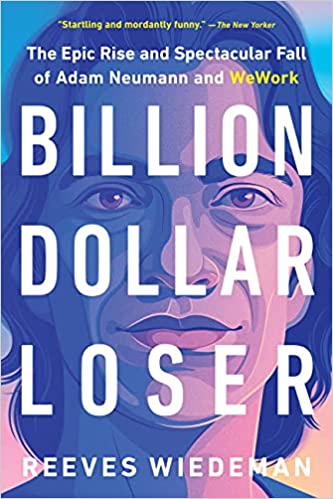
Billion Dollar Loser
Christened a potential savior of Silicon Valley’s startup culture, Adam Neumann was set to take WeWork, his office share company disrupting the commercial real estate market, public, cash out on the company’s forty-seven billion dollar valuation, and break the string of major startups unable to deliver to shareholders. But as employees knew, and investors soon found out, WeWork’s capital was built on promises that the company was more than a real estate purveyor, that in fact it was a transformational technology company.
Veteran journalist Reeves Weideman dives deep into WeWork and it CEO’s astronomical rise, from the marijuana and tequila-filled board rooms to cult-like company summer camps and consciousness-raising with Anthony Kiedis. Billion Dollar Loser is a character-driven business narrative that captures, through the fascinating psyche of a billionaire founder and his wife and co-founder, the slippery state of global capitalism.
A Wall Street Journal Business Bestseller
Out of stock
Related products
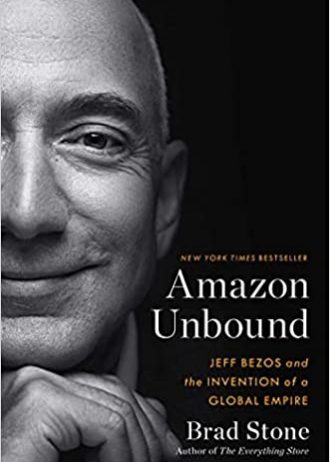
Amazon Unbound: Jeff Bezos and the Invention of a Global Empire
₦12,000.00Almost ten years ago, Bloomberg journalist Brad Stone captured the rise of Amazon in his bestseller The Everything Store. Since then, Amazon has expanded exponentially, inventing novel products like Alexa and disrupting countless industries, while its workforce has quintupled in size and its valuation has soared to well over a trillion dollars. Jeff Bezos’s empire, once housed in a garage, now spans the globe. Between services like Whole Foods, Prime Video, and Amazon’s cloud computing unit, AWS, plus Bezos’s ownership of The Washington Post, it’s impossible to go a day without encountering its impact. We live in a world run, supplied, and controlled by Amazon and its iconoclast founder.
In Amazon Unbound, Brad Stone presents a deeply reported, vividly drawn portrait of how a retail upstart became one of the most powerful and feared entities in the global economy. Stone also probes the evolution of Bezos himself—who started as a geeky technologist totally devoted to building Amazon, but who transformed to become a fit, disciplined billionaire with global ambitions; who ruled Amazon with an iron fist, even as he found his personal life splashed over the tabloids.
Definitive, timely, and revelatory, Stone has provided an unvarnished portrait of a man and company that we couldn’t imagine modern life without.
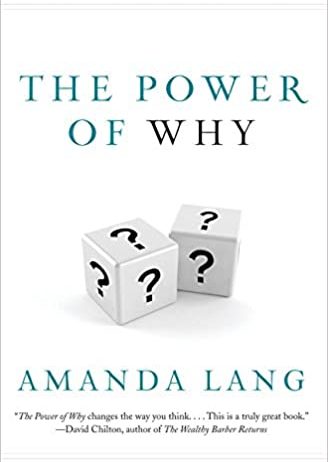
The Power of Why
₦4,000.00The urge to question is natural for small children—just ask any parent. But few of us are aware that it is also one of the most vital tools for success. In The Power of Why, Amanda Lang shows how curiosity and the ability to ask the right questions fuels innovation and can drive change not just in business but also in our personal lives.
Weaving together the latest research with in-depth profiles of innovators from around the world, Lang explores how to harness and develop the power of curiosity. She reveals how a major retailer set out to discover what really makes men happy—and was stunned by the results. She finds out why, at one particular hospital, nurses think it’s better if they don’t wash their hands. She learns why the most common methods of brainstorming don’t actually work and discovers a new soccer ball that could change the world.
A book that challenges conventional wisdom and offers practical, inspiring advice, The Power of Why shows how it’s possible to reignite your innate curiosity and overcome long-standing barriers—leaving you more creative, productive and fulfilled in your job and happier in your relationships.

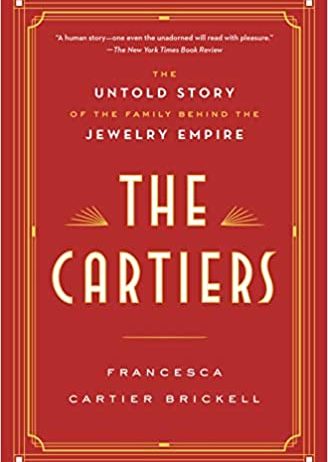
The Cartiers
₦13,000.00The Cartiers is the revealing tale of a jewelry dynasty—four generations, from revolutionary France to the 1970s. At its heart are the three Cartier brothers whose motto was “Never copy, only create” and who made their family firm internationally famous in the early days of the twentieth century, thanks to their unique and complementary talents: Louis, the visionary designer who created the first men’s wristwatch to help an aviator friend tell the time without taking his hands off the controls of his flying machine; Pierre, the master dealmaker who bought the New York headquarters on Fifth Avenue for a double-stranded natural pearl necklace; and Jacques, the globe-trotting gemstone expert whose travels to India gave Cartier access to the world’s best rubies, emeralds, and sapphires, inspiring the celebrated Tutti Frutti jewelry.
Francesca Cartier Brickell, whose great-grandfather was the youngest of the brothers, has traveled the world researching her family’s history, tracking down those connected with her ancestors and discovering long-lost pieces of the puzzle along the way. Now she reveals never-before-told dramas, romances, intrigues, betrayals, and more.
The Cartiers also offers a behind-the-scenes look at the firm’s most iconic jewelry—the notoriously cursed Hope Diamond, the Romanov emeralds, the classic panther pieces—and the long line of stars from the worlds of fashion, film, and royalty who wore them, from Indian maharajas and Russian grand duchesses to Wallis Simpson, Coco Chanel, and Elizabeth Taylor.
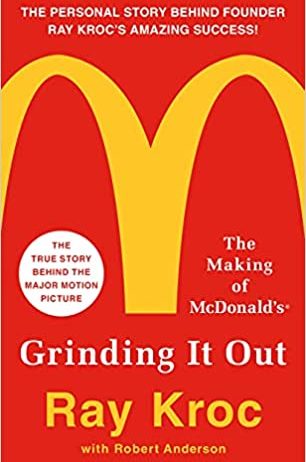
Grinding It Out: The Making of McDonald’s
₦9,000.00Few entrepreneurs can claim to have radically changed the way we live, and Ray Kroc is one of them. His revolutions in food-service automation, franchising, shared national training, and advertising have earned him a place beside the men and women who have founded not only businesses, but entire empires. But even more interesting than Ray Kroc the business man is Ray Kroc the man. Not your typical self-made tycoon, Kroc was fifty-two years old when he opened his first franchise. In Grinding It Out, you’ll meet the man behind McDonald’s, one of the largest fast-food corporations in the world with over 32,000 stores around the globe.
Irrepressible enthusiast, intuitive people person, and born storyteller, Kroc will fascinate and inspire you on every page.
Reviews
There are no reviews yet.