Paperback


₦10,000.00
Biafra In The News
Fifty years ago, Nigeria endured a period of violent disturbance leading to the breakaway of the Eastern Region under the name Biafra. The resulting conflict (1967-70) aroused shock and protests around the world because of mass starvation in the war zone. While Britain supplied arms to the federal
Nigerian government, and France to the Biafrans, relief agencies with contributions from countless individuals organized a memorable airlift of food and medicine to the Biafrans’ Uli airstrip.
Jonathan Derrick, then a journalist for the London weekly West Africa, followed these events closely and
recorded the war in the magazine’s news pages, right up to the federal forces’ final victory and the remarkable reconciliation between supporters of Biafra–predominantly Igbo–and other Nigerians. He later worked for some years in Nigeria, and has studied much of the material published on the war
since 1970.
Here, he recounts the history of the conflict as documented in West Africa, referring to later literature on and analysis of the events, which inspired passion at the time and have provoked debate ever since. His account deals with myths, misapprehensions and controversies surrounding the conflict, while recalling the tragic facts of a grim episode in African history.
Out of stock
Related products
The Quiet Americans
₦6,500.00At the end of World War II, the United States dominated the world militarily, economically, and in moral standing – seen as the victor over tyranny and a champion of freedom. But it was clear – to some – that the Soviet Union was already executing a plan to expand and foment revolution around the world. The American government’s strategy in response relied on the secret efforts of a newly-formed CIA.
The Quiet Americans chronicles the exploits of four spies – Michael Burke, a charming former football star fallen on hard times, Frank Wisner, the scion of a wealthy Southern family, Peter Sichel, a sophisticated German Jew who escaped the Nazis, and Edward Lansdale, a brilliant ad executive. The four ran covert operations across the globe, trying to outwit the ruthless KGB in Berlin, parachuting commandos into Eastern Europe, plotting coups, and directing wars against Communist insurgents in Asia.
But time and again their efforts went awry, thwarted by a combination of stupidity and ideological rigidity at the highest levels of the government – and more profoundly, the decision to abandon American ideals. By the mid-1950s, the Soviet Union had a stranglehold on Eastern Europe, the US had begun its disastrous intervention in Vietnam, and America, the beacon of democracy, was overthrowing democratically elected governments and earning the hatred of much of the world. All of this culminated in an act of betrayal and cowardice that would lock the Cold War into place for decades to come.
Anderson brings to the telling of this story all the narrative brio, deep research, sceptical eye, and lively prose that made Lawrence in Arabia a major international bestseller. The intertwined lives of these men began in a common purpose of defending freedom, but the ravages of the Cold War led them to different fates. Two would quit the CIA in despair, stricken by the moral compromises they had to make; one became the archetype of the duplicitous and destructive American spy; and one would be so heartbroken he would take his own life.
Scott Anderson’s The Quiet Americans is the story of these four men. It is also the story of how the United States, at the very pinnacle of its power, managed to permanently damage its moral standing in the world.
Sankara
₦2,500.00The African Renaissance is the concept that African people and nations shall overcome the current challenges confronting the continent and achieve cultural, scientific, and economic renewal.
At thirty-three, in 1983, Thomas Sankara came to power with a goal of eliminating corruption and eliminating the vestiges colonial domination. He immediately launched one of the most ambitious programmes for social and economic change ever attempted on the African continent. Sankara was assassinated by troops led by Blaise Compaoré in 1987.
It is this Thomas Sankara, held by some as one of Africa’s foremost statesmen, and derided by a small minority as a ruthless dictator, that Jude Idada sets to examine in this play. Everyone interested in history and the subject of an African Renaissance should read this play written by Jude Idada
Beneath the Tamarind Tree
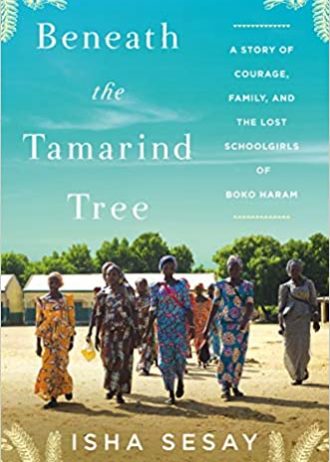
₦5,000.00In the early morning of April 14, 2014, the militant Islamic group Boko Haram violently burst into the small town of Chibok, Nigeria, and abducted 276 girls from their school dorm rooms. From poor families, these girls were determined to make better lives for themselves, but pursuing an education made them targets, resulting in one of the most high-profile abductions in modern history. While the Chibok kidnapping made international headlines, and prompted the #BringBackOurGirls movement, many unanswered questions surrounding that fateful night remain about the girls’ experiences in captivity, and where many of them are today.
In Beneath the Tamarind Tree, Isha Sesay tells this story as no one else can. Originally from Sierra Leone, Sesay led CNN’s Africa reporting for more than a decade, and she was on the front lines when this story broke. With unprecedented access to a group of girls who made it home, she follows the journeys of Priscilla, Saa, and Dorcas in an uplifting tale of sisterhood and survival.
Sesay delves into the Nigerian government’s inadequate response to the kidnapping, exposes the hierarchy of how the news gets covered, and synthesizes crucial lessons about global national security. She also reminds us of the personal sacrifice required of journalists to bring us the truth at a time of growing mistrust of the media. Beneath the Tamarind Tree is a gripping read and a story of resilience with a soaring message of hope at its core, reminding us of the ever-present truth that progress for all of us hinges on unleashing the potential of women.
Black and British: A Forgotten History
₦7,500.00In this vital re-examination of a shared history, historian and broadcaster David Olusoga tells the rich and revealing story of the long relationship between the British Isles and the people of Africa and the Caribbean.
This edition, fully revised and updated, features a new chapter encompassing the Windrush scandal and the Black Lives Matter protests of 2020, events which put black British history at the centre of urgent national debate. Black and British is vivid confirmation that black history can no longer be kept separate and marginalised. It is woven into the cultural and economic histories of the nation and it belongs to us all.
Drawing on new genealogical research, original records, and expert testimony, Black and British reaches back to Roman Britain, the medieval imagination, Elizabethan ‘blackamoors’ and the global slave-trading empire. It shows that the great industrial boom of the nineteenth century was built on American slavery, and that black Britons fought at Trafalgar and in the trenches of both World Wars. Black British history is woven into the cultural and economic histories of the nation. It is not a singular history, but one that belongs to us all.
Unflinching, confronting taboos, and revealing hitherto unknown scandals, Olusoga describes how the lives of black and white Britons have been entwined for centuries.
The Key Man
₦9,000.00In this compelling story of lies, greed and tarnished idealism, two Wall Street Journal reporters investigate a man who Bill Gates, Western governments, and other investors entrusted with billions of dollars to make profits and end poverty, but who now stands accused of masterminding one of the biggest, most brazen financial frauds ever.
Arif Naqvi was charismatic, inspiring, and self-made—all the qualities of a successful business leader. The founder of Abraaj, a Dubai-based private-equity firm, Naqvi was the Key Man to the global elite searching for impact investments to make money and do good. He persuaded politicians he could help stabilize the Middle East after 9/11 by providing jobs and guided executives to opportunities in cities they struggled to find on the map. Bill Gates helped him start a $1 billion fund to improve healthcare in poor countries and the UN and Interpol appointed him to boards. As Pope Francis blessed a move to harness capitalism for the good of the poor, Naqvi won the support of Obama’s administration and investors, who compared him to Tom Cruise in Mission: Impossible.
In 2018, Simon Clark and Will Louch were contacted by an anonymous whistleblower who said Naqvi had swindled investors out of hundreds of millions of dollars and offered bribes to sustain his billionaire lifestyle. Digging into the claims, Clark and Louch uncovered hundreds of documents and exposed the wrongdoing. In April 2019—months after their exposé broke—Naqvi was arrested on charges of fraud and racketeering, and faces up to 291 years in jail.
Populated by a cast of larger-than-life characters and moving across Asia, Africa, Europe and America, The Key Man is the story of how the global elite was duped by a capitalist fairytale. Clark and Louch shine a light on efforts to clean up global capital flows even as opaque private equity firms amass trillions of dollars and offshore tax havens cast a veil of secrecy which prevents regulators, investors and citizens from understanding what’s really going on in the finance industry.
Reviews
There are no reviews yet.