Paperback


₦6,000.00
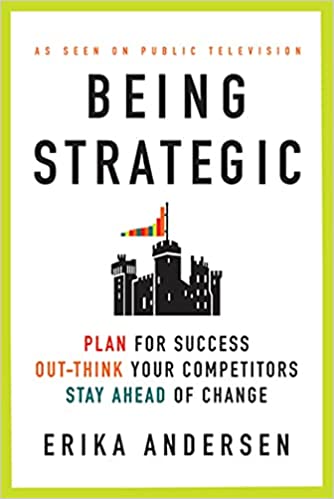
Being Strategic
Strategy? Tactics? Confused?
How many times have you sat in a meeting and heard someone say, “We’re not being very strategic” or “We need to approach this more strategically”? If your organization is like most, everyone in the meeting nods wisely, the meeting drones on, people endlessly debate how to approach the situation at hand, and no one is the wiser as to what “strategic” really means.
Next time, say this: “Being strategic means consistently making those core directional choices that will best move us toward our hoped-for future. Is this what we’re doing?”
Everybody talks about strategy, but there is a big gap between discussing strategy and using a practically strategic approach to achieving the business, the career, or the life you most want.
In this book, Erika Andersen offers you a step-by-step model and skills for making being strategic a powerful habit of mind and action
Out of stock
Related products
Lights Out
₦10,000.00This is the definitive history of General Electric’s epic decline, as told by the two Wall Street Journal reporters who covered its fall.
Since its founding in 1892, GE has been more than just a corporation. For generations, it was job security, a solidly safe investment, and an elite business education for top managers.
GE electrified America, powering everything from lightbulbs to turbines, and became fully integrated into the American societal mindset as few companies ever had. And after two decades of leadership under legendary CEO Jack Welch, GE entered the twenty-first century as America’s most valuable corporation. Yet, fewer than two decades later, the GE of old was gone.
Lights Out examines how Welch’s handpicked successor, Jeff Immelt, tried to fix flaws in Welch’s profit machine, while stumbling headlong into mistakes of his own. In the end, GE’s traditional win-at-all-costs driven culture seemed to lose its direction, which ultimately caused the company’s decline on both a personal and organizational scale. Lights Out details how one of America’s all-time great companies has been reduced to a cautionary tale for our times.
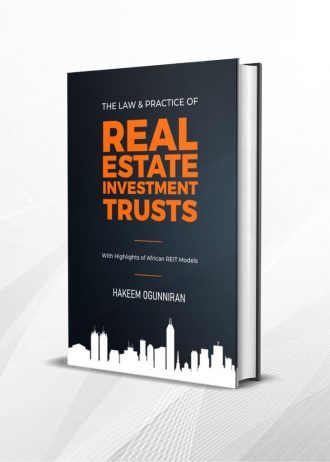
The Law & Practice of Real Estate Investment Trusts – Paperback
₦5,000.00In ten expertly written chapters, the author dissects the core elements and defining characteristics of REITs and provides analysis of the origin, growth, global spread, legal structure and governance of them.
The Mindful Millionaire
₦5,000.00In the world of personal finance the biggest challenge is the sense that there’s never going to be enough. It is this mindset of scarcity, and not the amount spent on lattes, that holds people back the most from achieving their financial dreams.
Using techniques she’s developed as a financial planner and spiritual coach, Leisa Peterson guides you to dig deeper and discover the root of your financial thinking to change not just the way you save and spend, but the way you live your life.
Through powerful practices, compelling stories and extensive research, The Mindful Millionaire meets you wherever you are in your money journey by exploring:
*Where your current money habits come from and why you feel the way you do about money and success.
*How to break the cycle of fear, grief, and shame that often surrounds your money habits.
*How to write a new money story that inspires joy, satisfaction and prosperity.
*Why wealth building isn’t just about positive thinking and “manifesting” things into reality.
*How to stop financial self-sabotage and procrastination.
*Where practical financial advice misses the mark.
*The most effective tools for changing how you think and feel about money.
*What true financial independence looks like and how to discover the millionaire within.
The Man Who Knew
₦8,000.00Greenspan’s life is a quintessential American success story: raised by a single mother in the Jewish émigré community of Washington Heights, he was a math prodigy who found a niche as a stats-crunching consultant. A master at explaining the economic weather to captains of industry, he translated that skill into advising Richard Nixon in his 1968 campaign. This led to a perch on the White House Council of Economic Advisers, and then to a dazzling array of business and government roles, from which the path to the Fed was relatively clear. A fire-breathing libertarian and disciple of Ayn Rand in his youth who once called the Fed’s creation a historic mistake, Mallaby shows how Greenspan reinvented himself as a pragmatist once in power. In his analysis, and in his core mission of keeping inflation in check, he was a maestro indeed, and hailed as such. At his retirement in 2006, he was lauded as the age’s necessary man, the veritable God in the machine, the global economy’s avatar. His memoirs sold for record sums to publishers around the world.
But then came 2008. Mallaby’s story lands with both feet on the great crash which did so much to damage Alan Greenspan’s reputation. Mallaby argues that the conventional wisdom is off base: Greenspan wasn’t a naïve ideologue who believed greater regulation was unnecessary. He had pressed for greater regulation of some key areas of finance over the years, and had gotten nowhere. To argue that he didn’t know the risks in irrational markets is to miss the point. He knew more than almost anyone; the question is why he didn’t act, and whether anyone else could or would have. A close reading of Greenspan’s life provides fascinating answers to these questions, answers whose lessons we would do well to heed. Because perhaps Mallaby’s greatest lesson is that economic statesmanship, like political statesmanship, is the art of the possible. The Man Who Knew is a searching reckoning with what exactly comprised the art, and the possible, in the career of Alan Greenspan.
How To Turn Down A Billion Dollars: The Snapchat Story
₦4,500.00The improbable and exhilarating story of the rise of Snapchat from a frat boy fantasy to a multi-billion dollar internet unicorn that has dramatically changed the way we communicate.
In 2013 Evan Spiegel, the brash CEO of the social network Snapchat, and his co-founder Bobby Murphy stunned the press when they walked away from a three-billion-dollar offer from Facebook: how could an app teenagers use to text dirty photos dream of a higher valuation? Was this hubris, or genius?
In How to Turn Down a Billion Dollars, tech journalist Billy Gallagher takes us inside the rise of one of Silicon Valley’s hottest start-ups. Snapchat developed from a simple wish for disappearing pictures as Stanford junior Reggie Brown nursed regrets about photos he had sent. After an epic feud between best friends, Brown lost his stake in the company, while Spiegel has gone on to make a name for himself as a visionary―if ruthless―CEO worth billions, linked to celebrities like Taylor Swift and his wife, Miranda Kerr.
Reviews
There are no reviews yet.