Paperback
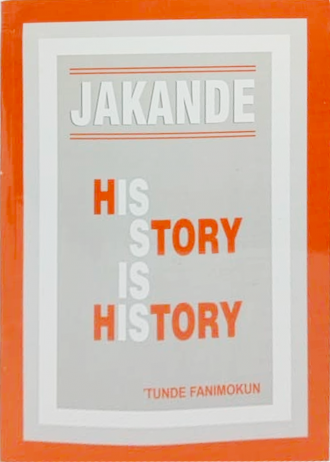
Jakande: His Story Is History
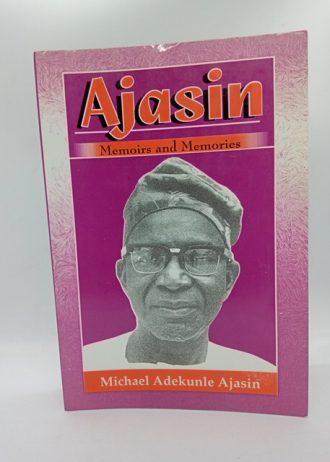
₦5,000.00This book is the story of Alhaji Chief (Dr) Lateef Kayode Jakande who was the first civilian governor of Lagos State (1979 – 1983) and the Honourable Minister of Works and Housing (1993 – 1995).


₦5,000.00
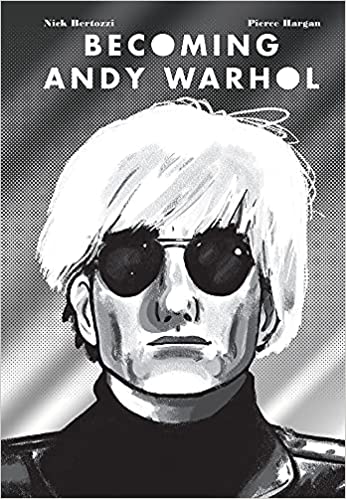
Celebrated during his lifetime as much for his personality as for his paintings, Andy Warhol (1928–87) is the most famous and influential of the Pop artists, who developed the notion of 15 minutes of fame, and the idea that an artist could be as illustrious as the work he creates. This graphic novel biography offers insight into the turning point of Warhol’s career and the creation of the Thirteen Most Wanted Men mural for the 1964 World’s Fair, when Warhol clashed with urban planner Robert Moses, architect Philip Johnson, and Governor Nelson Rockefeller. In Becoming Andy Warhol, New York Times bestselling writer Nick Bertozzi and artist Pierce Hargan showcase the moment when, by stubborn force of personality and sheer burgeoning talent, Warhol went up against the creative establishment and emerged to become one of the most significant artists of the 20th century.
Out of stock
This book is the story of Alhaji Chief (Dr) Lateef Kayode Jakande who was the first civilian governor of Lagos State (1979 – 1983) and the Honourable Minister of Works and Housing (1993 – 1995).
In February 2013, the arch-conservative Pope Benedict XVI made a startling announcement: he would resign, making him the first pope to willingly vacate his office in over 700 years. Reeling from the news, the College of Cardinals rushed to Rome to congregate in the Sistine Chapel to pick his successor. Their unlikely choice? Francis, the first non-European pope in 1,200 years, a onetime tango club bouncer, a passionate soccer fan, a man with the common touch.
Why did Benedict walk away at the height of power, knowing his successor might be someone whose views might undo his legacy? How did Francis – who used to ride the bus to work back in his native Buenos Aires – adjust to life as leader to a billion followers? If, as the Church teaches, the pope is infallible, how can two living popes who disagree on almost everything both be right? Having immersed himself in these men’s lives to write the screenplay for The Two Popes, Anthony McCarten masterfully weaves their stories into one gripping narrative. From Benedict and Francis’s formative experiences in war-torn Germany and Argentina to the sexual abuse scandal that continues to rock the Church to its foundations to the intrigue and the occasional comedy of life in the Vatican, The Two Popes glitters with the darker and the lighter details of one of the world’s most opaque but significant institutions.
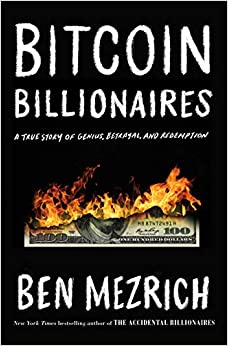
Ben Mezrich’s 2009 bestseller The Accidental Billionaires is the definitive account of Facebook’s founding and the basis for the Academy Award–winning film The Social Network. Two of the story’s iconic characters are Harvard students Tyler and Cameron Winklevoss: identical twins, Olympic rowers, and foils to Mark Zuckerberg. Bitcoin Billionaires is the story of the brothers’ redemption and revenge in the wake of their epic legal battle with Facebook.
Planning to start careers as venture capitalists, the brothers quickly discover that no one will take their money after their fight with Zuckerberg. While nursing their wounds in Ibiza, they accidentally run into an eccentric character who tells them about a brand-new idea: cryptocurrency. Immersing themselves in what is then an obscure and sometimes sinister world, they begin to realize “crypto” is, in their own words, “either the next big thing or total bulls–t.” There’s nothing left to do but make a bet.
From the Silk Road to the halls of the Securities and Exchange Commission, Bitcoin Billionaires will take us on a wild and surprising ride while illuminating a tantalizing economic future. On November 26, 2017, the Winklevoss brothers became the first bitcoin billionaires. Here’s the story of how they got there―as only Ben Mezrich could tell it.
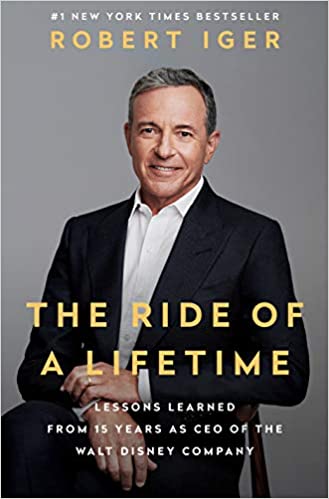
Robert Iger became CEO of The Walt Disney Company in 2005, during a difficult time. Competition was more intense than ever and technology was changing faster than at any time in the company’s history. His vision came down to three clear ideas: Recommit to the concept that quality matters, embrace technology instead of fighting it, and think bigger—think global—and turn Disney into a stronger brand in international markets.
Today, Disney is the largest, most admired media company in the world, counting Pixar, Marvel, Lucasfilm, and 21st Century Fox among its properties. Its value is nearly five times what it was when Iger took over, and he is recognized as one of the most innovative and successful CEOs of our era.
In The Ride of a Lifetime, Robert Iger shares the lessons he learned while running Disney and leading its 220,000-plus employees, and he explores the principles that are necessary for true leadership, including:
• Optimism. Even in the face of difficulty, an optimistic leader will find the path toward the best possible outcome and focus on that, rather than give in to pessimism and blaming.
• Courage. Leaders have to be willing to take risks and place big bets. Fear of failure destroys creativity.
• Decisiveness. All decisions, no matter how difficult, can be made on a timely basis. Indecisiveness is both wasteful and destructive to morale.
• Fairness. Treat people decently, with empathy, and be accessible to them.
This book is about the relentless curiosity that has driven Iger for forty-five years, since the day he started as the lowliest studio grunt at ABC. It’s also about thoughtfulness and respect, and a decency-over-dollars approach that has become the bedrock of every project and partnership Iger pursues, from a deep friendship with Steve Jobs in his final years to an abiding love of the Star Wars mythology.
Greenspan’s life is a quintessential American success story: raised by a single mother in the Jewish émigré community of Washington Heights, he was a math prodigy who found a niche as a stats-crunching consultant. A master at explaining the economic weather to captains of industry, he translated that skill into advising Richard Nixon in his 1968 campaign. This led to a perch on the White House Council of Economic Advisers, and then to a dazzling array of business and government roles, from which the path to the Fed was relatively clear. A fire-breathing libertarian and disciple of Ayn Rand in his youth who once called the Fed’s creation a historic mistake, Mallaby shows how Greenspan reinvented himself as a pragmatist once in power. In his analysis, and in his core mission of keeping inflation in check, he was a maestro indeed, and hailed as such. At his retirement in 2006, he was lauded as the age’s necessary man, the veritable God in the machine, the global economy’s avatar. His memoirs sold for record sums to publishers around the world.
But then came 2008. Mallaby’s story lands with both feet on the great crash which did so much to damage Alan Greenspan’s reputation. Mallaby argues that the conventional wisdom is off base: Greenspan wasn’t a naïve ideologue who believed greater regulation was unnecessary. He had pressed for greater regulation of some key areas of finance over the years, and had gotten nowhere. To argue that he didn’t know the risks in irrational markets is to miss the point. He knew more than almost anyone; the question is why he didn’t act, and whether anyone else could or would have. A close reading of Greenspan’s life provides fascinating answers to these questions, answers whose lessons we would do well to heed. Because perhaps Mallaby’s greatest lesson is that economic statesmanship, like political statesmanship, is the art of the possible. The Man Who Knew is a searching reckoning with what exactly comprised the art, and the possible, in the career of Alan Greenspan.
When The Mauritanian was first published as Guantánamo Diary in 2015—heavily redacted by the U.S. government—Mohamedou Ould Slahi was still imprisoned at the detainee camp in Guantánamo Bay, Cuba, despite a federal court ruling ordering his release, and it was unclear when or if he would ever see freedom. In October 2016 he was finally released and reunited with his family. During his fourteen-year imprisonment the United States never charged him with a crime.
Now he is able to tell his story in full, with previously censored material restored. This searing diary is not merely a vivid record of a miscarriage of justice, but a deeply personal memoir—terrifying, darkly humorous, and surprisingly gracious. The Mauritanian is a document of immense emotional power and historical importance.
Reviews
There are no reviews yet.