Paperback

Jakande: His Story Is History
₦5,000.00This book is the story of Alhaji Chief (Dr) Lateef Kayode Jakande who was the first civilian governor of Lagos State (1979 – 1983) and the Honourable Minister of Works and Housing (1993 – 1995).


₦4,500.00
As Rwanda was thrown into chaos during the 1994 genocide, Rusesabagina, a hotel manager, turned the luxurious Hotel Milles Collines into a refuge for more than 1,200 Tutsi and moderate Hutu refugees, while fending off their would-be killers with a combination of diplomacy and deception. In An Ordinary Man, he tells the story of his childhood, retraces his accidental path to heroism, revisits the 100 days in which he was the only thing standing between his “guests” and a hideous death, and recounts his subsequent life as a refugee and activist.
Out of stock
This book is the story of Alhaji Chief (Dr) Lateef Kayode Jakande who was the first civilian governor of Lagos State (1979 – 1983) and the Honourable Minister of Works and Housing (1993 – 1995).
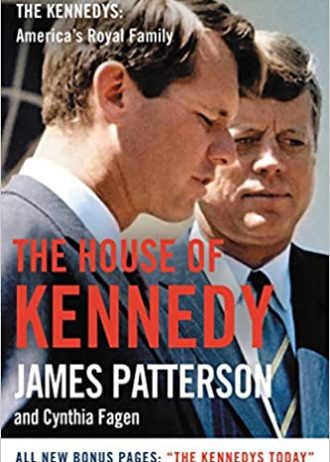
The Kennedys have always been a family of charismatic adventurers, raised to take risks and excel, living by the dual family mottos: “To whom much is given, much is expected” and “Win at all costs.” And they do—but at a price.
Across decades and generations, the Kennedys have occupied a unique place in the American imagination: charmed, cursed, at once familiar and unknowable. The House of Kennedy is a revealing, fascinating account of America’s most storied family, as told by America’s most trusted storyteller.
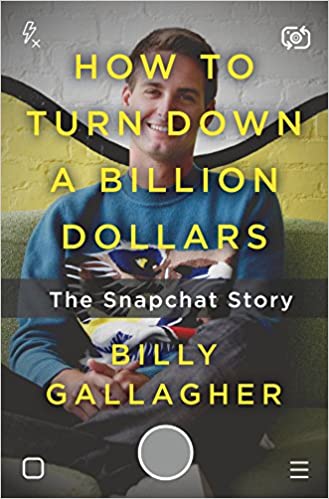
The improbable and exhilarating story of the rise of Snapchat from a frat boy fantasy to a multi-billion dollar internet unicorn that has dramatically changed the way we communicate.
In 2013 Evan Spiegel, the brash CEO of the social network Snapchat, and his co-founder Bobby Murphy stunned the press when they walked away from a three-billion-dollar offer from Facebook: how could an app teenagers use to text dirty photos dream of a higher valuation? Was this hubris, or genius?
In How to Turn Down a Billion Dollars, tech journalist Billy Gallagher takes us inside the rise of one of Silicon Valley’s hottest start-ups. Snapchat developed from a simple wish for disappearing pictures as Stanford junior Reggie Brown nursed regrets about photos he had sent. After an epic feud between best friends, Brown lost his stake in the company, while Spiegel has gone on to make a name for himself as a visionary―if ruthless―CEO worth billions, linked to celebrities like Taylor Swift and his wife, Miranda Kerr.
The wild inside story of the birth of CNN and dawn of the age of 24-hour news
How did we get from an age of dignified nightly news broadcasts on three national networks to the age of 24-hour news channels and constantly breaking news? The answer—thanks to Ted Turner and an oddball cast of cable television visionaries, big league rejects, and nonunion newbies—can be found in the basement of an abandoned country club in Atlanta. Because it was there, in the summer of 1980, that this motley crew launched CNN.
Lisa Napoli’s Up All Night is an entertaining inside look at the founding of the upstart network that set out to change the way news was delivered and consumed, and succeeded beyond even the wildest imaginings of its charismatic and uncontrollable founder. Mixing media history, a business adventure story, and great characters, this is a fun book on the making of the world we live in now.
Award-winning New York Times reporters Sheera Frenkel and Cecilia Kang unveil the tech story of our times in a riveting, behind-the-scenes exposé that offers the definitive account of Facebook’s fall from grace.
Once one of Silicon Valley’s greatest success stories, Facebook has been under constant fire for the past five years, roiled by controversies and crises. It turns out that while the tech giant was connecting the world, they were also mishandling users’ data, spreading fake news, and amplifying dangerous, polarizing hate speech.
The company, many said, had simply lost its way. But the truth is far more complex. Leadership decisions enabled, and then attempted to deflect attention from, the crises. Time after time, Facebook’s engineers were instructed to create tools that encouraged people to spend as much time on the platform as possible, even as those same tools boosted inflammatory rhetoric, conspiracy theories, and partisan filter bubbles. And while consumers and lawmakers focused their outrage on privacy breaches and misinformation, Facebook solidified its role as the world’s most voracious data-mining machine, posting record profits, and shoring up its dominance via aggressive lobbying efforts.
Drawing on their unrivaled sources, Sheera Frenkel and Cecilia Kang take readers inside the complex court politics, alliances and rivalries within the company to shine a light on the fatal cracks in the architecture of the tech behemoth. Their explosive, exclusive reporting led them to a shocking conclusion: The missteps of the last five years were not an anomaly but an inevitability—this is how Facebook was built to perform. In a period of great upheaval, growth has remained the one constant under the leadership of Mark Zuckerberg and Sheryl Sandberg. Both have been held up as archetypes of uniquely 21st century executives—he the tech “boy genius” turned billionaire, she the ultimate woman in business, an inspiration to millions through her books and speeches. But sealed off in tight circles of advisers and hobbled by their own ambition and hubris, each has stood by as their technology is coopted by hate-mongers, criminals and corrupt political regimes across the globe, with devastating consequences. In An Ugly Truth, they are at last held accountable.
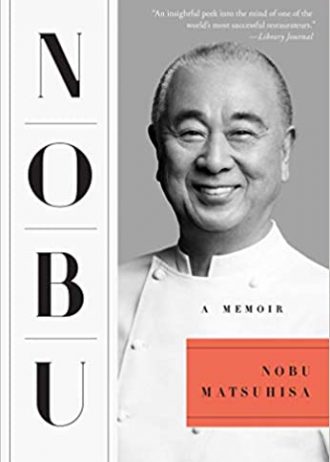
As one of the world’s most widely acclaimed restaurateurs, Nobu’s influence on food and hospitality can be found at the highest levels of haute-cuisine to the food trucks you frequent during the work week—this is the Nobu that the public knows.
But now, we are finally introduced to the private Nobu: the man who failed three times before starting the restaurant that would grow into an empire; the man who credits the love and support of his family as the only thing keeping him from committing suicide when his first restaurant burned down; and the man who values the busboy who makes sure each glass is crystal clear as highly as the chef who slices the fish for Omakase perfectly.
What makes Nobu special, and what made him famous, is the spirit of what exists on these pages. He has the traditional Japanese perspective that there is great pride to be found in every element of doing a job well—no matter how humble that job is. Furthermore, he shows us repeatedly that success is as much about perseverance in the face of adversity as it is about innate talent.


Reviews
There are no reviews yet.