History & Geography

Behind The Enigma

10,000.00

For a hundred years GCHQ – Government Communications Headquarters – has been at the forefront of British secret statecraft. Born out of the need to support military operations in the First World War, and fought over ever since, today it is the UK’s biggest intelligence, security and cyber agency and a powerful tool of the British state.

Famed primarily for its codebreaking achievements at Bletchley Park against Enigma ciphers in the Second World War, GCHQ has intercepted, interpreted and disrupted the information networks of Britain’s foes for a century, and yet it remains the least known and understood of British intelligence services.

It has been one of the most open-minded, too: GCHQ has always demanded a diversity of intellectual firepower, finding it in places which strike us as ground-breaking today, and allying it to the efforts of ordinary men and women to achieve extraordinary insights in war, diplomacy and peace. GCHQ shapes British decision-making more than any other intelligence organisation and, along with its partners in the Five Eyes intelligence partnership-including the United States’ National Security Agency-has become ever more crucial in an age governed by information technology.

Based on unprecedented access to documents in GCHQ’s archive, many of them hitherto classified, this is the first book to authoritatively explain the entire history of one of the world’s most potent intelligence agencies. Many major contemporary conflicts-between Russia and the West, between Arab nations and Israel, between state security and terrorism-become fully explicable only in the light of the secret intelligence record. Written by one of the world’s leading experts in intelligence and strategy, Behind the Enigma reveals the fascinating truth behind this most remarkable and enigmatic of organisations.

The Rise and Fall of The Roman and British Empire Plus The Crusades: ( 3 books in 1 )

10,000.00

The Rise and Fall of The Roman and British Empire Plus The Crusades (3 books in 1) Triple The Action!

How did we get here, to this time and place in history? Are we repeating history’s mistakes because we did not learn about the pivotal events that shaped the modern world? At fewer than 500 pages, this easy-to-read, three-book history course helps you quickly understand the nuances and the impact of three crucial periods portrayed in countless films: the Crusades and of the rise and fall of two great empires, the Roman and British. The culture, technology, law, and military organization of the Roman Empire shaped western civilization. Determined to spread their rule, the Romans succeeded magnificently until human nature and other factors led to the empire’s collapse.

One reviewer noted, “The book is written in accessible and interesting language that will allow both novice and an experienced person in the field of history to understand …” Were current relationships between Christians and Muslims determined when the Knights of the Crusaders rode off on their grand quest? “I was looking for a book which would have a good historical overview of the Crusades and have an objective approach to the underlining story of power struggle.

By Water Beneath The Walls

10,000.00

How did the US Navy—the branch of the US military tasked with patrolling the oceans—ever manage to produce a unit of raiders trained to operate on land? And how, against all odds, did that unit become one of the world’s most elite commando forces, routinely striking thousands of miles from the water on the battlefields of Iraq, Afghanistan, Syria, even Central Africa?

Behind the SEALs’ improbable rise lies the most remarkable underdog story in American military history—and in these pages, former Navy SEAL Benjamin H. Milligan captures it as never before.

Told through the eyes of remarkable leaders and racing from one longshot, hair-curling raid to the next, By Water Beneath the Walls is the tale of the unit’s heroic naval predecessors, and the evolution of the SEALs themselves. But it’s also the story of the forging of American special operations as a whole—and how the SEALs emerged from the fires as America’s first permanent commando force when again and again some other unit seemed predestined to seize that role.

Here Milligan thrillingly captures the outsize feats of the SEALs’ frogmen forefathers in World War II, the Korean War, and elsewhere, even as he plunges us into the second front of interservice rivalries and personal ambition that shaped the SEALs’ evolution.

In equally vivid, masterful detail, he chronicles key early missions undertaken by units like the Marine Raiders, Army Rangers, and Green Berets, showing us how these fateful, bloody moments helped create the modern American commando—even as they opened up pivotal opportunities for the Navy.

Finally, he takes us alongside as the SEALs at last seize the mantle of commando raiding, and discover the missions of capture/kill and counterterrorism that would define them for decades to come.

Written with the insight that can only come from a combat veteran and a member of the book’s tribe, By Water Beneath the Walls is an essential new history of the SEAL teams, a crackling account of desperate last stands and unforgettable characters accomplishing the impossible—and a riveting epic of the dawn of American special operations.

Obama

10,000.00

A vibrant celebration of President Obama, this perfect commemorative book provides a valuable record of his historical presidency.

In January 2017, Barack Obama concluded two terms of his historic presidency. Through stunning images by White House photographers and beyond, as well as notable essays and quotes from a broad spectrum of people, Obama looks back at President Obama’s journey—from his remarkable victory to his final days in office and the significant milestones along the way.
Obama features rare and unseen photographs, along with iconic images and newspaper front pages from the president’s 2,920 days in office. It includes dramatic pictures, including the iconic shot from the situation room as the president and his staff watched the live unfolding of the bin Laden raid; day-to-day images of Obama in his roles as a world leader, policy maker, commander in chief, and father; lighthearted photos from the White House Correspondents’ Dinner; late-night television appearances; and moments with the entire Obama family.
Included are excerpts from seven historic speeches and contributions from notable historians, community leaders, journalists, academics and business leaders—including Sir Richard Branson, Laurie Garrett, Tweed Roosevelt, Anastasia Somoza and others whose lives have been touched by Obama’s actions and initiatives. Obama is truly a keepsake memento of a beloved president.

Maosim: A Global History

10,000.00

For decades, the West has dismissed Maoism as an outdated historical and political phenomenon. Since the 1980s, China seems to have abandoned the utopian turmoil of Mao’s revolution in favour of authoritarian capitalism. But Mao and his ideas remain central to the People’s Republic and the legitimacy of its Communist government. With disagreements and conflicts between China and the West on the rise, the need to understand the political legacy of Mao is urgent and growing.

The power and appeal of Maoism have extended far beyond China. Maoism was a crucial motor of the Cold War: it shaped the course of the Vietnam War (and the international youth rebellions that conflict triggered) and brought to power the murderous Khmer Rouge in Cambodia; it aided, and sometimes handed victory to, anti-colonial resistance movements in Africa; it inspired terrorism in Germany and Italy, and wars and insurgencies in Peru, India and Nepal, some of which are still with us today – more than forty years after the death of Mao.

In this new history, Julia Lovell re-evaluates Maoism as both a Chinese and an international force, linking its evolution in China with its global legacy. It is a story that takes us from the tea plantations of north India to the sierras of the Andes, from Paris’s fifth arrondissement to the fields of Tanzania, from the rice paddies of Cambodia to the terraces of Brixton.

Starting with the birth of Mao’s revolution in northwest China in the 1930s and concluding with its violent afterlives in South Asia and resurgence in the People’s Republic today, this is a landmark history of global Maoism.

Capitalism In America

10,000.00

From even the start of his fabled career, Alan Greenspan was duly famous for his deep understanding of even the most arcane corners of the American economy, and his restless curiosity to know even more. To the extent possible, he has made a science of understanding how the US economy works almost as a living organism–how it grows and changes, surges and stalls. He has made a particular study of the question of productivity growth, at the heart of which is the riddle of innovation. Where does innovation come from, and how does it spread through a society? And why do some eras see the fruits of innovation spread more democratically, and others, including our own, see the opposite?

In Capitalism in America, Greenspan distills a lifetime of grappling with these questions into a thrilling and profound master reckoning with the decisive drivers of the US economy over the course of its history. In partnership with the celebrated Economist journalist and historian Adrian Wooldridge, he unfolds a tale involving vast landscapes, titanic figures, triumphant breakthroughs, enlightenment ideals as well as terrible moral failings. Every crucial debate is here–from the role of slavery in the antebellum Southern economy to the real impact of FDR’s New Deal to America’s violent mood swings in its openness to global trade and its impact. But to read Capitalism in America is above all to be stirred deeply by the extraordinary productive energies unleashed by millions of ordinary Americans that have driven this country to unprecedented heights of power and prosperity.

At heart, the authors argue, America’s genius has been its unique tolerance for the effects of creative destruction, the ceaseless churn of the old giving way to the new, driven by new people and new ideas. Often messy and painful, creative destruction has also lifted almost all Americans to standards of living unimaginable to even the wealthiest citizens of the world a few generations past. A sense of justice and human decency demands that those who bear the brunt of the pain of change be protected, but America has always accepted more pain for more gain, and its vaunted rise cannot otherwise be understood, or its challenges faced, without recognizing this legacy. For now, in our time, productivity growth has stalled again, stirring up the populist furies. There’s no better moment to apply the lessons of history to the most pressing question we face, that of whether the United States will preserve its preeminence, or see its leadership pass to other, inevitably less democratic powers.

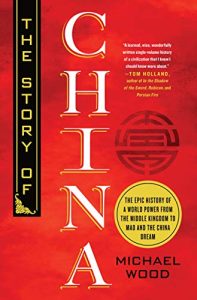
The Story Of China

10,000.00

After a century and a half of foreign invasion, civil war, and revolution, China has once again returned to center stage as a global superpower and the world’s second largest economy. But how did it become so dominant? Wood argues that in order to comprehend the great significance of China today, we must begin with its history.

The Story of China takes a fresh look at the Middle Kingdom in the light of the recent massive changes inside the country. Taking into account exciting new archeological discoveries, the book begins with China’s prehistory—the early dynasties, the origins of the Chinese state, and the roots of Chinese culture in the age of Confucius. Wood looks at particular periods and themes that are now being reevaluated by historians, such as the renaissance of the Song with its brilliant scientific discoveries. He paints a vibrant picture of the Qing Empire in the 18th century, just before the European impact, a time when China’s rich and diverse culture was at its height. Then, Wood explores the encounter with the West, the Opium Wars, the clashes with the British, and the extraordinarily rich debates in the late 19th century that pushed China along the path to modernity.

Finally, he provides a clear up-to-date account of post-1949 China, including revelations about the 1989 crisis based on newly leaked inside documents, and fresh insights into the new order of President Xi Jinping. All woven together with landscape history and the author’s own travel journals, The Story of China is the indispensable book about the most intriguing and powerful country on the world stage today.

Gandhi: The Years That Changed The World

10,000.00

Opening in July 1914, as Mohandas Gandhi leaves South Africa to return to India, Gandhi: The Years That Changed the World, 1914-1918 traces the Mahatma’s life over the three decades preceding his assassination. Drawing on new archival materials, acclaimed historian Ramachandra Guha follows Gandhi’s struggle to deliver India from British rule, to forge harmonious relations between India’s Hindus and Muslims, to end the pernicious practice of untouchability, and to nurture India’s economic and moral self-reliance. He shows how in each of these campaigns, Gandhi adapted methods of nonviolence that successfully challenged British authority and would influence revolutionary movements throughout the world.

A revelatory look at the complexity of Gandhi’s thinking and motives, the book is a luminous portrait of not only the man himself, but also those closest to him—family, friends, and political and social leaders.

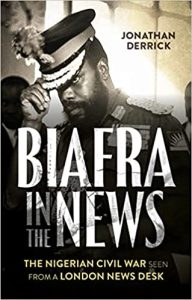
Biafra In The News

10,000.00

Fifty years ago, Nigeria endured a period of violent disturbance leading to the breakaway of the Eastern Region under the name Biafra. The resulting conflict (1967-70) aroused shock and protests around the world because of mass starvation in the war zone. While Britain supplied arms to the federal
Nigerian government, and France to the Biafrans, relief agencies with contributions from countless individuals organized a memorable airlift of food and medicine to the Biafrans’ Uli airstrip.

Jonathan Derrick, then a journalist for the London weekly West Africa, followed these events closely and
recorded the war in the magazine’s news pages, right up to the federal forces’ final victory and the remarkable reconciliation between supporters of Biafra–predominantly Igbo–and other Nigerians. He later worked for some years in Nigeria, and has studied much of the material published on the war
since 1970.

Here, he recounts the history of the conflict as documented in West Africa, referring to later literature on and analysis of the events, which inspired passion at the time and have provoked debate ever since. His account deals with myths, misapprehensions and controversies surrounding the conflict, while recalling the tragic facts of a grim episode in African history.

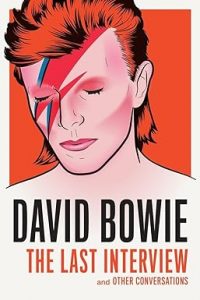
The Last Interview: David Bowie

9,500.00

A revealing collection of interviews with the shape-shifting, genre-bending, wildly influential musician and song writer

David Bowie was an icon, not only his stunning musical output, but also his fascinating refusal to stay the same—the same as other trending artists, or even the same as himself.

In this remarkable collection, Bowie reveals the fierce intellectualism, artistry, and humor behind it all. From his very first interview—as a teenager on the BBC, before he was even a musician—to his last, Bowie takes on the most probing questions, candidly discussing his sexuality, his drug use, his sense of fashion, his method of composition, and more.

For fans still mourning his passing, as well as for those who know little about him, it’s a revealing, interesting, and inspiring look at one of the most influential artists of the last fifty years.

The Director: My Years Assisting J. Edgar Hoover

9,500.00

The 1960s and 1970s were arguably among America’s most turbulent post-Civil War decades. While the Vietnam War continued seemingly without end, protests and riots ravaged most cities, the Kennedys and MLK were assassinated, and corruption found its way to the highest levels of politics, culminating in Watergate.

In 1965, at the beginning of the chaos, twenty-two-year-old Paul Letersky was assigned to assist the legendary FBI director J. Edgar Hoover who’d just turned seventy and had, by then, led the Bureau for an incredible forty-one years. Hoover was a rare and complex man who walked confidently among the most powerful. His personal privacy was more tightly guarded than the secret “files” he carefully collected—and that were so feared by politicians and celebrities. Through Letersky’s close working relationship with Hoover, and the trust and confidence he gained from Hoover’s most loyal senior assistant, Helen Gandy, Paul became one of the few able to enter the Director’s secretive—and sometimes perilous—world.

Since Hoover’s death half a century ago, millions of words have been written about the man and hundreds of hours of TV dramas and A-list Hollywood films produced. But until now, there has been virtually no account from someone who, for a period of years, spent hours with the Director on a daily basis.

Balanced, honest, and keenly observed, this “vivid, foibles-and-all portrait of the fabled scourge of gangsters, Klansmen, and communists” (The Wall Street Journal) sheds new light on one of the most powerful law enforcement figures in American history.

Gandhi & Churchill

9,500.00

In this fascinating and meticulously researched book, bestselling historian Arthur Herman sheds new light on two of the most universally recognizable icons of the twentieth century, and reveals how their forty-year rivalry sealed the fate of India and the British Empire.

They were born worlds apart: Winston Churchill to Britain’s most glamorous aristocratic family, Mohandas Gandhi to a pious middle-class household in a provincial town in India. Yet Arthur Herman reveals how their lives and careers became intertwined as the twentieth century unfolded. Both men would go on to lead their nations through harrowing trials and two world wars—and become locked in a fierce contest of wills that would decide the fate of countries, continents, and ultimately an empire.

Gandhi & Churchill reveals how both men were more alike than different, and yet became bitter enemies over the future of India, a land of 250 million people with 147 languages and dialects and 15 distinct religions—the jewel in the crown of Britain’s overseas empire for 200 years.

Over the course of a long career, Churchill would do whatever was necessary to ensure that India remain British—including a fateful redrawing of the entire map of the Middle East and even risking his alliance with the United States during World War Two.

Mohandas Gandhi, by contrast, would dedicate his life to India’s liberation, defy death and imprisonment, and create an entirely new kind of political movement: satyagraha, or civil disobedience. His campaigns of nonviolence in defiance of Churchill and the British, including his famous Salt March, would become the blueprint not only for the independence of India but for the civil rights movement in the U.S. and struggles for freedom across the world.

Now master storyteller Arthur Herman cuts through the legends and myths about these two powerful, charismatic figures and reveals their flaws as well as their strengths. The result is a sweeping epic of empire and insurrection, war and political intrigue, with a fascinating supporting cast, including General Kitchener, Rabindranath Tagore, Franklin Roosevelt, Lord Mountbatten, and Mohammed Ali Jinnah, the founder of Pakistan. It is also a brilliant narrative parable of two men whose great successes were always haunted by personal failure, and whose final moments of triumph were overshadowed by the loss of what they held most dear.

The Last Of The Tsars

9,500.00

In March 1917, Nicholas II, the last Tsar of All the Russias, abdicated and the dynasty that had ruled an empire for three hundred years was forced from power by revolution. In this masterful and forensic study, Robert Service examines the last year Nicholas’s reign and the months between that momentous abdication and his death, with his family, in Ekaterinburg in July 1918.

Drawing on the Tsar’s own diaries and other hitherto unexamined contemporary records, The Last of the Tsars reveals a man who was almost entirely out of his depth, perhaps even willfully so. It is also a compelling account of the social, economic and political foment in Russia in the aftermath of Alexander Kerensky’s February Revolution, the Bolshevik seizure of power in October 1917 and the beginnings of Lenin’s Soviet republic.

The Korean War

9,500.00

On 25 June 1950 the invasion of South Korea by the Communist North launched one of the bloodiest conflicts of the last century. The seemingly limitless power of the Chinese-backed North was thrown against the ferocious firepower of the UN-backed South in a war that can be seen today as the stark prelude to Vietnam.

Max Hastings draws on first-hand accounts of those who fought on both sides to produce this vivid and incisive reassessment of the Korean War, bringing the military and human dimensions into sharp focus. Critically acclaimed on publication, republished with an introduction from the author, The Korean War remains the best narrative history of this conflict.

Loot: Britain and the Benin Bronzes

9,500.00

In 1897, Britain sent a punitive expedition to the Kingdom of Benin, in what is today Nigeria, in retaliation for the killing of seven British officials and traders. British soldiers and sailors captured Benin, exiled its king and annexed the territory. They also made off with some of Africa’s greatest works of art.

The ‘Benin Bronzes’ are now amongst the most admired and valuable artworks in the world. But seeing them in the British Museum today is, in the words of one Benin City artist, like ‘visiting relatives behind bars’. In a time of huge controversy about the legacy of empire, racial justice and the future of museums, what does the future hold for the Bronzes?

A Spy Among Friends

9,500.00

Who was Kim Philby? Those closest to him—like his fellow MI6 officer and best friend since childhood, Nicholas Elliot, and the CIA’s head of counterintelligence, James Jesus Angleton—knew him as a loyal confidant and an unshakeable patriot. Philby was a brilliant and charming man who rose to head Britain’s counterintelligence against the Soviet Union. Together with Elliott and Angleton he stood on the front lines of the Cold War, holding Communism at bay. But he was secretly betraying them both: He was working for the Russians the entire time.

Every word uttered in confidence to Philby by his colleagues in the West made its way to Moscow, leading countless missions to their doom and subverting American and British attempts to subdue the Soviet threat. So how was this cunning double-agent finally exposed? In A Spy Among Friends, Ben Macintyre expertly weaves the heart-pounding tale of how Philby almost got away with it all—and what happened when he was finally unmasked.

Based on personal papers and never-before-seen British intelligence files, this is Ben Macintyre’s epic telling of one of the greatest spy stories ever, a Cold War history that will keep you on the edge of your seat.

1 4 5 6 11