Business & Economics

Finding The Space To Lead

9,000.00

The complexity and relentless pace of our world places exceptional demands on leaders today. They work incredibly hard and yet feel that they are not meeting their own expectations of excellence. They feel disconnected from their own values and overburdened. By the thousands, they seek out books on leadership skills, time management, and “getting things done,” but the techniques these volumes offer, useful as they are, often don’t speak to the leader’s fundamental sense that something is missing.

Janice Marturano, a senior executive with decades of experience in Fortune 500 corporations, explains how Mindful Leadership training integrates the practice of mindfulness–meditation and self-awareness–with the practical tools of management, enabling leaders to bring a wider range of their capacities to the challenges at hand. We already know from scientific research that mindfulness practices enhance mental health and improve clarity and focus. Finding the Space to Lead shows how this training has specific value for leaders.

This is not a new “leadership system” to add to the burden of already overworked people. It brings the concepts of mindfulness into the everyday life of anyone in a leadership role, through specific exercises that address practical issues–the calendar, schedule, phone usage, meetings, to-do list, and strategic planning, as well as interpersonal challenges such as listening and working with difficult colleagues.

Leaders who have experienced mindfulness training report that it provides a “transformative experience” with significant improvements in innovation, self-awareness, listening, and making better decisions. In Finding the Space to Lead, Marturano masterfully lays out her proven techniques for promoting mindfulness in the busy executive’s working life.
Five Stars

5,000.00

Ideas don’t sell themselves. As the forces of globalization, automation, and artificial intelligence combine to disrupt every field, having a good idea isn’t good enough. Mastering the ancient art of persuasion is the key to standing out, getting ahead, and achieving greatness in the modern world. Communication is no longer a “soft” skill―it is the human edge that will make you unstoppable, irresistible, and irreplaceable―earning you that perfect rating, that fifth star.

In Five Stars, Carmine Gallo, bestselling author of Talk Like TED, breaks down how to apply Aristotle’s formula of persuasion to inspire contemporary audiences. As the nature of work changes, and technology carries things across the globe in a moment, communication skills become more valuable―not less. Gallo interviews neuroscientists, economists, historians, billionaires, and business leaders of companies like Google, Nike, and Airbnb to show first-hand how they use their words to captivate your imagination and ignite your dreams.

In the knowledge age―the information economy―you are only as valuable as your ideas. Five Stars is a book to help you bridge the gap between mediocrity and exceptionality, and gain your competitive edge in the age of automation.

In Five Stars, you will also learn:

-The one skill billionaire Warren Buffett says will raise your value by 50 percent.
-Why your job might fall into a category where 75 percent or more of your income relies on your ability to sell your idea.
-How Airbnb’s founders follow a classic 3-part formula shared by successful Hollywood movies.
-Why you should speak in third-grade language to persuade adult listeners.
-The one brain hack Steve Jobs, Leonardo da Vinci, and Picasso used to unlock their best ideas.

Flex

6,000.00

The recent coronavirus outbreak has proven what Annie Auerbach has long championed: working 9-5 in an office doesn’t work for most us.

It’s time to change the rules.

We can be efficient and productive when we’re allowed the freedom of flexibility—to meet deadlines working during the hours and in the places we choose. But before the coronavirus pandemic, only 47 percent of American workers had access to flexible working options. Annie Auerbach advises major corporations, including Nike, Google, Unilever, and Pepsico. She understands work culture and the needs of employees. The world is changing for working women, but until the recent pandemic, companies turned a blind eye. Now, it’s time to make this change routine.

Auerbach reiterates the importance of leaving the office cubicle behind and explores the realities many women experience working from home and the changes to their daily lives, including the trickle-down effects, from emotional labor to balancing childcare and education with work, to even biohacking the female body’s unique rhythms.

What happens when women embrace the concept of flex? We become more creative, more strategic with our time and energy, and more engaged with our personal lives. As Auerbach makes clear, we reject “our toxic culture of presenteeism, time-pressure, and ultimately burnout. It helps us escape the army of octopus lady jugglers, crazed with the exhaustion of “having it all.” It allows us to live longer lives more sustainably. It gives us self-worth.”

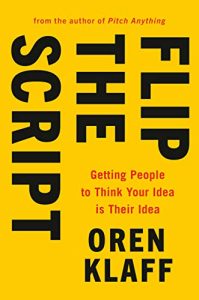
Flip The Script

7,000.00

If there’s one lesson Oren Klaff has learned over decades of pitching, presenting, and closing long-shot, high-stakes deals, it’s that people are sick of being marketed and sold to. Most of all, they hate being told what to think. The more you push them, the more they resist.

What people love, however, is coming up with a great idea on their own, even if it’s the idea you were guiding them to have all along. Often, the only way to get someone to sign is to make them feel like they’re smarter than you.

That’s why Oren is throwing out the old playbook on persuasion. Instead, he’ll show you a new approach that works on this simple insight: Everyone trusts their own ideas. If, rather than pushing your idea on your buyer, you can guide them to discover it on their own, they’ll believe it, trust it, and get excited about it. Then they’ll buy in and feel good about the chance to work with you.

That might sound easier said than done, but Oren has taught thousands of people how to do it with a series of simple steps that anyone can follow in any situation.

And as you’ll see in this book, Oren has been in a lot of different situations.

He’ll show you how he got a billionaire to take him seriously, how he got a venture capital firm to cough up capital, and how he made a skeptical Swiss banker see him as an expert in banking. He’ll even show you how to become so compelling that buyers are even more attracted to you than to your product.

These days, it’s not enough to make a great pitch.

To get attention, create trust, and close the deal, you need to flip the script.

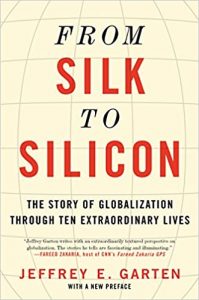
From Silk to Silicon: The Story of Globalization Through Ten Extraordinary Lives

5,000.00

The story of globalization, the most powerful force in history, as told through the life and times of ten people who changed the world by their singular, spectacular accomplishments.

This is the first book to look at the history of globalization through the lens of individuals who did something transformative, as opposed to describing globalization through trends, policies, or particular industries. From Silk to Silicon tells the story of who these men and women were, what they did, how they did it and how their achievements continue to shape our world today. They include:

• Genghis Khan, who united east and west by conquest and by opening new trade routes built on groundbreaking transportation, communications, and management innovations.

• Mayer Amschel Rothschild, who arose from an oppressive Jewish ghetto to establish the most powerful bank the world has seen, and ushered in an era of global finance.

• Cyrus Field, who became the father of global communications by leading the effort to build the transatlantic telegraph, the forerunner to global radio, TV, and the worldwide Internet.

• Margaret Thatcher, whose controversial policies opened the gusher of substantially free markets that linked economies across borders.

• Andy Grove, a Hungarian refugee from the Nazis who built the company—Intel—that figured out how to manufacture complex computer chips on a mass, commercial scale and laid the foundation for Silicon Valley’s computer revolution.

Through these stories Jeffrey E. Garten finds the common links between these figure and probes critical questions including: How much influence can any one person have in fundamentally changing the world? And how have past trends in globalization affected the present and how will they shape the future? From Silk to Silicon is an essential book to understanding the past—and the future—of the most powerful force of our times.

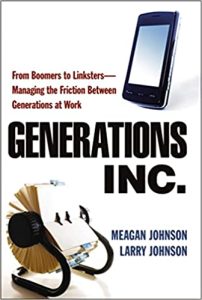
Generations Inc

6,500.00

Now that five different generations are on the job simultaneously–from Traditionals to Generation Y to Millennials–it’s more important than ever for companies to understand how their people can not only coexist and cooperate, but thrive together as a team.

Written by a father-daughter team of two generational experts, Generations, Inc. offers the perspectives of people of different eras to elicit practical insights on wrestling with generational issues in the workplace.

The book provides Baby Boomers and Linksters alike with practical techniques for addressing conflicts, forging alliances with coworkers from other generations, getting people with different values and idiosyncratic styles to work together, and running productive meetings where all participants find value in each other’s ideas. The generation we were born in influences our expectations, actions, and mind-sets.

Generations, Inc. includes realistic strategies for relating to your team members’ different views of loyalty, work ethic, and the definition of a job well done–and tips to make those perspectives work together to strengthen your workforce and grow your business.

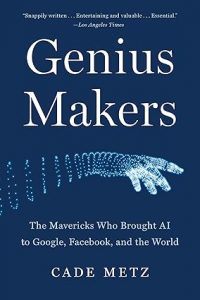
Genius Makers

12,000.00

What does it mean to be smart? To be human? What do we really want from life and the intelligence we have, or might create?

With deep and exclusive reporting, across hundreds of interviews, New York Times Silicon Valley journalist Cade Metz brings you into the rooms where these questions are being answered. Where an extraordinarily powerful new artificial intelligence has been built into our biggest companies, our social discourse, and our daily lives, with few of us even noticing.

Long dismissed as a technology of the distant future, artificial intelligence was a project consigned to the fringes of the scientific community. Then two researchers changed everything. One was a sixty-four-year-old computer science professor who didn’t drive and didn’t fly because he could no longer sit down—but still made his way across North America for the moment that would define a new age of technology. The other was a thirty-six-year-old neuroscientist and chess prodigy who laid claim to being the greatest game player of all time before vowing to build a machine that could do anything the human brain could do.

They took two very different paths to that lofty goal, and they disagreed on how quickly it would arrive. But both were soon drawn into the heart of the tech industry. Their ideas drove a new kind of arms race, spanning Google, Microsoft, Facebook, and OpenAI, a new lab founded by Silicon Valley kingpin Elon Musk. But some believed that China would beat them all to the finish line.

Genius Makers dramatically presents the fierce conflict between national interests, shareholder value, the pursuit of scientific knowledge, and the very human concerns about privacy, security, bias, and prejudice. Like a great Victorian novel, this world of eccentric, brilliant, often unimaginably yet suddenly wealthy characters draws you into the most profound moral questions we can ask. And like a great mystery, it presents the story and facts that lead to a core, vital question:

How far will we let it go?

Genius Makers

16,000.00

What does it mean to be smart? To be human? What do we really want from life and the intelligence we have, or might create?

With deep and exclusive reporting, across hundreds of interviews, New York Times Silicon Valley journalist Cade Metz brings you into the rooms where these questions are being answered. Where an extraordinarily powerful new artificial intelligence has been built into our biggest companies, our social discourse, and our daily lives, with few of us even noticing.

Long dismissed as a technology of the distant future, artificial intelligence was a project consigned to the fringes of the scientific community. Then two researchers changed everything. One was a sixty-four-year-old computer science professor who didn’t drive and didn’t fly because he could no longer sit down—but still made his way across North America for the moment that would define a new age of technology. The other was a thirty-six-year-old neuroscientist and chess prodigy who laid claim to being the greatest game player of all time before vowing to build a machine that could do anything the human brain could do.

They took two very different paths to that lofty goal, and they disagreed on how quickly it would arrive. But both were soon drawn into the heart of the tech industry. Their ideas drove a new kind of arms race, spanning Google, Microsoft, Facebook, and OpenAI, a new lab founded by Silicon Valley kingpin Elon Musk. But some believed that China would beat them all to the finish line.

Genius Makers dramatically presents the fierce conflict between national interests, shareholder value, the pursuit of scientific knowledge, and the very human concerns about privacy, security, bias, and prejudice. Like a great Victorian novel, this world of eccentric, brilliant, often unimaginably yet suddenly wealthy characters draws you into the most profound moral questions we can ask. And like a great mystery, it presents the story and facts that lead to a core, vital question:

How far will we let it go?

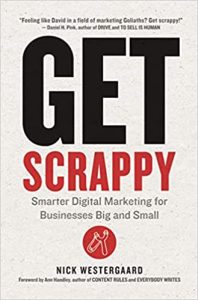
Get Scrappy

7,000.00

It’s an exciting time to be in marketing, with an array of equalizing platforms from the Internet to social media to content marketing, that have reset the playing field for businesses large and small. Yet, it’s also a challenging time, with much work to do and an ever-changing array of platforms, features, and networks to master–all on tighter budgets than ever before.

In Get Scrappy, chief brand strategist Nick Westergaard weaves hacks, tips, and idea starters together to provide a plan of attack for businesses of any size to:

– Demystify digital marketing in a way that makes sense for your business
– Do more with less
– Build a strong brand with something to say
– Create relevant and engaging content for your social media platforms
– Spark dialogue with your community of customers
– Measure what matter

The result will be a reliable, repeatable system for building your brand, creating engaging content, and growing your community of customers. Don’t wait for marketing to reinvent itself. Instead, proactively reinvent your company’s marketing to maximize its reach!

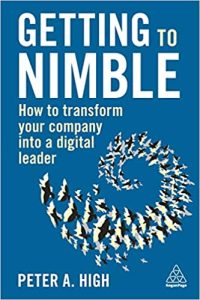
Getting To Nimble

12,000.00

With increased pressure from digital natives, now is the time for established companies to address outdated and antiquated practices in order to respond quickly to the ever-increasing speed of market changes.

The pace of change in business today is such that it is becoming easier to go from a legendarily high-performing company to liquidation in a short period of time. Getting to Nimble shares the stories of organizations that were able to successfully transform their people practices, processes, technology, ecosystems and strategy for the digital era. The book also covers once dominant companies like Circuit City and Kodak that neglected to change and were impaired or died as a result.

Highlighting a framework to follow along with best practices that others can emulate, Getting to Nimble includes case studies from major organizations such as Capital One, FedEx, CarMax, The Washington Post, Domino’s Pizza, Walmart and the country of Estonia.

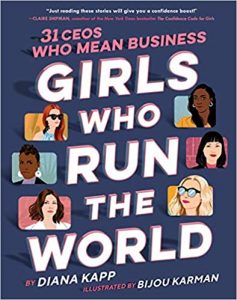
Girls Who Run The World

5,000.00

The perfect gift for future entrepreneurs! Part biography, part business how-to, and fully empowering, this book shows that you’re never too young to dream BIG! With colorful portraits, fun interviews and DIY tips, Girls Who Run the World features the success stories of 31 leading ladies today of companies like Rent the Runway, PopSugar, and Soul Cycle.

Girls run biotech companies.
Girls run online fashion sites.
Girls run environmental enterprises.
They are creative. They are inventive. They mean business.
Girls run the world.
This collection gives girls of all ages the tools they need to follow their passions, turn ideas into reality and break barriers in the business world.

Go Where There Is No Path

7,000.00

Gray, the son of a single working mother who had him at age fourteen, grew up in deep poverty in Birmingham, Alabama. An academic star, he had every qualification for attending a top college—except for the financial means. Desperate, Gray headed off the beaten path, searching online to apply for every scholarship he could find. His hustle resulted in awards of 1.3 million dollars and became his call to action to help other students win their own “schollys.” It inspired him to start up Scholly, an app that matches college applicants with millions of dollars in outside scholarships that often go unclaimed.

When he was a senior at Drexel University, he appeared on Shark Tank as CEO of Scholly. In the most heated fight in the show’s history, the sharks challenged Gray as to whether his app was a charity or a profitable business. Both, he insisted, proposing a new paradigm for social entrepreneurship and netting deals from Lori Grenier and Daymond John.

At the time Scholly’s subscriber base was 90,000 users. Today the app has 4 million subscribers who have won scholarships totaling more than $100 million. Meanwhile, Gray—without help from the mostly all-white boy’s club of Silicon Valley—has emerged as a tech startup superhero now tackling the crisis of student debt with innovative, unrivaled strategies.

Gray’s premise is that when you lead with the good—confronting issues such as poverty and racism—the money will follow. His story is proof that when you develop a mindset for success, you turn disadvantages into gold. And when you create opportunities for others, you enrich the marketplace for yourself too.

Gray shows us, we can carve out new paths to better days and leave trails for others.

Gold, Oil and Avocados: A Recent History of Latin America in Sixteen Commodities

12,500.00

The 21st century began optimistically in Latin America. Left-leaning leaders armed with programs to reduce poverty and reclaim national wealth were seeing results—but as the aughts gave way to the teens, they began to fall like dominos. Where did the dreams of this “pink tide” go? Look no further than the original culprits of Latin American disenfranchisement: resource-rich land and unscrupulous extraction.

Recounting the story commodity by commodity, Andy Robinson reveals what oxen have to do with the rise of Jair Bolsonaro, how quinoa explains the mob that descended on Evo Morales, and why oil is the culprit behind the protracted coup in Venezuela. In addition to the usual suspects like gold and bananas which underscored the original plunder of the Americas, Robinson also shows how a new generation of valuable resources—like coltan for smartphones, lithium for electric cars, and niobium for SpaceX rockets—have become important players in the fate of Latin America. And as the energy transition sets mineral prices soaring, Latin America remains at the mercy of the rollercoaster of commodity prices.

In Gold, Oil, and Avocados, Robinson takes readers from the salt plains of Chile to the depths of the Amazonian jungle to stitch together the story of Latin America’s last decade, showing how the imperial plunder of the past carries on today under a new name.

Good Boss, Bad Boss

5,500.00

Now with a new chapter that focuses on what great bosses really do. Dr. Sutton reveals new insights that he’s learned since the writing of Good Boss, Bad Boss. Sutton adds revelatory thoughts about such legendary bosses as Ed Catmull, Steve Jobs, A.G. Lafley, and many more, and how you can implement their techniques.

If you are a boss who wants to do great work, what can you do about it? Good Boss, Bad Boss is devoted to answering that question. Stanford Professor Robert Sutton weaves together the best psychological and management research with compelling stories and cases to reveal the mindset and moves of the best (and worst) bosses. This book was inspired by the deluge of emails, research, phone calls, and conversations that Dr. Sutton experienced after publishing his blockbuster bestseller The No Asshole Rule. He realized that most of these stories and studies swirled around a central figure in every workplace: THE BOSS. These heart-breaking, inspiring, and sometimes funny stories taught Sutton that most bosses – and their followers – wanted a lot more than just a jerk-free workplace. They aspired to become (or work for) an all-around great boss, somebody with the skill and grit to inspire superior work, commitment, and dignity among their charges.

As Dr. Sutton digs into the nitty-gritty of what the best (and worst) bosses do, a theme runs throughout Good Boss, Bad Boss – which brings together the diverse lessons and is a hallmark of great bosses: They work doggedly to “stay in tune” with how their followers (and superiors, peers, and customers too) react to what they say and do.

The best bosses are acutely aware that their success depends on having the self-awareness to control their moods and moves, to accurately interpret their impact on others, and to make adjustments on the fly that continuously spark effort, dignity, and pride among their people.

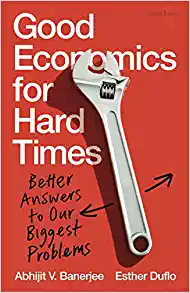
Good Economics For Hard Times

7,000.00

Figuring out how to deal with today’s critical economic problems is perhaps the great challenge of our time. Much greater than space travel or perhaps even the next revolutionary medical breakthrough, what is at stake is the whole idea of the good life as we have known it.

Immigration and inequality, globalization and technological disruption, slowing growth and accelerating climate change–these are sources of great anxiety across the world, from New Delhi and Dakar to Paris and Washington, DC. The resources to address these challenges are there–what we lack are ideas that will help us jump the wall of disagreement and distrust that divides us. If we succeed, history will remember our era with gratitude; if we fail, the potential losses are incalculable.

In this revolutionary book, renowned MIT economists Abhijit V. Banerjee and Esther Duflo take on this challenge, building on cutting-edge research in economics explained with lucidity and grace. Original, provocative, and urgent, Good Economics for Hard Times makes a persuasive case for an intelligent interventionism and a society built on compassion and respect. It is an extraordinary achievement, one that shines a light to help us appreciate and understand our precariously balanced world.

Good Strategy Bad Strategy

23,000.00

Good Strategy/Bad Strategy clarifies the muddled thinking underlying too many strategies and provides a clear way to create and implement a powerful action-oriented strategy for the real world.

Developing and implementing a strategy is the central task of a leader. A good strategy is a specific and coherent response to – and approach for – overcoming the obstacles to progress. A good strategy works by harnessing and applying power where it will have the greatest effect. Yet, Rumelt shows that there has been a growing and unfortunate tendency to equate Mom-and-apple-pie values, fluffy packages of buzzwords, motivational slogans, and financial goals with “strategy”.

In Good Strategy/Bad Strategy, he debunks these elements of “bad strategy” and awakens an understanding of the power of a “good strategy”. He introduces nine sources of power – ranging from using leverage to effectively focusing on growth – that are eye-opening yet pragmatic tools that can easily be put to work on Monday morning and uses fascinating examples from business, nonprofit, and military affairs to bring its original and pragmatic ideas to life. The detailed examples range from Apple to General Motors, from the two Iraq wars to Afghanistan, from a small local market to Wal-Mart, from Nvidia to Silicon Graphics, from the Getty Trust to the Los Angeles Unified School District, from Cisco Systems to Paccar, and from Global Crossing to the 2007-08 financial crisis.

Reflecting an astonishing grasp and integration of economics, finance, technology, history, and the brilliance and foibles of the human character, Good Strategy/Bad Strategy stems from Rumelt’s decades of digging beyond the superficial to address hard questions with honesty and integrity.

1 8 9 10 36