

The Harder You Work, the Luckier You Get: An Entrepreneur’s Memoir
₦7,000.00Joe Ricketts, founder of TD Ameritrade, shares the epic inside story of how a working-class kid from the Nebraska prairie took on Wall Street’s clubby brokerage business, busted it open, and walked away a billionaire.
Joe Ricketts always had the gift of seeing what others missed. The son of a house builder, he started life as a part-time janitor, but by the age of thirty-three he saw the chance to challenge the big brokerage firms by offering Americans an inexpensive way to take control of their own stock trading. Nowadays, we take for granted that Main Street is playing right there on Wall Street, but Ricketts made that happen. His company, begun with $12,500 borrowed from friends and family, took off like a rocket thanks to an early embrace of digital technology and irreverent marketing. But Ameritrade also faced a series of near-disasters: the SEC almost shut him down; his partners tried to force him out because of his relentless risk-taking; penny brokers swindled the company; the crash of 1989 nearly cost him everything; and he was almost shut down again when a customer committed massive fraud. By the time of the dot-com bust, he had proven that his strategy based on frontier values could survive just about anything.
The Harder You Work, The Luckier You Get offers a view inside Joe Ricketts’ mind, giving readers a visceral understanding of how entrepreneurs think and act differently from the rest of us—how they see the horizon where we just see a spreadsheet. As unvarnished as the prairie he comes from, Ricketts also talks honestly about his shortcomings as a manager, the career sacrifices his wife made for his business, the complexity of being a father, and the pain of splitting with his mentor and of his brother’s death from AIDS. Overcoming these and other challenges, he built a company now worth $30 billion.
A must-read for anyone who’s ever dreamed of starting their own business, The Harder You Work, The Luckier You Get is the ultimate only-in-America story.
The Hospitable Leader
₦6,000.00Successful leaders today don’t dictate; they invite. They don’t dismiss; they welcome. They don’t neglect; they care. Now more than ever we must pay attention to the soft side of leadership if we want hard results. As leaders–from parents to CEOs–we must learn gracious leadership to truly, positively, change our spheres of influence.
In this passionate, powerful book, pastor and leadership mentor Terry Smith fleshes out five vital principles you need to become a hospitable leader. He shows that this type of leadership is not superficial niceness or allowing people to do whatever they want. Hospitable leadership is result-oriented because it’s motivated by genuine love. It’s how you create environments where people and dreams can thrive, where vision turns to action, and where great things happen regularly. Here is everything you need to become the type of leader people want to follow.

The Hot Hand
₦6,500.00For decades, statisticians, social scientists, psychologists, and economists (among them Nobel Prize winners) have spent massive amounts of precious time thinking about whether streaks actually exist. After all, a substantial number of decisions that we make in our everyday lives are quietly rooted in this one question: If something happened before, will it happen again? Is there such a thing as being in the zone? Can someone have a “hot hand”? Or is it simply a case of seeing patterns in randomness? Or, if streaks are possible, where can they be found?
In The Hot Hand, Wall Street Journal reporter Ben Cohen offers an unfailingly entertaining and provocative investigation into these questions. He begins with how a $35,000 fine and a wild night in New York revived a debate about the existence of streaks that was several generations in the making. We learn how the ability to recognize and then bet against streaks turned a business school dropout named David Booth into a billionaire, and how the subconscious nature of streak-related bias can make the difference between life and death for asylum seekers. We see how previously unrecognized streaks hidden amidst archival data helped solve one of the most haunting mysteries of the twentieth century, the disappearance of Raoul Wallenberg.
Cohen also exposes how streak-related incentives can be manipulated, from the five-syllable word that helped break arcade profit records to an arc of black paint that allowed Stephen Curry to transform from future junior high coach into the greatest three-point shooter in NBA history. Crucially, Cohen also explores why false recognition of nonexistent streaks can have cataclysmic results, particularly if you are a sugar beet farmer or the sort of gambler who likes to switch to black on the ninth spin of the roulette wheel.
The Idea Is The Easy Part
₦25,000.00Part business manual, part memoir, The Idea Is the Easy Part counters widespread myths of failure and success with lessons learned from Dovey’s decades of hands-on business experience.
Today’s renowned businessmen and entrepreneurs, like Elon Musk, Mark Cuban, Peter Thiel, and more can earn celebrity and billionaire status. Our books, movies, and TV shows seem to say that with a big idea and a jazzy elevator pitch, anyone can quickly earn funding for their own startups and achieve massive financial success. In these stories, a brilliant innovation—and the funding you’ll easily acquire—are all you need for success.
The reality, however, is vastly different. Getting funding is incredibly hard, and success depends on many factors, strategies, and decisions.
Between serving as the president of the company that developed the groundbreaking EpiPen, bringing entrepreneurship to a Fortune 500 company as president, working in venture capitalism for several decades, and being involved in the development of nearly 300 startups, Brian Dovey is well acquainted with entrepreneurship—its reality as well as its mythology. In The Idea Is the Easy Part, Dovey debunks common myths about businesses and lays out an enthusiastic but realistic guidebook for aspiring entrepreneurs guiding them with the right growth mindset to make better decisions at every stage of the entrepreneurial process.
The Idea Is the Easy Part is a reliable guide to navigating entrepreneurial waters, replacing today’s misleading notions with objective and actionable advice.
The Infinite Game
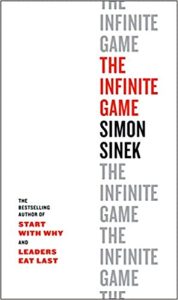
₦20,000.00How do we win a game that has no end? Finite games, like football or chess, have known players, fixed rules and a clear endpoint. The winners and losers are easily identified. Infinite games, games with no finish line, like business or politics, or life itself, have players who come and go. The rules of an infinite game are changeable while infinite games have no defined endpoint. There are no winners or losers—only ahead and behind.
The question is, how do we play to succeed in the game we’re in?
In this revelatory new book, Simon Sinek offers a framework for leading with an infinite mindset. On one hand, none of us can resist the fleeting thrills of a promotion earned or a tournament won, yet these rewards fade quickly. In pursuit of a Just Cause, we will commit to a vision of a future world so appealing that we will build it week after week, month after month, year after year. Although we do not know the exact form this world will take, working toward it gives our work and our life meaning.
Leaders who embrace an infinite mindset build stronger, more innovative, more inspiring organizations. Ultimately, they are the ones who lead us into the future.
The Innovation Mandate
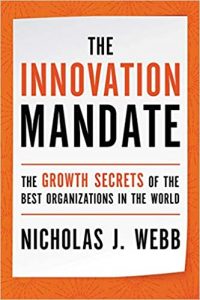
₦5,000.00In today’s ultra competitive marketplace, the difference between success and failure is innovation. From small entrepreneurial startups to global Fortune 500 companies, innovation—the steady flow of new ideas—drives sustained success. It allows a company to:
– Introduce new products and services
– Effectively connect with customers
– Sharpen the supply chain
– Efficiently manage finances
– Hire and retain the best people
Without a steady stream of new ideas, even the best company will slow down, atrophy, lose market share, hemorrhage customers, and eventually close or be sold.
The Innovation Mandate offers a clear and straightforward pathway to profitable innovation. It demystifies the concept, making it easy to understand, implement, and measure. The book centers around three simple concepts:
Innovation generates profits;
Innovation, in the form of new, profitable ideas, can come from anywhere
Identifying, harnessing, evaluating, and implementing these new ideas cannot be left to chance
Additionally, the book offers a five-point checklist to ensure your company is innovation ready.
The Innovation Stack
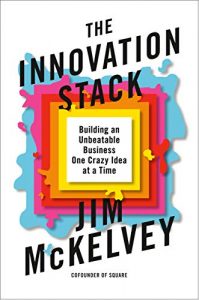
₦12,000.00In 2009, a St. Louis glassblowing artist and recovering computer scientist named Jim McKelvey lost a sale because he couldn’t accept American Express cards. Frustrated by the high costs and difficulty of accepting credit card payments, McKelvey joined his friend Jack Dorsey (the cofounder of Twitter) to launch Square, a startup that would enable small merchants to accept credit card payments on their mobile phones. With no expertise or experience in the world of payments, they approached the problem of credit cards with a new perspective, questioning the industry’s assumptions, experimenting and innovating their way through early challenges, and achieving widespread adoption from merchants small and large.
But just as Square was taking off, Amazon launched a similar product, marketed it aggressively, and undercut Square on price. For most ordinary startups, this would have spelled the end. Instead, less than a year later, Amazon was in retreat and soon discontinued its service. How did Square beat the most dangerous company on the planet? Was it just luck? These questions motivated McKelvey to study what Square had done differently from all the other companies Amazon had killed. He eventually found the key: a strategy he calls the Innovation Stack.
McKelvey’s fascinating and humorous stories of Square’s early days are blended with historical examples of other world-changing companies built on the Innovation Stack to reveal a pattern of ground-breaking, competition-proof entrepreneurship that is rare but repeatable.
The Innovation Stack is a thrilling business narrative that’s much bigger than the story of Square. It is an irreverent first-person look inside the world of entrepreneurship, and a call to action for all of us to find the entrepreneur within ourselves and identify and fix unsolved problems–one crazy idea at a time.
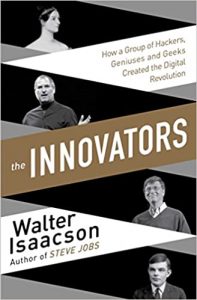
The Innovators
₦6,500.00What were the talents that allowed certain inventors and entrepreneurs to turn their visionary ideas into disruptive realities? What led to their creative leaps? Why did some succeed and others fail?
The Innovators is a masterly saga of collaborative genius destined to be the standard history of the digital revolution—and an indispensable guide to how innovation really happens. Isaacson begins the adventure with Ada Lovelace, Lord Byron’s daughter, who pioneered computer programming in the 1840s. He explores the fascinating personalities that created our current digital revolution, such as Vannevar Bush, Alan Turing, John von Neumann, J.C.R. Licklider, Doug Engelbart, Robert Noyce, Bill Gates, Steve Wozniak, Steve Jobs, Tim Berners-Lee, and Larry Page.
This is the story of how their minds worked and what made them so inventive. It’s also a narrative of how their ability to collaborate and master the art of teamwork made them even more creative.

The Insider’s Guide to Culture Change
₦10,000.00From disengaged employees to underserved customers, business failures invariably stem from a culture problem. In The Insider’s Guide to Culture Change, acclaimed culture transformation expert and global executive Siobhan McHale shares her proven four-step process to demystifying culture transformation and starting down the path to positive change.
Many leaders and managers struggle to get a handle on exactly what culture is and how pervasive its impact is throughout an organization. Some try to change the culture by publishing a statement of core values but soon find that no meaningful change happens.
Others try to unify the culture around a set of shared goals that satisfy shareholders but find their efforts backfire as stressed employees throw their hands up because “leadership just doesn’t get it.” Others implement expensive new IT systems to try to bring about change, only to find that employees find “workarounds” and soon go back to their old ways.
The Insider’s Guide to Culture Change walks readers through McHale’s four-step process to culture transformation, including how to:
- Understand what “corporate culture” really is and how it impacts every aspect of the way your organization operates
- Analyze where your culture is broken or not adding maximum value
- Unlock the power of reframing roles within your company to empower and engage your employees
- Utilize proven methods and tools to break through deeply embedded patterns and change your company mind-set
- Keep the momentum going by consolidating gains and maintaining your foot on the change accelerator
With The Insider’s Guide to Culture Change, watch your employees go from followers to change leaders who drive an agile culture that constantly outperforms.
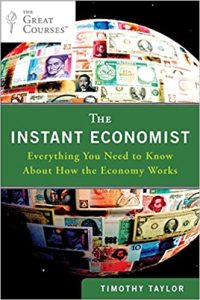
The Instant Economist
₦4,500.00Economics isn’t just about numbers: it’s about politics, psychology, history, and so much more. We are all economists – when we work, save for the future, invest, pay taxes, and buy our groceries. Yet many of us feel lost when the subject arises. Award-winning professor Timothy Taylor tackles all the key questions and hot topics of both microeconomics and macroeconomics, including: * Why do budget deficits matter? * What exactly does the Federal Reserve do? * Does globalization take jobs away from American workers? * Why is health insurance so costly? The perfect read for fans of Freakonomics, The Undercover Economist and Naked Economics, The Instant Economist offers the knowledge and sophistication to understand the issues – so you can understand and discuss economics on a personal, national, and global level.

The Intelligence Revolution
₦10,000.00We all know about driverless cars, automated production lines and chatbots but how do you ensure your business keeps up and where do you start? Bestselling author and strategy guru, Bernard Marr, argues that AI absolutely applies to your business and explains how to design an AI strategy that will guarantee its success. The Intelligence Revolution explores the opportunities and challenges that come with this monumental new taskforce that is defining the new standards of business.
Guiding us through intelligent products, services and work processes, The Intelligence Revolution illustrates how new technologies are impacting customer experience, product and service design and work efficiency. Bernard Marr delights us with fascinating case studies of businesses excelling at maximizing the potential of AI like Netflix, Autodesk, Disney, Rolls Royce and Amazon.
Don’t be left behind. Instead, discover how to turbocharge your business.

The Introvert’s Edge
₦6,500.00Extroverts are rarely short on words, and their conversations and pitches never feel sales-y to them. The world of sales just comes naturally to the extrovert. However, introverts aren’t comfortable with traditional tactics like aggressively pushing a product or talking over a customer’s objections.
Known as “The Rapid Growth Guy”, author Matthew Pollard shares how introverts can feel equally comfortable and sincere in the sales world as well without changing who they are.
In The Introvert’s Edge, this book reveals how to:
– Find your natural confidence
– Prepare for every situation
– Easily sidestep objections
– Ask for the sale (without asking)
– Leverage the power of virtual and social networking
The introverted salesperson is no longer an oxymoron, it’s a recipe for success.
Whether you want to drum up clients, pitch investors, or exceed quotas, The Introvert’s Edge will unleash the low-key, high-impact sales machine lurking inside of you.