Business & Economics

The Vision Driven Leader

₦7,000.00

Having a clear, compelling vision–and getting buy-in from your team–is essential to effective leadership. If you don’t know where you’re going, how on earth will you get there? But how do you craft that vision? How do you get others on board? And how do you put that vision into practice at every level of your organization?

In The Vision Driven Leader, New York Times bestselling author Michael Hyatt offers six tools for crafting an irresistible vision for your business, rallying your team around the vision, and distilling it into actionable plans that drive results. Based on Michael’s 40 years of experience as an entrepreneur and executive, backed by insights from organizational science and psychology, and illustrated by case studies and stories from multiple industries, The Vision Driven Leader takes you step-by-step from why to what and then how. Your business will never be the same.

Inside Coca Cola

₦6,000.00

The first book by a Coca-Cola CEO tells the remarkable story of the company’s revival.

Neville Isdell was a key player at Coca-Cola for more than thirty years, retiring in 2009 as Chairman after rebuilding the tarnished brand image of the world’s leading soft-drink company. Inside Coca-Cola tells an extraordinary personal and professional worldwide story, ranging from Northern Ireland to South Africa to Australia, the Philippines, Russia, Germany, India, South Africa, and Turkey. Isdell helped put out huge public-relations fires (India and Turkey), opened markets (Russia, Eastern Europe, the Philippines, and Africa), championed Muhtar Kent, the current Turkish-American CEO, all while living the ideal of corporate responsibility.

Isdell’s―and Coke’s―story is newsy without being gossipy; principled without being preachy, and filled with stories and lessons appealing to anyone who has ever taken “the pause that refreshes.” It’s also a readable and important look at how companies can market and govern themselves more―ethically and to great success.

#GirlBoss

₦5,000.00

Amoruso spent her teens hitchhiking, committing petty theft, and scrounging in dumpsters for leftover bagels. By age twenty-two she had dropped out of school, and was broke, directionless, and checking IDs in the lobby of an art school—a job she’d taken for the health insurance. It was in that lobby that Sophia decided to start selling vintage clothes on eBay.

Flash forward to today, and she’s the founder of Nasty Gal and the founder and CEO of Girlboss. Sophia was never a typical CEO, or a typical anything, and she’s written #GIRLBOSS for other girls like her: outsiders (and insiders) seeking a unique path to success, even when that path is windy as all hell and lined with naysayers.

#GIRLBOSS proves that being successful isn’t about where you went to college or how popular you were in high school. It’s about trusting your instincts and following your gut; knowing which rules to follow and which to break; when to button up and when to let your freak flag fly.

The Modern Detective

₦7,000.00

A fascinating examination of the world of private investigators by a 21st-century private eye.

Today’s world is complicated: companies are becoming more powerful than nations, the lines between public and corporate institutions grow murkier, and the internet is shredding our privacy. To combat these onslaughts, people everywhere — rich and not so rich, in business and in their personal lives — are turning away from traditional police, lawyers, and government regulators toward a new champion: the private investigator.

As a private investigator, Tyler Maroney has traveled the globe, overseeing sensitive investigations and untying complicated cases for a wide array of clients. In his new book, he shows that it’s private eyes who today are being called upon to catch corrupt politicians, track down international embezzlers, and mine reams of data to reveal which CEOs are lying. The tools Maroney and other private investigators use are a mix of the traditional and the cutting edge, from old phone records to computer forensics to solid (and often inspired) street-level investigative work. The most useful assets private investigators have, Maroney has found, are their resourcefulness and their creativity.

Each of the investigations Maroney explores in this book highlights an individual case and the people involved in it, and in each account he explains how the transgressors were caught and what lessons can be learned from it. Whether the clients are a Middle Eastern billionaire whose employees stole millions from him, the director of a private equity firm wanting a background check on a potential hire (a known convicted felon), or creditors of a wealthy American investor trying to recoup their money after he fled the country to avoid bankruptcy, all of them hired private investigators to solve problems the authorities either can’t or won’t touch. In an era when it’s both easier and more difficult than ever to disappear after a crime is committed, it’s the modern detective people are turning to for help, for revenge, and for justice.

The End Of Poverty

₦7,000.00

Hailed by Timeas one of the world’s hundred most influential people, Jeffrey D. Sachs is renowned for his work around the globe advising economies in crisis. Now a classic of its genre, The End of Poverty distills more than thirty years of experience to offer a uniquely informed vision of the steps that can transform impoverished countries into prosperous ones. Marrying vivid storytelling with rigorous analysis, Sachs lays out a clear conceptual map of the world economy. Explaining his own work in Bolivia, Russia, India, China, and Africa, he offers an integrated set of solutions to the interwoven economic, political, environmental, and social problems that challenge the world’s poorest countries.

Ten years after its initial publication, The End of Poverty remains an indispensible and influential work. In this 10th anniversary edition, Sachs presents an extensive new foreword assessing the progress of the past decade, the work that remains to be done, and how each of us can help. He also looks ahead across the next fifteen years to 2030, the United Nations’ target date for ending extreme poverty, offering new insights and recommendations.

Capitalism In America

₦10,000.00

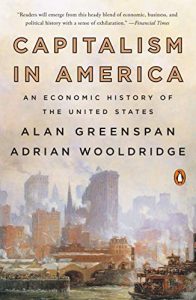
From even the start of his fabled career, Alan Greenspan was duly famous for his deep understanding of even the most arcane corners of the American economy, and his restless curiosity to know even more. To the extent possible, he has made a science of understanding how the US economy works almost as a living organism–how it grows and changes, surges and stalls. He has made a particular study of the question of productivity growth, at the heart of which is the riddle of innovation. Where does innovation come from, and how does it spread through a society? And why do some eras see the fruits of innovation spread more democratically, and others, including our own, see the opposite?

In Capitalism in America, Greenspan distills a lifetime of grappling with these questions into a thrilling and profound master reckoning with the decisive drivers of the US economy over the course of its history. In partnership with the celebrated Economist journalist and historian Adrian Wooldridge, he unfolds a tale involving vast landscapes, titanic figures, triumphant breakthroughs, enlightenment ideals as well as terrible moral failings. Every crucial debate is here–from the role of slavery in the antebellum Southern economy to the real impact of FDR’s New Deal to America’s violent mood swings in its openness to global trade and its impact. But to read Capitalism in America is above all to be stirred deeply by the extraordinary productive energies unleashed by millions of ordinary Americans that have driven this country to unprecedented heights of power and prosperity.

At heart, the authors argue, America’s genius has been its unique tolerance for the effects of creative destruction, the ceaseless churn of the old giving way to the new, driven by new people and new ideas. Often messy and painful, creative destruction has also lifted almost all Americans to standards of living unimaginable to even the wealthiest citizens of the world a few generations past. A sense of justice and human decency demands that those who bear the brunt of the pain of change be protected, but America has always accepted more pain for more gain, and its vaunted rise cannot otherwise be understood, or its challenges faced, without recognizing this legacy. For now, in our time, productivity growth has stalled again, stirring up the populist furies. There’s no better moment to apply the lessons of history to the most pressing question we face, that of whether the United States will preserve its preeminence, or see its leadership pass to other, inevitably less democratic powers.

The Psychology Of Money

₦28,000.00

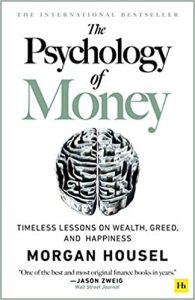
Doing well with money isn’t necessarily about what you know. It’s about how you behave. And behavior is hard to teach, even to really smart people.

Money―investing, personal finance, and business decisions―is typically taught as a math-based field, where data and formulas tell us exactly what to do. But in the real world people don’t make financial decisions on a spreadsheet. They make them at the dinner table, or in a meeting room, where personal history, your own unique view of the world, ego, pride, marketing, and odd incentives are scrambled together.

In The Psychology of Money, award-winning author Morgan Housel shares 19 short stories exploring the strange ways people think about money and teaches you how to make better sense of one of life’s most important topics.

Gold, Oil and Avocados: A Recent History of Latin America in Sixteen Commodities

₦12,500.00

The 21st century began optimistically in Latin America. Left-leaning leaders armed with programs to reduce poverty and reclaim national wealth were seeing results—but as the aughts gave way to the teens, they began to fall like dominos. Where did the dreams of this “pink tide” go? Look no further than the original culprits of Latin American disenfranchisement: resource-rich land and unscrupulous extraction.

Recounting the story commodity by commodity, Andy Robinson reveals what oxen have to do with the rise of Jair Bolsonaro, how quinoa explains the mob that descended on Evo Morales, and why oil is the culprit behind the protracted coup in Venezuela. In addition to the usual suspects like gold and bananas which underscored the original plunder of the Americas, Robinson also shows how a new generation of valuable resources—like coltan for smartphones, lithium for electric cars, and niobium for SpaceX rockets—have become important players in the fate of Latin America. And as the energy transition sets mineral prices soaring, Latin America remains at the mercy of the rollercoaster of commodity prices.

In Gold, Oil, and Avocados, Robinson takes readers from the salt plains of Chile to the depths of the Amazonian jungle to stitch together the story of Latin America’s last decade, showing how the imperial plunder of the past carries on today under a new name.

Market Movers

₦6,500.00

The former CEO and Chairman of Nasdaq shares insights and lessons learned from one of the world’s largest stock exchanges, detailing the company’s transformation from a fledgling U.S. equities market to a global financial technology company.

During 2003, the U.S. economy was described by one economist as “nervous, anxious, and waiting.” In December the Dow had topped 10,000 for the first time in a year and a half, and at year’s end the markets were up for the first time since 1999. But in the same year, American troops had moved into Iraq, and corporate boards were cutting CEOs at the slightest signs of trouble.

Amidst this turmoil Robert Greifeld, a former tech entrepreneur from outside the Wall Street bubble, became CEO of Nasdaq, a position he would hold for the next thirteen years. He saw the company through one of the most mercurial economic periods in history: the Bernie Madoff mega-scandal; Facebook’s tumultuous and disastrous IPO; Hurricane Sandy’s disruption of the world’s financial hub; the implosion of America’s housing market and the global economic crash that followed, from which we have yet to fully recover.

In Market Mover, Bob will write a first-hand account of the most critical moments of his career, with each chapter focusing on a headline-making event and ending with a prescriptive takeaway to impart to his readers.
Now Bob, who stepped aside as Nasdaq’s CEO at the end of 2016, is eager to look back at more than a decade of transformational change that occurred on his watch in order to share his insights and lessons with business readers.

Anxiety At Work

₦7,000.00

Have you ever dreaded Sunday night, got a pit in your stomach on the way to work, or had your heartbeat speed up at the sound of your boss’s voice? If so, you may have had anxiety at work. In this empathetic and wise guide, executive coaches and gurus of gratitude Adrian Gostick and Chester Elton explore the causes of workplace stress and anxiety and the management practices that have proven successful in reducing tension and cultivating calm.

If you’re a manager, how do you keep up with demands while creating a stress-free work atmosphere? How can you spot rising anxiety levels in your people? If your employees feel overwhelmed or worried about the future, what can you do to ease their concerns? How do you engage in productive conversations about emotions in uncertain times? Anxiety at Work builds on the authors’ vast knowledge and experience working with the leadership teams of some of the world’s most successful organizations to offer effective strategies that can make any workplace better, helping supervisors and their employees:

-Weather uncertainty
-Balance overload
-Beat perfectionism
-Build confidence
-Create and sustain an environment that fosters resilience
-Strengthen strong social bonds

In today’s volatile, fast-paced, and ever-changing global climate, organizations and their employees are under more pressure than ever to perform. Anxiety at Work shows how everyone at all levels can work together to build an environment that fosters camaraderie, productivity, and calm.

Too Big To Jail

₦11,000.00

Across the world, HSBC likes to sell itself as ‘the world’s local bank’, the friendly face of corporate and personal finance. And yet, a decade ago, the same bank was hit with a record US fine of $1.9 billion for facilitating money laundering for ‘drug kingpins and rogue nations’. In pursuit of their goal of becoming the biggest bank in the world, between 2003 to 2010, HSBC allowed El Chapo and the Sinaloa cartel, one of the most notorious and murderous criminal organizations in the world, to turn its ill-gotten money into clean dollars and thereby grow one of the deadliest drugs empires the world has ever seen.

How did a bank, which boasts ‘we’re committed to helping protect the world’s financial system on which millions of people depend, by only doing business with customers who meet our high standards of transparency’ come to facilitate Mexico’s richest drug baron? And how did a bank that had been named ‘one of the best-run organizations in the world’ become so entwined with one of the most barbaric groups of gangsters on the planet?

Too Big to Jail is an extraordinary story brilliantly told by writer, commentator, and former editor of The Independent, Chris Blackhurst, that starts in Hong Kong and ranges across London, Washington, the Cayman Islands and Mexico, where HSBC saw the opportunity to become the largest bank in the world, and El Chapo seized the chance to fuel his murderous empire by laundering his drug proceeds through the bank. It brings together an extraordinary cast of politicians, bankers, drug dealers, FBI officers and whistle-blowers, and asks what price does greed have? Whose job is it to police global finance? And why did not a single person go to prison for facilitating the murderous expansion of a global drug empire?

Hot Seat

₦7,000.00

In September 2001, Jeff Immelt replaced the most famous CEO in history, Jack Welch, at the helm of General Electric. Less than a week into his tenure, the 9/11 terrorist attacks shook the nation, and the company, to its core. GE was connected to nearly every part of the tragedy-GE-financed planes powered by GE-manufactured engines had just destroyed real estate that was insured by GE-issued policies. Facing an unprecedented situation, Immelt knew his response would set the tone for businesses everywhere that looked to GE-one of America’s biggest and most-heralded corporations-for direction. No pressure.

Over the next sixteen years, Immelt would lead GE through many more dire moments, from the 2008-09 Global Financial Crisis to the 2011 meltdown of Fukushima’s nuclear reactors, which were designed by GE. But Immelt’s biggest challenge was inherited: Welch had handed over a company that had great people, but was short on innovation. Immelt set out to change GE’s focus by making it more global, more rooted in technology, and more diverse. But the stock market rarely rewarded his efforts, and GE struggled.

In Hot Seat, Immelt offers a rigorous, candid interrogation of himself and his tenure, detailing for the first time his proudest moments and his biggest mistakes. The most crucial component of leadership, he writes, is the willingness to make decisions. But knowing what to do is a thousand times easier than knowing when to do it. Perseverance, combined with clear communication, can ensure progress, if not perfection, he says. That won’t protect any CEO from second-guessing, but Immelt explains how he’s pushed through even the most withering criticism: by staying focused on his team and the goals they tried to achieve. As the business world continues to be rocked by stunning economic upheaval, Hot Seat is an urgently needed, and unusually raw, source of authoritative guidance for decisive leadership in uncertain times.

How To Make Work Not Suck

₦5,000.00

Google doesn’t have the answer
Dream big, plan small
When in doubt, Helvetica
Assumption is the mother of all fuck ups
Stay curious
No one knows what they’re doing, neither should you

In this straight-talking guide to the real world of work, discover genuinely useful advice that will help you find the confidence to go for that promotion, quit your job, break into that industry, nail that pitch or climb over a creative brick wall. With 120 irreverent, unusual but always useful insights, this book will help you reach your career goals.

Talent

₦11,000.00

How do you find talent with a creative spark? To what extent can you predict human creativity, or is human creativity something irreducible before our eyes, perhaps to be spotted or glimpsed by intuition, but unique each time it appears?

The art and science of talent search get at exactly those questions. Renowned economist Tyler Cowen and venture capitalist and entrepreneur Daniel Gross guide the reader through the major scientific research areas relevant for talent search, including how to conduct an interview, how much to weight intelligence, how to judge personality and match personality traits to jobs, how to evaluate talent in on-line interactions such as Zoom calls, why talented women are still undervalued and how to spot them, how to understand the special talents in people who have disabilities or supposed disabilities, and how to use delegated scouts to find talent.

Identifying underrated, brilliant individuals is one of the simplest ways to give yourself an organizational edge, and this is the book that will show you how to do that. It is both for people searching for talent, and for those being searched and wish to understand how to better stand out.

The Catalyst Leader

₦5,000.00

We need great leaders. More than ever we need authentic, collaborative, inspiring men and women of integrity at the helm of society- and too often our leaders fall short. Some focus on personal success, alienating those they lead. Others shift their principles when it is convenient.

There is a better way. You can energize and inspire the people around you. You can equip a team of principled collaborators to answer God’s calling. You can be a catalyst leader.

In The Catalyst Leader, Brad Lomenick describes the skills and principles that define a true change maker. This book offers eight key essentials by which a leader can influence others and make a difference, laying out the path to the keys for becoming an effective leader.

Lomenick shares wisdom, practical knowledge, and stories of success and failure from his own journey of running Catalyst, one of America’s most influential leadership movements. And the lives of dozens of leaders around the world- from the creators of famous reality show to pastors, from ranch workers to a Silicon Valley designer. These men and women are living proof that good leadership inspires and innovates, while poor leadership leaves us with hopelessness and regret.

Leading can be a difficult road, and many choose to follow. But you can take a better path. Begin your journey to becoming a catalyst leader.

Good Boss, Bad Boss

₦5,500.00

Now with a new chapter that focuses on what great bosses really do. Dr. Sutton reveals new insights that he’s learned since the writing of Good Boss, Bad Boss. Sutton adds revelatory thoughts about such legendary bosses as Ed Catmull, Steve Jobs, A.G. Lafley, and many more, and how you can implement their techniques.

If you are a boss who wants to do great work, what can you do about it? Good Boss, Bad Boss is devoted to answering that question. Stanford Professor Robert Sutton weaves together the best psychological and management research with compelling stories and cases to reveal the mindset and moves of the best (and worst) bosses. This book was inspired by the deluge of emails, research, phone calls, and conversations that Dr. Sutton experienced after publishing his blockbuster bestseller The No Asshole Rule. He realized that most of these stories and studies swirled around a central figure in every workplace: THE BOSS. These heart-breaking, inspiring, and sometimes funny stories taught Sutton that most bosses – and their followers – wanted a lot more than just a jerk-free workplace. They aspired to become (or work for) an all-around great boss, somebody with the skill and grit to inspire superior work, commitment, and dignity among their charges.

As Dr. Sutton digs into the nitty-gritty of what the best (and worst) bosses do, a theme runs throughout Good Boss, Bad Boss – which brings together the diverse lessons and is a hallmark of great bosses: They work doggedly to “stay in tune” with how their followers (and superiors, peers, and customers too) react to what they say and do.

The best bosses are acutely aware that their success depends on having the self-awareness to control their moods and moves, to accurately interpret their impact on others, and to make adjustments on the fly that continuously spark effort, dignity, and pride among their people.

1 … 25 26 27 … 40