
Paperback
₦6,000.00
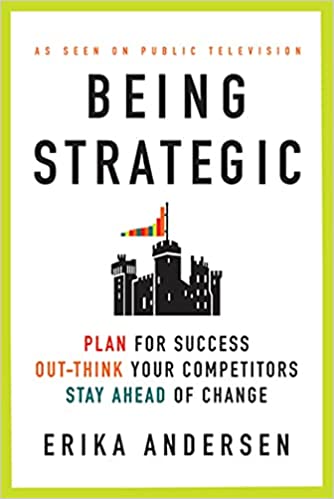
Being Strategic
Strategy? Tactics? Confused?
How many times have you sat in a meeting and heard someone say, “We’re not being very strategic” or “We need to approach this more strategically”? If your organization is like most, everyone in the meeting nods wisely, the meeting drones on, people endlessly debate how to approach the situation at hand, and no one is the wiser as to what “strategic” really means.
Next time, say this: “Being strategic means consistently making those core directional choices that will best move us toward our hoped-for future. Is this what we’re doing?”
Everybody talks about strategy, but there is a big gap between discussing strategy and using a practically strategic approach to achieving the business, the career, or the life you most want.
In this book, Erika Andersen offers you a step-by-step model and skills for making being strategic a powerful habit of mind and action
Out of stock
Related products

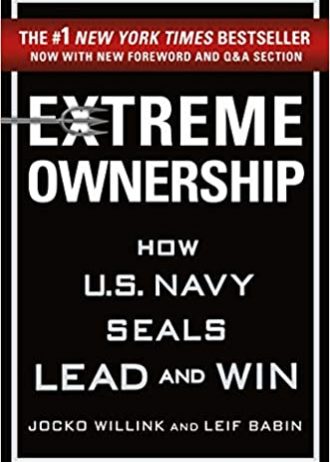
Extreme Ownership
₦7,500.00An updated edition of the blockbuster bestselling leadership book that took America and the world by storm, two U.S. Navy SEAL officers who led the most highly decorated special operations unit of the Iraq War demonstrate how to apply powerful leadership principles from the battlefield to business and life. Now with an excerpt from the authors’ new book, THE DICHOTOMY OF LEADERSHIP.
Combat, the most intense and dynamic environment imaginable, teaches the toughest leadership lessons, with absolutely everything at stake. Jocko Willink and Leif Babin learned this reality first-hand on the most violent and dangerous battlefield in Iraq. As leaders of SEAL Team Three’s Task Unit Bruiser, their mission was one many thought impossible: help U.S. forces secure Ramadi, a violent, insurgent-held city deemed “all but lost.” In gripping, firsthand accounts of heroism, tragic loss, and hard-won victories, they learned that leadership―at every level―is the most important factor in whether a team succeeds or fails.
Willink and Babin returned home from deployment and instituted SEAL leadership training to pass on their harsh lessons learned in combat to help forge the next generation of SEAL leaders. After leaving the SEAL Teams, they launched a company, Echelon Front, to teach those same leadership principles to leaders in businesses, companies, and organizations across the civilian sector. Since that time, they have trained countless leaders and worked with hundreds of companies in virtually every industry across the U.S. and internationally, teaching them how to develop their own high-performance teams and most effectively lead those teams to dominate their battlefields.
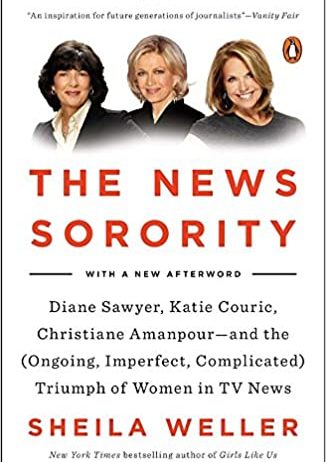
The News Sorority
₦4,000.00For decades, women battered the walls of the male fortress of television journalism. After fierce struggles, three women—Diane Sawyer, Katie Couric, and Christiane Amanpour—broke into the newsroom’s once impenetrable “boys’ club.” These women were not simply pathbreakers, but wildly gifted journalists whose unique talents enabled them to climb to the top of the corporate ladder and transform the way Americans received their news.
Drawing on exclusive interviews with their colleagues and intimates from childhood on, The News Sorority crafts a lively and exhilarating narrative that reveals the hard struggles and inner strengths that shaped these women and powered their success. Life outside the newsroom—love, loss, child rearing—would mark them all, complicating their lives even as it deepened their convictions and instincts. Life inside the newsroom would include many nervy decisions and back room power plays previously uncaptured in any media account. Taken together, Sawyer’s, Couric’s, and Amanpour’s lives as women are here revealed not as impediments but as keys to their success.
Raised in Louisville, Kentucky, Diane Sawyer was a young woman steering her own unique political course in a time of societal upheaval. Her fierce intellect, almost insuperable work ethic, and sophisticated emotional intelligence would catapult Sawyer from being the first female on-air correspondent for 60 Minutes, to presenting anchoring the network flagship ABC World News. From her first breaks as a reporter all the way through her departure in 2014, Sawyer’s charisma and drive would carry her through countless personal and professional changes.
Katie Couric, always conveniently underestimated because of her “girl-next-door” demeanor, brazened her way through a succession of regional TV news jobs until she finally hit it big. In 1991, Couric became the cohost of Today, where, over the next fifteen years, she transformed the “female” slot from secondary to preeminent while shouldering devastating personal loss. Couric’s greatest triumph—and most bedeviling challenge—was at CBS Evening News, as the first woman to solo-anchor a nighttime network news program. Her contradictions—seriously feminist while proudly sorority-girlish—made her beyond easy typecasting, and as original as she is relatable.
A glamorous, unorthodox cosmopolite—raised in pre-revolution Iran amid royalty and educated in England—Christiane Amanpour would never have been picked out of a lineup as a future war reporter, until her character flourished on catastrophic soil: her family’s exile during the Iranian Revolution. Once she knew her calling, Amanpour shrewdly made a virtue of her outsider status, joining the fledgling CNN on the bottom rung and then becoming its “face,” catalyzing its rise to global prominence. Amanpour’s fearlessness in war zones would make her the world’s witness to some of its most acute crises and television’s chief advocate for international justice.
Revealing the tremendous combination of ambition, empathy, and skill that empowered Sawyer, Couric, and Amanpour to reach stardom, The News Sorority is a detailed story of three very particular lives and a testament to the extraordinary character of women everywhere.
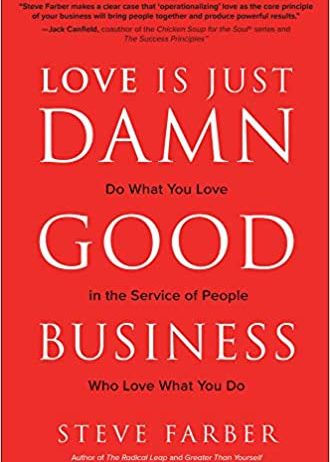
Love is Just Damn Good Business: Do What You Love in the Service of the People Who Love What You Do
₦12,500.00It’s time to toss aside the touchy-feely notions of love in business and acknowledge the real power that it holds. Love is not only appropriate in the context of business, it’s the foundation of great leadership. To put it bluntly: love is just damn good business. That’s the simple but profound truth that leadership consultant Steve Farber has discovered in his extensive work with Fortune 100 companies and other successful businesses. His game-changing approach to love as a practical business strategy will help you to:
• Identify your passions―and share them with others
• Create a culture of love at work―and spark innovation, productivity, and joy
• Serve your customers, so they love how you treat them―and have them coming back for more
• Invest time in making personal connections―that are mutually rewarding
• Focus on serving the needs of others―they’re going to love it
• Do what you love―and make it your business, so others love it, too
The proven principles you’ll find in this book will help you lay the groundwork for a thriving, competitive enterprise. When love is part of your organization’s framework and operationalized in its culture, employees and customers feel genuinely valued. Employees who are passionate about the work that they do are more loyal, innovative, creative, and inspired, and that translates to great customer experience. They don’t serve others out of obligation, but because of a genuine desire to improve people’s lives. And when customers reciprocate by loving your products, your services, and your people, that’s when something great happens. That’s when you get loyalty. That’s when you get raving fans. It’s a refreshingly human way of doing business.
In addition to Farber’s field-tested strategies, you’ll find inspiring case studies from a wide range of industries and leaders, revealing self-assessment quizzes, and practical pointers on how to build a corporate culture based on love, the ultimate competitive advantage. At the end of the day, it’s just damn good business.
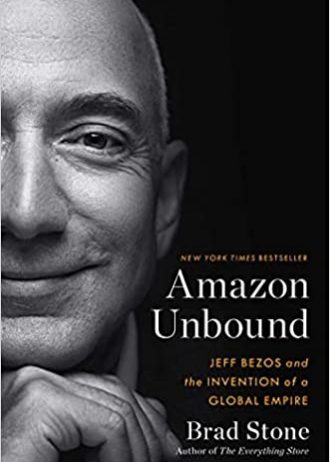
Amazon Unbound: Jeff Bezos and the Invention of a Global Empire
₦12,000.00Almost ten years ago, Bloomberg journalist Brad Stone captured the rise of Amazon in his bestseller The Everything Store. Since then, Amazon has expanded exponentially, inventing novel products like Alexa and disrupting countless industries, while its workforce has quintupled in size and its valuation has soared to well over a trillion dollars. Jeff Bezos’s empire, once housed in a garage, now spans the globe. Between services like Whole Foods, Prime Video, and Amazon’s cloud computing unit, AWS, plus Bezos’s ownership of The Washington Post, it’s impossible to go a day without encountering its impact. We live in a world run, supplied, and controlled by Amazon and its iconoclast founder.
In Amazon Unbound, Brad Stone presents a deeply reported, vividly drawn portrait of how a retail upstart became one of the most powerful and feared entities in the global economy. Stone also probes the evolution of Bezos himself—who started as a geeky technologist totally devoted to building Amazon, but who transformed to become a fit, disciplined billionaire with global ambitions; who ruled Amazon with an iron fist, even as he found his personal life splashed over the tabloids.
Definitive, timely, and revelatory, Stone has provided an unvarnished portrait of a man and company that we couldn’t imagine modern life without.
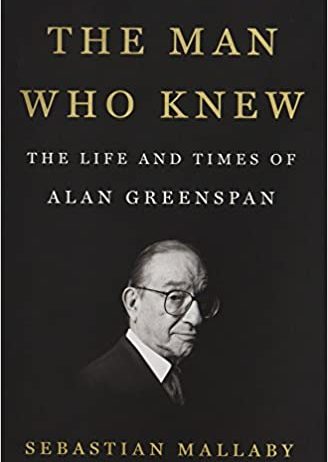
The Man Who Knew
₦8,000.00Greenspan’s life is a quintessential American success story: raised by a single mother in the Jewish émigré community of Washington Heights, he was a math prodigy who found a niche as a stats-crunching consultant. A master at explaining the economic weather to captains of industry, he translated that skill into advising Richard Nixon in his 1968 campaign. This led to a perch on the White House Council of Economic Advisers, and then to a dazzling array of business and government roles, from which the path to the Fed was relatively clear. A fire-breathing libertarian and disciple of Ayn Rand in his youth who once called the Fed’s creation a historic mistake, Mallaby shows how Greenspan reinvented himself as a pragmatist once in power. In his analysis, and in his core mission of keeping inflation in check, he was a maestro indeed, and hailed as such. At his retirement in 2006, he was lauded as the age’s necessary man, the veritable God in the machine, the global economy’s avatar. His memoirs sold for record sums to publishers around the world.
But then came 2008. Mallaby’s story lands with both feet on the great crash which did so much to damage Alan Greenspan’s reputation. Mallaby argues that the conventional wisdom is off base: Greenspan wasn’t a naïve ideologue who believed greater regulation was unnecessary. He had pressed for greater regulation of some key areas of finance over the years, and had gotten nowhere. To argue that he didn’t know the risks in irrational markets is to miss the point. He knew more than almost anyone; the question is why he didn’t act, and whether anyone else could or would have. A close reading of Greenspan’s life provides fascinating answers to these questions, answers whose lessons we would do well to heed. Because perhaps Mallaby’s greatest lesson is that economic statesmanship, like political statesmanship, is the art of the possible. The Man Who Knew is a searching reckoning with what exactly comprised the art, and the possible, in the career of Alan Greenspan.
Reviews
There are no reviews yet.