


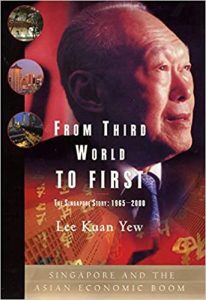
From Third World to First: The Singapore Story – 1965-2000
₦27,000.00Few gave tiny Singapore much chance of survival when it was granted independence in 1965. How is it, then, that today the former British colonial trading post is a thriving Asian metropolis with not only the world’s number one airline, best airport, and busiest port of trade, but also the world’s fourth–highest per capita real income?
The story of that transformation is told here by Singapore’s charismatic, controversial founding father, Lee Kuan Yew. Rising from a legacy of divisive colonialism, the devastation of the Second World War, and general poverty and disorder following the withdrawal of foreign forces, Singapore now is hailed as a city of the future. This miraculous history is dramatically recounted by the man who not only lived through it all but who fearlessly forged ahead and brought about most of these changes.
Delving deep into his own meticulous notes, as well as previously unpublished government papers and official records, Lee details the extraordinary efforts it took for an island city–state in Southeast Asia to survive at that time.
Lee explains how he and his cabinet colleagues finished off the communist threat to the fledgling state’s security and began the arduous process of nation building: forging basic infrastructural roads through a land that still consisted primarily of swamps, creating an army from a hitherto racially and ideologically divided population, stamping out the last vestiges of colonial–era corruption, providing mass public housing, and establishing a national airline and airport.
In this illuminating account, Lee writes frankly about his trenchant approach to political opponents and his often unorthodox views on human rights, democracy, and inherited intelligence, aiming always “to be correct, not politically correct.” Nothing in Singapore escaped his watchful eye: whether choosing shrubs for the greening of the country, restoring the romance of the historic Raffles Hotel, or openly, unabashedly persuading young men to marry women as well educated as themselves. Today’s safe, tidy Singapore bears Lee’s unmistakable stamp, for which he is unapologetic: “If this is a nanny state, I am proud to have fostered one.”
Though Lee’s domestic canvas in Singapore was small, his vigor and talent assured him a larger place in world affairs. With inimitable style, he brings history to life with cogent analyses of some of the greatest strategic issues of recent times and reveals how, over the years, he navigated the shifting tides of relations among America, China, and Taiwan, acting as confidant, sounding board, and messenger for them. He also includes candid, sometimes acerbic pen portraits of his political peers, including the indomitable Margaret Thatcher and Ronald Reagan, the poetry–spouting Jiang Zemin, and ideologues George Bush and Deng Xiaoping.
Lee also lifts the veil on his family life and writes tenderly of his wife and stalwart partner, Kwa Geok Choo, and of their pride in their three children –– particularly the eldest son, Hsien Loong, who is now Singapore’s deputy prime minister.
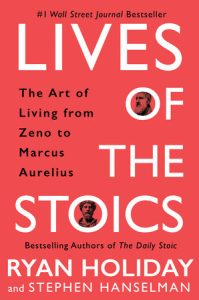
Lives Of The Stoics
₦27,000.00From the bestselling authors of The Daily Stoic comes an inspiring guide to the lives of the Stoics, and what the ancients can teach us about happiness, success, resilience and virtue.
Nearly 2,300 years after a ruined merchant named Zeno first established a school on the Stoa Poikile of Athens, Stoicism has found a new audience among those who seek greatness, from athletes to politicians and everyone in between. It’s no wonder; the philosophy and its embrace of self-mastery, virtue, and indifference to that which we cannot control is as urgent today as it was in the chaos of the Roman Empire.
In Lives of the Stoics, Holiday and Hanselman present the fascinating lives of the men and women who strove to live by the timeless Stoic virtues of Courage. Justice. Temperance. Wisdom. Organized in digestible, mini-biographies of all the well-known–and not so well-known–Stoics, this book vividly brings home what Stoicism was like for the people who loved it and lived it, dusting off powerful lessons to be learned from their struggles and successes.
More than a mere history book, every example in these pages, from Epictetus to Marcus Aurelius–slaves to emperors–is designed to help the reader apply philosophy in their own lives. Holiday and Hanselman unveil the core values and ideas that unite figures from Seneca to Cato to Cicero across the centuries. Among them are the idea that self-rule is the greatest empire, that character is fate; how Stoics benefit from preparing not only for success, but failure; and learn to love, not merely accept, the hand they are dealt in life. A treasure of valuable insights and stories, this book can be visited again and again by any reader in search of inspiration from the past.
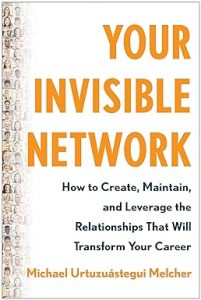
Your Invisible Network
₦27,000.00Meaningful relationships are a must-have to sustain and further your career. A network built on reciprocity, depth, and trust isn’t merely helpful to your career growth; it is absolutely necessary. Your skills, work ethic, education, lived experience, passions—all these will only achieve their full potential when paired with meaningful relationships.
Your Invisible Network provides a practical, nuanced plan for building and sustaining a network that will supercharge your growth—from author Michael Urtuzuástegui Melcher, an internationally acclaimed executive coach and leadership expert who has partnered with professionals in nearly every field for decades. Every chapter of Your Invisible Network contains compelling true stories along with quick lessons and manageable practice exercises that even the busiest of professionals can fit into their schedules.
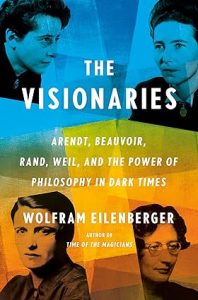
The Visionaries
₦27,000.00The period from 1933 to 1943 was one of the darkest and most chaotic in human history, as the Second World War unfolded with unthinkable cruelty. It was also a crucial decade in the dramatic, intersecting lives of some of history’s greatest philosophers. There were four women, in particular, whose parallel ideas would come to dominate the twentieth century—at once in necessary dialogue and in striking contrast with one another.
Simone de Beauvoir, already in a deep emotional and intellectual partnership with Jean-Paul Sartre, was laying the foundations for nothing less than the future of feminism. Born Alisa Rosenbaum in Saint Petersburg, Ayn Rand immigrated to the United States in 1926 and was honing one of the most politically influential voices of the twentieth century. Her novels The Fountainhead and Atlas Shrugged would reach the hearts and minds of millions of Americans in the decades to come, becoming canonical libertarian texts that continue to echo today among Silicon Valley’s tech elite. Hannah Arendt was developing some of today’s most important liberal ideas, culminating with the publication of The Origins of Totalitarianism and her arrival as a peerless intellectual celebrity. Perhaps the greatest thinker of all was a classmate of Beauvoir’s: Simone Weil, who turned away from fame to devote herself entirely to refugee aid and the resistance movement during the war. Ultimately, in 1943, she would starve to death in England, a martyr and true saint in the eyes of many.
Few authors can synthesize gripping storytelling with sophisticated philosophy as Wolfram Eilenberger does. The Visionaries tells the story of four singular philosophers—indomitable women who were refugees and resistance fighters—each putting forward a vision of a truly free and open society at a time of authoritarianism and war.
All In
₦27,000.00t’s never been harder building successful teams. With challenges of work-from-anywhere, flex-schedule and generational divides, business leaders bend over backwards searching for solutions that work. They’ve tried everything from food perks and ping pong tables to endless team-building exercises and training—but nothing sticks.
Now, in his long-awaited book for leaders at all levels, bestselling author Mike Michalowicz reveals his proven formula to build an unstoppable team for any work environment:
All In shows readers how to:
– Recruit the right talent
– Transform struggling employees into superstars
– Match individual abilities to client and company needs
– Elevate your company to where every employee cares as much as an owner
You want a thriving workforce that shines and sticks around. One that takes full responsibility for their work and outcomes. A community of employees who love your organization and are invested in its growth. With All In you will discover how to build a team where everyone flourishes–including you.
Take Your Company Global
₦27,000.00If you’re on the internet, you’re already global. Now, get access to an innovative data-driven model for profitably expanding the international presence you already have.
Companies looking to expand used to think about entering international markets, but today you’re global from the moment you create a website. Nataly Kelly, Chief Growth Officer at Rebrandly (a global tech company with customers in more than 100 countries) and former VP International Ops and Strategy at HubSpot, says now the goal should be market intensification—building on the presence you already have.
Kelly’s MARACA model enables companies to distill the mass amounts of data available to determine if, how, and where they should expand by looking at three key areas of measurement:
MA: market availability—the size of the market opportunity within a given country
RA: real-time analytics—data indicating how your company is currently performing in that market
CA: customer addressability—the measure of your company’s ability to address the market, no matter its size
The book is based on Kelly’s experiences with building a global business both at HubSpot and as a consultant, but also contains numerous examples from successful global companies of various sizes, such as Airbnb, Canva, Dashlane, GoStudent, Facebook, LinkedIn, Lottie Dolls, Netflix, Revolut, Teamwork, and Zoom. Including information on building a globally minded corporate culture, this is a complete strategic guide to discovering international growth opportunities.
Revolutionizing Business Operations
₦27,000.00Don’t risk the dire consequences of your work processes becoming obsolete—discover a powerful model for constant, ongoing, enterprise-wide process evolution and optimization.
If you have a great product, but don’t have the operations in place to efficiently and effectively support it—production, manufacturing, sales, finance, human resources, etc.—you won’t succeed. Product innovation is seen as flashier and so gets far more attention, but you can create an enduring competitive advantage by revolutionizing business operations.
The problem is most attempts to improve business operations are reactive, sporadic, and siloed. Tony Saldanha and Filippo Passerini’s Dynamic Process Transformation model provides a living model for constant, ongoing process evolution and optimization.
The authors focus on maximizing three drivers of change. First, “open market rules”—each business process must be run as a separate business, instead of via monolithic mandates coming down from on high. Second, there must be “unified accountability”— outcomes must be clear and consistent across the company, instead of being siloed within departments. And third, there needs to be a “dynamic operating engine,” a methodology to convert the constantly changing business process goals into tactical day-to-day employee actions.
With numerous examples from leading companies, this book shows how to proactively keep business processes across the company from becoming obsolete and take advantage of a neglected key to success.

Read Write Own
₦27,000.00The internet of today is a far cry from its early promise of a decentralized, democratic network of innovation, connection, and freedom. In the past decade, it has fallen almost entirely under the control of a very small group of companies like Apple, Google, and Facebook. In Read Write Own, tech visionary Chris Dixon argues that the dream of an open network for fostering creativity and entrepreneurship doesn’t have to die and can, in fact, be saved with blockchain networks. He separates this movement, which aims to provide a solid foundation for everything from social networks to artificial intelligence to virtual worlds, from cryptocurrency speculation—a distinction he calls “the computer vs. the casino.”
With lucid and compelling prose—drawing from a twenty-five-year career in the software industry—Dixon shows how the internet has undergone three distinct eras, bringing us to the critical moment we’re in today. The first was the “read” era, in which early networks democratized information. In the “read-write” era, corporate networks democratized publishing. We are now in the midst of the “read-write-own” era, sometimes called web3, in which blockchain networks are granting power and economic benefits to communities of users, not just corporations.
Read Write Own is a must-read for anyone—internet users, business leaders, creators, entrepreneurs—who wants to understand where we’ve been and where we’re going. It provides a vision for a better internet and a playbook to navigate and build the future.
The Smart Mission
₦27,000.00Why human skills and expertise, not technical tools, are what make projects succeed.
The project is the basic unit of work in many industries. Software applications, antiviral vaccines, launch-ready spacecraft: all were produced by a team and managed as a project. Project management emphasizes control, processes, and tools—but, according to The Smart Mission, that is not the right way to run a project. Human skills and expertise, not technical tools, are what make projects successful. Projects run on knowledge. This paradigm-shifting book—by three project management experts, all of whom have decades of experience at NASA and elsewhere—challenges the conventional wisdom on project management, focusing on the human dimension: learning, collaboration, teaming, communication, and culture.
The authors emphasize three themes: projects are fundamentally about how teams work and learn together to get things done; the local level—not an organization’s upper levels—is where the action happens; and projects don’t operate in a vacuum but exist within organizations that are responsible to stakeholders. Drawing on examples and case studies from NASA and other organizations, the authors identify three project models—micro, macro, and global—and their different knowledge needs. Successful organizations have a knowledge-based culture. Successful project management guides the interplay of knowledge, projects, and people.